Updated 27 June 2026
I don’t believe in just scrubbing algae; I believe in starving it. If you’re fighting a losing battle against green hair algae or cyanobacteria, your logic should lead you straight to your phosphate levels. After 15 years of managing high-tech planted tanks and community setups—from my 50-gallon community to my 20-gallon long—I’ve tested every resin and pad remover on the market. In this guide, I’m breaking down the most efficient ways to strip excess phosphates from your water without crashing your system’s delicate balance.
Phosphate Remover Fast Facts:
- Top Tip: Always rinse GFO (like Rowaphos) until the water runs clear to avoid a “rust storm” in your tank.
- Best for Beginners: Seachem PhosGuard (Easy, aluminum-based beads).
- Best for Reef/Saltwater: Rowaphos GFO (Potent, safe for corals, high capacity).
- Best for Small Filters: API Phos-Zorb (Pre-measured pouches for HOB filters).
- The “Sweet Spot”: Aim for 0.02 to 0.05 ppm. Never strip to absolute zero if you have live plants.
| Product Recommendations | Best For | Price | |
|---|---|---|---|
| Seachem PhosGuard | Beginners, fast-acting, community tanks | ~$9 | Check price |
| Rowaphos GFO | Reef/saltwater, coral-safe, high capacity | ~$28 | Check price |
| API Phos-Zorb | Small HOB filters, pre-measured pouches | ~$13 | Check price |
Disclosure: AquaLogicHQ.com is a participant in the Amazon Services LLC Associates Program, as well as other affiliate programs, designed to provide a means for us to earn fees by linking to Amazon.com and affiliated sites at no extra cost to you. Please see the Affiliate Disclosure for more details.
Case Study: The “False Zero” Mystery
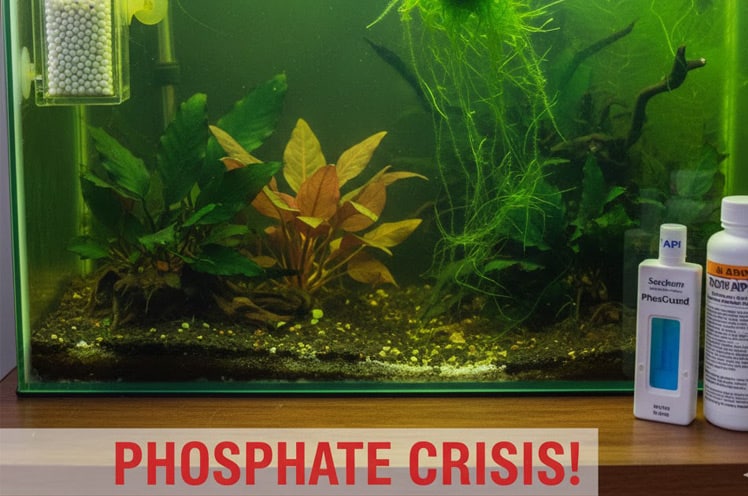
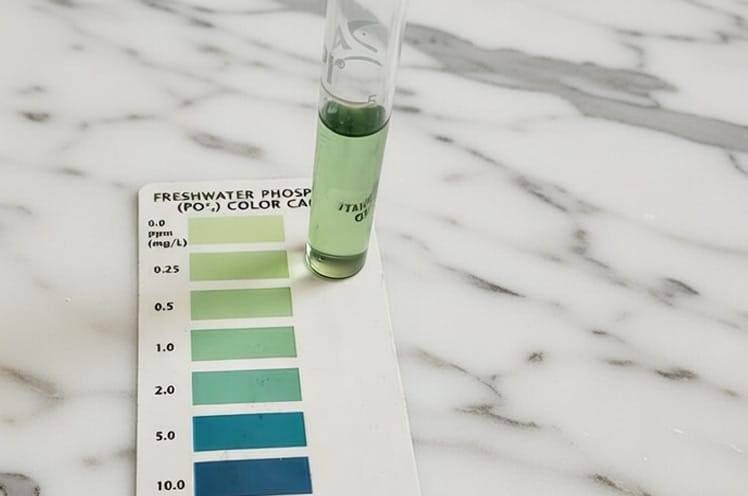
The Problem: Last year, my 20-gallon long was covered in stubborn hair algae. I used my digital water tester and it read 0.00 ppm for phosphates. I was confused—how could I have algae with no phosphates?
The Discovery: I realized the algae was “consuming” the phosphate as fast as it was being produced. The water was clean only because the algae was acting like a giant sponge.
The Fix: I manually scrubbed the algae, did a 30% water change, and added a bag of Seachem PhosGuard. Within 48 hours, my “real” reading jumped to between 0.25 and 0.5 ppm as the hidden phosphates were released from the decaying algae, and the PhosGuard quickly sucked them up. Within about two weeks, the tank was crystal clear again.
The Zero Phosphate Myth
Beginners often try to hit 0.0 ppm phosphates. That’s a mistake, in my opinion. Plants and beneficial bacteria actually need trace phosphates to survive. If you’re running a reef tank and strip the water too clean, you risk triggering a dinoflagellate outbreak, which is much harder to kill than green algae. Freshwater tanks don’t face that specific risk, but stripped-bare water still isn’t ideal for your plants. Either way, I aim for the “Sweet Spot” of 0.02 to 0.05 ppm.
Where Do Phosphates Actually Come From?
Removing phosphates is only half the battle — if you don’t fix the source, you’re just buying more media every few weeks. In my 15 years, I’ve traced almost every stubborn phosphate problem back to one of four places:
- Overfeeding: Uneaten food is the single biggest contributor I see. Feed only what your fish can finish in 2 minutes.
- Tap water: Many municipal supplies actually add phosphate compounds to prevent pipe corrosion — the EPA confirms water systems commonly add orthophosphate specifically to prevent lead and copper leaching. Test your tap water before you blame your tank.
- Decaying organic matter: Dead leaves, leftover food trapped in substrate, and general detritus all break down into phosphate over time. Regular gravel vacuuming matters here just as much as any media.
- Fertilizer overdosing: This one trips up planted-tank keepers specifically — most liquid all-in-one ferts and dry NPK fertilizers use potassium phosphate as their phosphorus source. If you’re dosing on a fixed schedule without checking how your plants are actually using it, it’s easy to overshoot. If this sounds like your tank, my guide on how often to fertilize aquarium plants breaks down dosing that won’t overshoot your phosphate levels.
Fix the source, and you’ll find your media lasts dramatically longer between swaps.
The 3 Best Aquarium Phosphate Removers (Freshwater & Saltwater)
1. My Favorite: Seachem PhosGuard
This is my go-to for community tanks. It’s a resin-like bead that is incredibly easy to use. Just rinse it, toss it in a mesh bag, and put it in your filter.
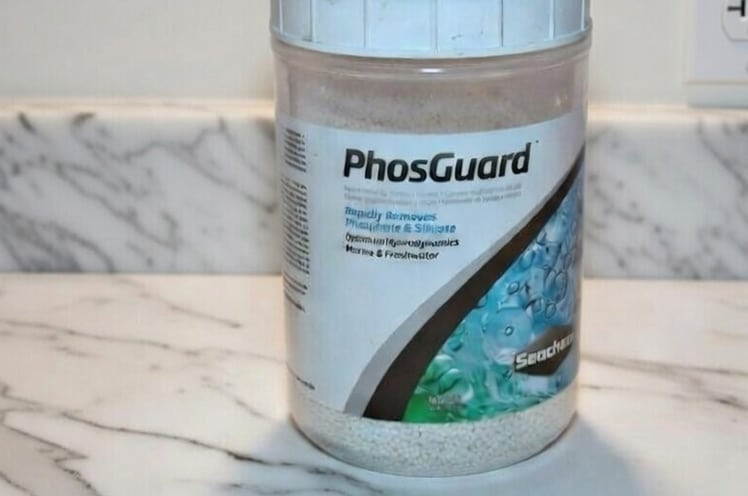
- Please Note: PhosGuard is aluminum-based. It’s perfectly safe for almost all fish, but if you keep very sensitive shrimp, I recommend starting with a half-dose.
- How I Use It: This is my “maintenance” media for my 50-gallon community tank. I don’t use a fancy reactor; I just put about 40–50ml of these white beads into a fine-mesh media bag and tuck it right into the back of my Tidal filter.
- Pro Tip: I rinse and reuse the same batch of beads rather than buying fresh every time — I only swap in new media once I notice my phosphates start creeping back up, which is usually somewhere around the 4-week mark. If you leave the same beads in too long past that point, they start collecting “mulm” (fish gunk), which makes them less effective at pulling out phosphates.
- Cost: $18 for 250ml jar
- 4.6 Stars (1,703 Amazon Reviews)
2. Best for High-End/Reef: Rowaphos GFO
This is GFO (Granular Ferric Oxide). It is significantly more powerful than standard resins.
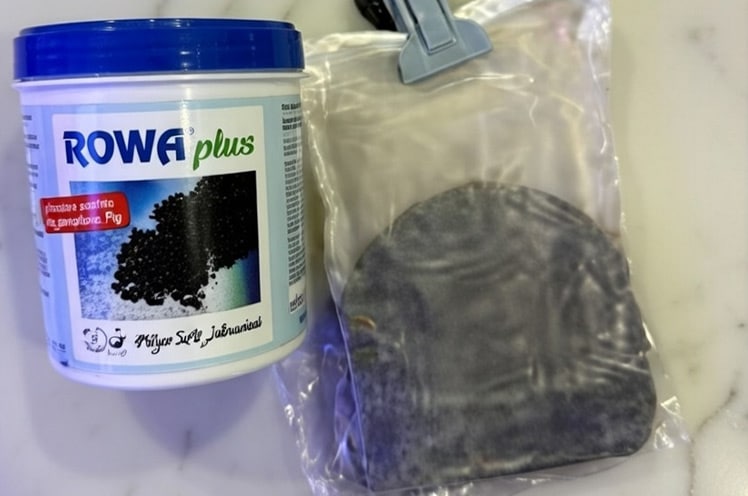
- How I Use It: I keep this on hand for “Algae Emergencies.” Because it’s a GFO (Granular Ferric Oxide), it is incredibly potent. After rinsing, I drop it in a mesh filter bag and pop it in my filter.
- Important Tip: Warning—this stuff is messy. Before it goes anywhere near my tank, I put it in a media bag and rinse it under a slow-running tap until the water runs clear. If you skip this, your tank will look like a rusty dust storm for hours. I use this when my phosphates hit 1.0 ppm or higher.
- Cons: This stuff is pricey!
- Cost: Starts at about $28
- 4.4 Stars (348 Amazon Reviews)
3. Best for Small Filters: API Phos-Zorb
If you have a simple “Hang on Back” filter and don’t want to mess with loose media, these pre-measured pouches are perfect. Just swap them out every 4 weeks.
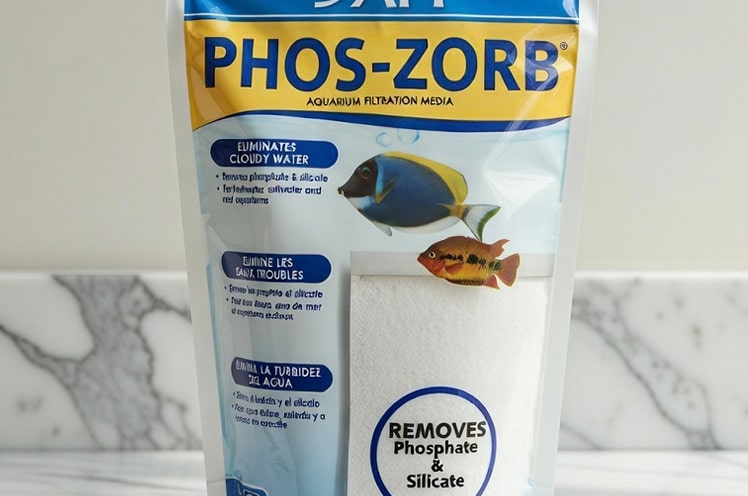
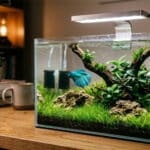
- How I Use It: This is my “Lazy Man’s” solution. I use these pre-dosed pouches in my nano betta tank.
- Quick Tip: Because the pouch is already sealed, it’s perfect for small “Hang on Back” (HOB) filters where space is tight. I just rinse it quickly and slide it in behind the filter sponge. It’s the easiest way to keep a small tank algae-free without doing complex math.
- Cost: About $13
- 4.6 Stars (483 Amazon Reviews)
Comparison: Which One Do You Need?
| Remover Type | Speed | Best Use Case | Maintenance |
|---|---|---|---|
| Resin (PhosGuard) | Fast | Community/Beginner Tanks | Rinse and reuse; replace when phosphates climb |
| GFO (Rowaphos) | Medium | Large/Reef Tanks | Replace when PO4 rises |
| API Phos-Zorb | Fast | Small/Nano Tanks, HOB Filters | Replace pouch every 4 weeks as needed |
GFO vs. Aluminum Oxide: What’s the Real Difference?
There are two main players: Granular Ferric Oxide (GFO) and Aluminum Oxide. The logic I use? GFO (like Rowaphos) is slower and safer for sensitive fish, while Aluminum-based removers (like Seachem PhosGuard) work like a lightning strike. However, if you let Aluminum stay in your tank too long, it can irritate soft corals or sensitive skin.
Phosphate Removers for Saltwater and Reef Tanks
If you are running a marine aquarium or reef tank, phosphate control is even more critical than in freshwater. High levels can literally stop corals from building their skeletons.
- Pro Tip: If you have a saltwater setup, I highly recommend using a dedicated media reactor for your GFO rather than just a bag. A reactor is a small sealed canister that forces water through the media under pressure, tumbling every granule so the whole batch gets even contact with the water — instead of a passive bag, where only the outer layer does most of the work while the center stays mostly unused. This keeps the media tumbling and prevents it from clumping into a solid brick.
- The Best Choice: GFO (Rowaphos) is the industry standard for reef tanks. It doesn’t leak anything back into the water and is safe for sensitive corals and invertebrates.
- The Logic: In a reef environment, you want to drop phosphates slowly. A “lightning strike” removal can shock your corals.
Frequently Asked Questions About Phosphate Removers
What is the best phosphate remover for a reef tank or saltwater aquarium?
For a reef tank, stability is everything. I recommend Rowaphos GFO (Granular Ferric Oxide) as the best phosphate remover for saltwater. Unlike some aluminum-based resins, GFO is incredibly stable and won’t irritate sensitive corals or invertebrates. The logic here is to lower levels slowly to avoid shocking your “clean-up crew” or coral colonies.
Does phosphate remover kill algae directly?
No, and this is a common misconception. Phosphate removers do not kill algae; they starve it. By stripping the water of excess nutrients, the algae loses its “fuel” and begins to die off. For the best results, you should manually scrub as much algae as possible before adding your media. This ensures the remover is pulling phosphates from the water rather than just fighting the bloom you already have.
Why is my phosphate test reading zero when I have an algae bloom?
This is the “False Zero” trap. Your fish tank algae is acting like a sponge, consuming phosphates as quickly as they are produced. If you see algae, you have a phosphate issue—even if your test kit says 0.0 ppm. You need to use a high-quality remover to pull the “hidden” phosphates out of the water column so the algae can’t reach them.
Can I use these removers in a marine aquarium with a protein skimmer?
Absolutely. In a marine aquarium, using a phosphate remover alongside a protein skimmer is a “pro-level” logic move. The skimmer removes organic waste before it breaks down into phosphate, while the media (like PhosGuard or GFO) mops up whatever is left. This dual-action approach is the secret to a crystal-clear reef tank.
Is there a difference between GFO and Aluminum-based removers?
Yes. Aluminum Oxide (like PhosGuard) works very fast but can sometimes irritate soft corals if left in too long. GFO (Granular Ferric Oxide) works more slowly but has a much higher capacity for holding phosphates. For a quick “lightning strike” on a freshwater algae bloom, go with aluminum. For long-term stability in a saltwater or high-end planted tank, go with GFO.
How do I know when my phosphate media is exhausted?
The logic is simple: monitor your algae growth and your test kit. If you’ve been at 0.05 ppm and suddenly jump to 0.20 ppm, your media is “full” and can no longer absorb nutrients. In a heavily stocked tank, this might happen in 2 weeks; in a cleaner setup, it might last 4 to 6 weeks.
How often should I replace my phosphate media?
Most media lasts 3 to 4 weeks. However, if your tank has very high levels, the media might fill up in just a few days. Test your water weekly to see when the levels start to creep back up.
Will a water change lower my phosphates?
Yes, but only if your tap water is low in phosphates. I always recommend testing your tap water first. Many cities add phosphates to pipes to prevent corrosion!
Why should I use GFO, Granular Ferric Oxide, instead of liquid removers?
GFO provides a steady, slow removal over weeks, which is safer for the tank’s stability. Liquid removers are better for emergency spikes but can be harder to dose accurately.
What is the #1 cause of phosphate spikes?
Overfeeding. Uneaten fish food is basically a phosphate bomb. Feed only what your fish can eat in 2 minutes to keep your levels naturally low.
Final Thoughts On The Best Aquarium Phosphate Removers
The logic of using phosphate removers is about restoration, not just elimination. You aren’t just trying to kill algae; you’re trying to restore the competitive advantage to your plants and beneficial bacteria. In my 15 years, I’ve seen many hobbyists panic and dump a year’s worth of chemical media into a filter, only to have their pH swing and stress their livestock.
In my 50-gallon community, I prefer a slow-acting GFO in a media bag because stability is king. But if I’m dealing with a massive bloom in a new setup, I might reach for a more aggressive pad. Whatever you choose, remember that the remover is a “band-aid.” The real logic is finding out why your phosphates are high—usually overfeeding or poor source water—and fixing that alongside the treatment. Use these tools to win the battle, but fix your routine to win the war.
Still seeing green? Drop a comment below with your current test readings, and I’ll help you troubleshoot your setup!

I founded AquaLogicHQ to share hands-on, tested strategies that come from 3-month algae battles and countless hours perfecting the nitrogen cycle. My mission is simple: I've made most of the mistakes on my four active tanks and am sharing the answers so you can avoid disaster in yours. When I’m not elbows-deep in a water change, I’m putting the latest hobby gear through its paces to see if it actually delivers.
- Best Canister Filters For Fish Tanks: What I’d Actually Buy for a Big Tank - July 26, 2026
- The Best Nano Aquarium Tanks I’ve Actually Run in My Fish Room - July 19, 2026
- The Best Fish Tank Heaters: Ranked and Sized for Your Setup - July 4, 2026