Updated 28 June 2026
Every beginner’s first plant usually turns into brown mush within a week — and that’s not bad luck, that’s bad shopping. Most pet stores slap an ‘easy’ label on plants that actually need CO2 injection and high-end lighting to survive. After 15 years of scaping everything from my low-tech 50-gallon community to a high-tech 20-gallon long, I’ve narrowed it down to a handful of species that are genuinely, nearly impossible to kill. In this guide, I’m sharing the logic behind choosing plants that thrive on ‘neglect’ and the simple veteran hacks to keep them green without a degree in botany.
Easy Fish Tank Plants TLDR Cheat Sheet
- Don’t Panic Over “Crypt Melt”: If a new Cryptocoryne Wendtii drops every leaf in its first week, the roots are still alive. Give it about two weeks, and stronger new leaves will grow back.
- The Best Starter Plant: Anubias. It’s nearly impossible to kill, thrives under basic kit lighting, and the thick, waxy leaves are tough enough that most plant-eating fish leave it alone.
- The #1 Mistake to Avoid: Burying the Rhizome. Never bury the thick horizontal stem on an Anubias or Java Fern in your substrate — it will rot and kill the plant. Use a dab of superglue gel or some thread to attach it to wood or stone instead.
- The Algae Fighters: Frogbit and Water Sprite. Frogbit’s floating roots give it direct access to airborne CO2, letting it grow up to so much faster than submerged plants — and Water Sprite grows just as aggressively, both starving algae of the nutrients it needs.
- The Lighting Rule: 6 to 8 Hours a Day. Every plant on this list thrives in a low-tech setup under standard kit lighting — no CO2 injection or specialized gear required.
Disclosure: AquaLogicHQ.com is a participant in the Amazon Services LLC Associates Program, as well as other affiliate programs, designed to provide a means for us to earn fees by linking to Amazon.com and affiliated sites at no extra cost to you. Please see the Affiliate Disclosure for more details.
Easy Fish Tank Plants Overview and My Ratings:
| Plant Name Ease (1–10) | Placement | My Best Use Case |
|---|---|---|
| Anubias / 10 out of 10 | Attached to Wood/Stone | Low-light Betta tanks |
| Java Fern / 9 out of 10 | Attached to Wood/Stone | Background “forest” look |
| Frogbit / 8 out of 10 | Floating | Nitrate removal & shading |
| Water Sprite / 8 out of 10 | Floating or Planted | Rapid growth to fight algae |
| Amazon Sword / 7 out of 10 | Deep Substrate | Centerpiece for large tanks |
| Crypt. Wendtii / 7 out of 10 | Rooted | Midground texture |
| Java Moss / 9 out of 10 | Anywhere | Shrimp breeding & fry cover |
| Hornwort / 9 out of 10 | Floating or Weighted | Brand new “cycling” tanks |
Why Should You Use These Easy Plants In Your Tank?
These plants are forgiving—they survive low light, basic substrates, and the occasional “oops” moment. Beyond looking great, they provide:
- Nutrient Control: They absorb nitrates and ammonia, acting as a natural filter.
- Algae Prevention: By “out-eating” algae for nutrients, they keep your glass cleaner.
- Fish Health: They provide cover for shy fish and natural resting spots.
1. The Epiphytes: Anubias & Java Fern
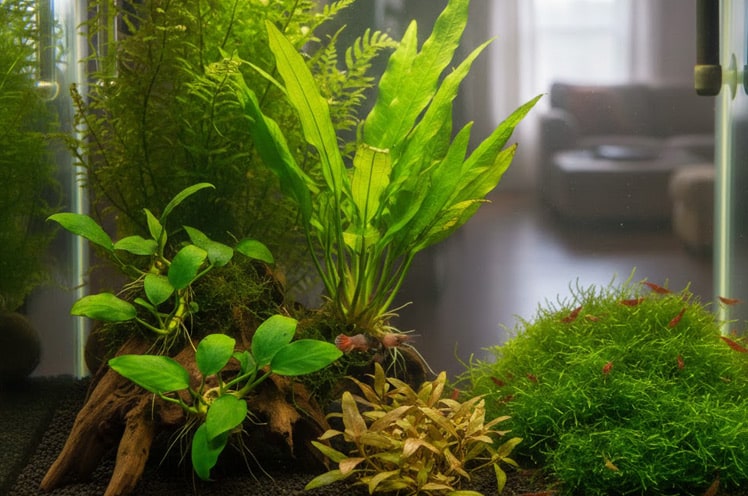
These two are almost unkillable. In my experience, these are the best plants for anyone using basic LED lights that came with their tank kit.
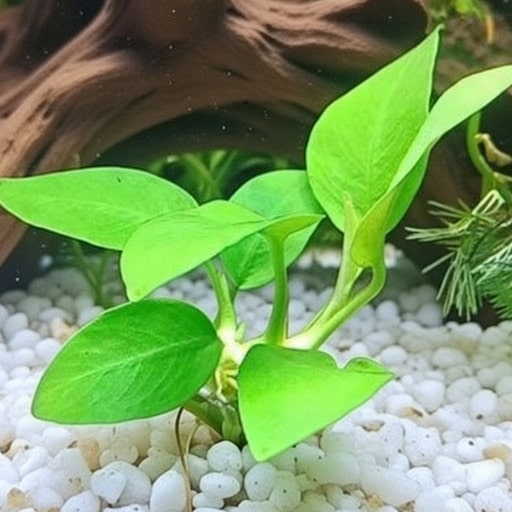
Anubias
It has thick, waxy leaves that even plant-eating fish usually leave alone.
Pro-Tip: Never bury the “rhizome” (the thick green horizontal stem). If you bury it in gravel, it will rot and die. Instead, use a tiny drop of super glue gel or some black thread to attach it to a piece of driftwood.
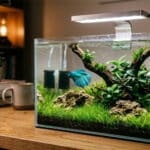
My Experience: I keep an Anubias Nana in my nano betta tank. My betta actually uses the broad leaves as a hammock to chill from time to time.
Java Fern
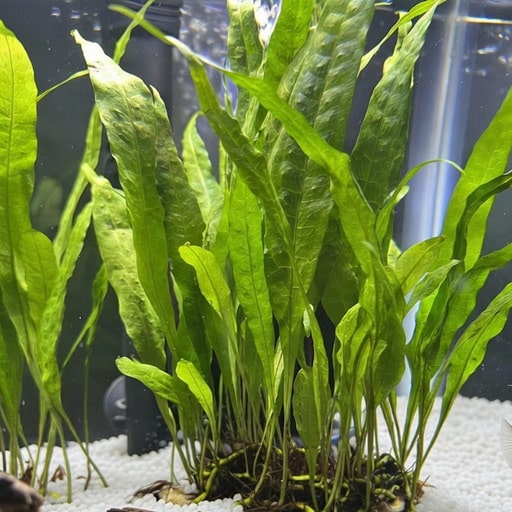
The Java Fern is a classic background plant that produces “babies” right on the tips of its leaves.
Lesson I Learned: Don’t be alarmed if you see black spots on the underside of the leaves. These aren’t a disease; they are spores where new baby plants will grow. I made the mistake of clipping my plant and spent a lot of time trying to figure out what was wrong with my tank.
2. The Nutrient Sponges
If you are battling high nitrates (see my guide on how to lower nitrate in fish tank), floating plants are your best friend.
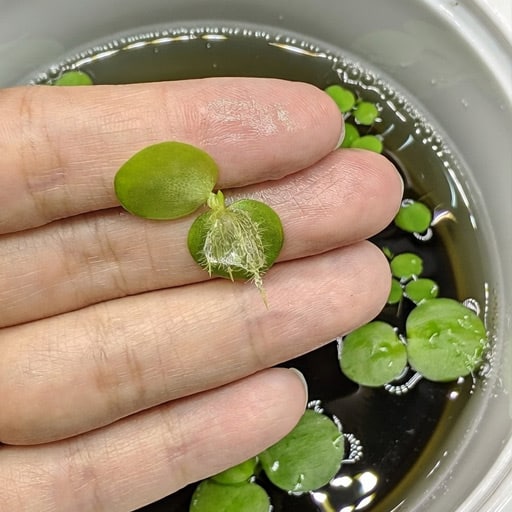
Amazon Frogbit
Frogbit looks like tiny lily pads with long, elegant roots hanging down. It is such an easy plant to use in your fish tank. Frogbit’s floating roots give it direct access to airborne CO2 — atmospheric CO2 concentration is roughly 200-400 times higher than what’s dissolved in aquarium water — letting it grow dramatically faster than submerged plants.
Why I prefer it over Duckweed: Duckweed is often called “aquarium herpes” because once it’s in your tank, it’s nearly impossible to get out. Frogbit is much larger and easier to manage.
A Quick Warning: Floating plants hate “top-down” moisture. If you have a tight-fitting lid, condensation can drip on the leaves and cause them to rot. Leave a small gap for airflow.
Water Sprite
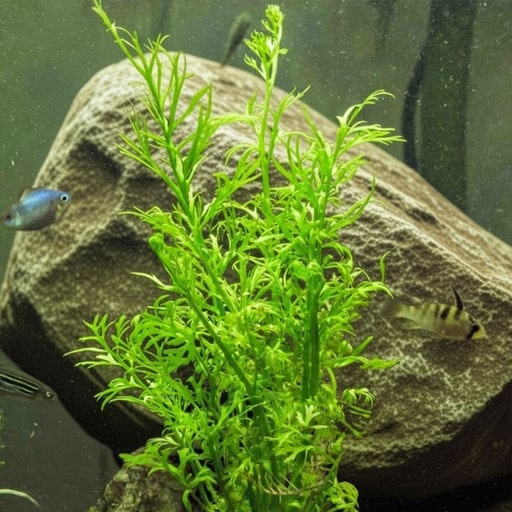
Water Sprite is a plant that is a bit of a shape-shifter. You can let it float or plant it in the substrate.
Pro-Tip: If you have an algae outbreak (see how to remove algae easily), throw in a handful of Water Sprite. It grows so fast that it “out-eats” the algae, starving it of nutrients.
3. The Root Feeders: Amazon Sword & Crypts
These plants look the most “traditional,” but they require a bit more attention to what’s under the gravel.
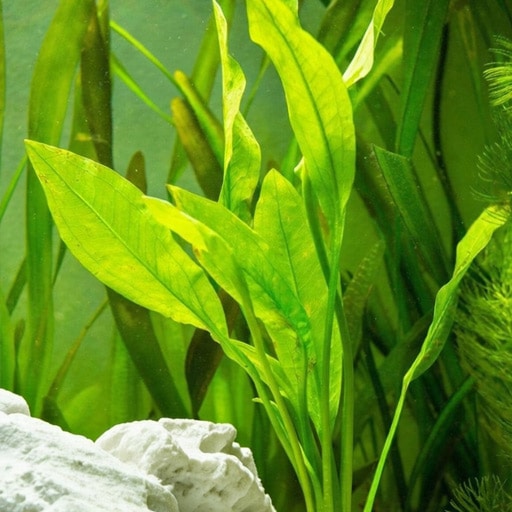
Amazon Sword
Amazon Sword is a great centerpiece plant or just an easy plant to add to your tank. It can grow massive, easily taking over a 20-gallon tank.
My Substrate Secret: Swords are heavy root feeders. If you are using plain gravel (check out my best aquarium substrate guide), you should know that root tabs are a must for these. I tuck one root tab into the gravel near the base of the plant every 3 months. Without it, the leaves will turn yellow and see-through.
Cryptocoryne Wendtii
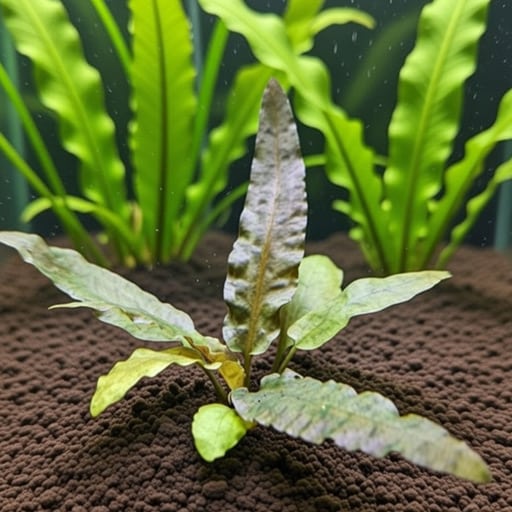
This is my “underrated” pick. It comes in beautiful bronze and green colors.
Warning: The “Crypt Melt”: When you first move this plant to a new tank, it might lose every single leaf. Beginners often think it’s dead and throw it away. Don’t. The roots are still alive. Give it two weeks, and you’ll see new, stronger leaves appearing.
4. Low-Light Textures: Java Moss & Hornwort
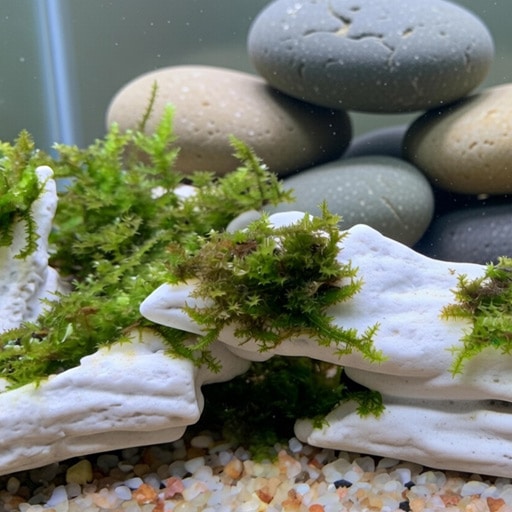
Java Moss
Java moss is the best and easiest plant for breeding. It provides a “carpet” for baby shrimp and fish fry to hide in.
My Cleaning Hack: Moss can trap a lot of “gunk.” During your weekly water change, use your siphon to gently hover over the moss to suck out trapped debris without pulling the moss up.
Hornwort
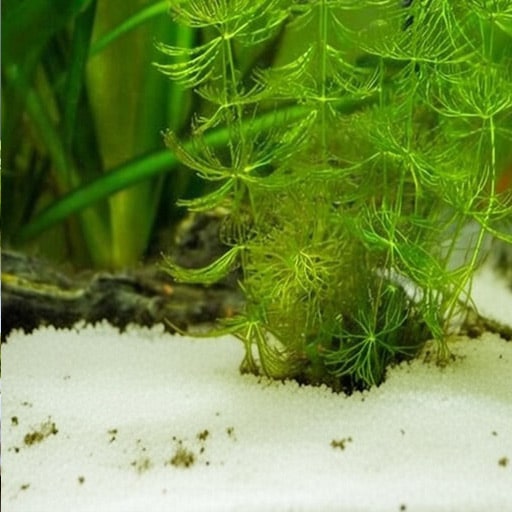
Hornwort doesn’t even have real roots; it just sucks nutrients directly from the water.
Quick Tip: It can be messy if it “sheds” its needles. I prefer to keep it in a brand-new tank to help soak up ammonia during the nitrogen cycle, then move it once the system is stable.
Easy Fish Tank Plants Super Tips:
- This is the #1 mistake beginners make with Anubias and Java Fern: burying the thick horizontal stem (the rhizome) of either plant in your Substrate. Do this, and it will rot and die. It is much better to use a tiny drop of gel superglue or a piece of fishing line to ‘anchor’ these plants to rocks or wood instead. It’s a 30-second veteran move that ensures your plant lives for years.
- If you’re struggling with Nitrates, look at floating plants like Frogbit or Water Sprite. The logic? They have direct access to the CO2 in the air, allowing them to grow 10x faster than submerged plants and suck toxins out of your water like a biological vacuum.
Easy Fish Tank Plants FAQs
Do I need a special planted tank light for these?
For the 8 plants on this list, usually no. Most standard LEDs that come with tank kits provide enough low-to-medium light. If your tank is deeper than 18 inches, you might want a dedicated light like a Nicrew or Hygger. I’ve got a post that covers the best lights for aquarium plants that goes into more detail if you want to check it out.
Why are my new plants turning yellow or brown?
This is usually transplant shock or melting. Most aquarium plants are grown in nurseries with their leaves above water. When you submerge them, they shed those air leaves to grow water leaves. Give them 2-3 weeks. This is the same “Crypt Melt” phenomenon I mentioned earlier — don’t panic, and don’t throw the plant out.
Can I grow these in plain aquarium sand or gravel?
Yes for the epiphytes (Anubias/Java Fern) and floaters. However, for the Amazon Sword and Crypts, you’ll need to bury a root tab under the roots every 3 months to keep them from starving.
Will these plants bring snails into my tank?
It’s a possibility. Snails often hitchhike as eggs. If you want to be 100% safe, give your plants an alum soak or a quick bleach dip (1 part bleach to 20 parts water) before adding them.
How many hours a day should I leave the lights on?
Aim for 6 to 8 hours. If you leave them on for 12 hours, these slow-growing plants won’t use all that light, but algae will.
Do I need to add CO2 to make these grow?
Not at all. Every plant on this list thrives in low-tech environments without added CO2.
Can I use these plants in a Goldfish tank?
Goldfish are plant eaters. I’ve had success with Anubias and Java Fern because their leaves are very tough and bitter. Avoid Duckweed unless you want it to be a snack!
Is liquid fertilizer necessary?
It’s not strictly necessary if you have a decent bioload (fish waste), but a weekly dose of an all-in-one liquid fertilizer can make the colors much more vibrant. I wrote up a post that goes over how often to fertilize different fish tank plants that can clear up any questions you might have about fertilization.
Final Thoughts: My Philosophy on Easy Fish Tank Plants
The logic of a planted tank is about creating a self-sustaining ecosystem. In my 15 years, I’ve found that plants are the ultimate “safety net” for your fish. They don’t just look good; they act as a secondary filter, consuming the waste that your Starter Bacteria miss.
Don’t feel pressured to start with a high-tech setup. In my nano setups, I stick to the basics—Java Moss, Anubias, and Crypts. These plants give you the beauty of a lush tank without the headache of expensive CO2 systems or daily dosing. At AquaLogicHQ, we prioritize stability over complexity. By choosing plants that match your lighting and maintenance style, you ensure that your aquarium remains a place of relaxation, not a chore. Start with these ‘unkillable’ species, and you’ll be amazed at how quickly your tank transforms into a thriving underwater forest.
Still unsure which plant to buy first? If you’re a total beginner, go buy one Anubias Nana. Tie it to a rock, drop it in, and watch it grow. It’s the closest thing to an ‘immortal’ plant we have in this hobby!

I founded AquaLogicHQ to share hands-on, tested strategies that come from 3-month algae battles and countless hours perfecting the nitrogen cycle. My mission is simple: I've made most of the mistakes on my four active tanks and am sharing the answers so you can avoid disaster in yours. When I’m not elbows-deep in a water change, I’m putting the latest hobby gear through its paces to see if it actually delivers.
- Best Canister Filters For Fish Tanks: What I’d Actually Buy for a Big Tank - July 26, 2026
- The Best Nano Aquarium Tanks I’ve Actually Run in My Fish Room - July 19, 2026
- The Best Fish Tank Heaters: Ranked and Sized for Your Setup - July 4, 2026