Updated 26 June 2026
The ultimate goal of any hobbyist is that ‘fish swimming in air’ look. There is nothing more soul-crushing than spending hours aquascaping a tank only to have it look like a foggy swamp 24 hours later. I’ve been there—during the first few years of my 15-year journey, I wasted a small fortune on ‘magic’ chemicals before realizing that the secret to crystal-clear water isn’t a bottle; it’s the logic of understanding what the cloudiness is telling you. In this guide, In this guide, I’m sharing the exact 6-step “Clarity Protocol” I use across my four active tanks to diagnose and fix cloudy water for good.
Fish Tank Clarity TLDR Cheat Sheet:
- The #1 Rule: Never rinse your main filter sponges under a chlorinated tap. Squeeze them out in a bucket of old tank water to protect the bacteria that keep your tank clean.
- The Milky White Fix: This is a harmless bacterial bloom (common in new tanks). Changing the water often resets the clock and makes it worse. Test your ammonia; if it’s 0 ppm, leave it alone for 48 to 72 hours to clear on its own.
- The Dusty Particle Fix: Use the $10 Filter Floss Trick. Stuff fine polyester poly-fill into the final stage of your filter. It acts like a micro-mask, trapping fine debris your sponge misses. Throw it away after 48 hours.
- The Yellow/Tea Tint Fix: Drop a bag of Seachem Purigen into your filter basket. It’s a specialized resin that removes driftwood tannins and organic stains like magic, turning water into liquid glass in 24 hours.
- The Green Water Fix: This is free-floating algae. Water changes won’t fix it. You need a 72-hour total light blackout or an internal UV Sterilizer to destroy the algae spores.
| Product | Best For | Price | |
|---|---|---|---|
| Seachem Purigen (100ml) | Yellow/tea tannin tint | ~$10 | Check price |
| Seachem Clarity | Fast fix for dusty/cloudy particles | ~$10 | Check price |
| Green Killing Machine UV Sterilizer | Stubborn green algae blooms | ~$40 | Check price |
Disclosure: AquaLogicHQ.com is a participant in the Amazon Services LLC Associates Program, as well as other affiliate programs, designed to provide a means for us to earn fees by linking to Amazon.com and affiliated sites at no extra cost to you. Please see the Affiliate Disclosure for more details.
Step 1: Diagnose Why Your Fish Tank Water is Cloudy
Cloudy water is a common issue for beginners, often caused by one of these culprits:
- Milky White/Hazy: This is usually a “bacterial bloom”. It’s most common in new tanks (New Tank Syndrome) or after a massive filter cleaning.
- Pro Tip: My biggest mistake early on was trying to “clean” my way out of a white bloom. The more water I changed, the worse it got. Sometimes, the best fix for a white bloom is simply doing nothing for 48 to 72 hours.
- Pro Tip: My biggest mistake early on was trying to “clean” my way out of a white bloom. The more water I changed, the worse it got. Sometimes, the best fix for a white bloom is simply doing nothing for 48 to 72 hours.
- Green Water: This is an Algae Bloom. It’s caused by too much light or a spike in nitrates. If your tank is near a window, this is your likely culprit.
- Yellow or Brown Tint: These are Tannins (usually from driftwood) or dissolved organic waste. It’s not ‘cloudy’ as much as it is ‘stained.’
- Fine Floating Particles: This is mechanical debris. If you just added sand or didn’t rinse your gravel, you’re seeing physical dust that your filter is too weak to catch.
Case Study: The “Clean Freak” Disaster
When I set up my first 20-gallon breeder, the water turned milky white on day four. I panicked and did a 70% water change. The next day, it was even cloudier. I did another water change and scrubbed the filter pads in tap water.
The Result: I wiped out my beneficial bacteria and crashed my cycle. What I thought was ‘dirt’ was actually a harmless bacterial bloom trying to balance the tank. I had to learn the hard way that clarity comes from stability, not scrubbing. Now, when I see a white bloom, I just check my ammonia levels and wait it out.
Step 2: Test Your Water Parameters to Find the Source
Testing identifies the cause of cloudy water, guiding your fix. I learned this after neglecting tests and dealing with a murky tank.
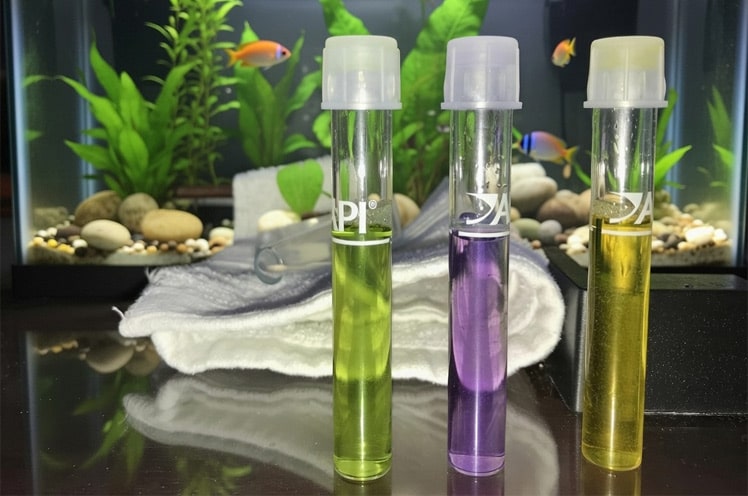
- Use a Test Kit: I have used the API Master Test Kit for years. It’s cheap and accurate, and it tests ammonia, nitrite, nitrate, and pH easily. You can use test strips, but they are less accurate. My advice is to get a liquid test kit — if you want help picking one, my full comparison guide breaks down the best options.
- What I Test For: Ammonia (0 ppm), nitrite (0 ppm), nitrate (<20 ppm), and pH (6.5–7.5 for freshwater). High ammonia/nitrite suggests cycling issues; high pH may contribute to cloudiness. I have written several guides for fixing common issues. See the Water Quality & Testing page for a little help, if you need it.
Step 3: Perform a Dilution Water Change
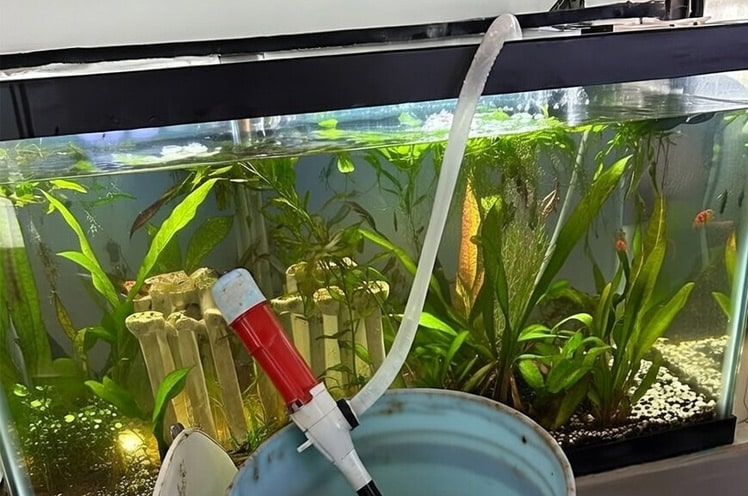
- How It Works: Replacing 25–50% of water removes debris, excess nutrients, and bacteria, reducing cloudiness.
- How I do It:
- I use a siphon hose or pump to remove water and a tank vacuum to clean gravel. See my post on the best pumps for water changes.
- Before I add water back into the tank, I add a water conditioner to the tank’s new water so it’s dechlorinated.
- I make sure the new water is as close as possible to the tank’s water temp.
- Pros: Simple, effective, no chemicals needed.
- Cons: Frequent changes may stress fish if overdone.
- Quick Tip: Before reaching for extra water changes, make sure you know which type of cloudiness you’re dealing with (see Step 1). For mechanical debris or a sudden ammonia spike, a 25% change can genuinely help. But if it’s a bacterial bloom, more frequent changes will reset the clock the same way they did in the Clean Freak Disaster above — patience, not extra water changes, is the real fix there.
Step 4: Hack Your Filter for Crystal Clear Water Quickly
- How It Works: Water Clarifiers, like Seachem’s Clarity (about $10), clump particles together for filter removal.
- How I Do It:
- Add 1 capful per 10 gallons (check directions on whatever water clarifier you may use)
- Make sure to keep the filter running for 24–48 hours to clear particles.
- I test the water after 12 to 24 hours to ensure no ammonia spikes.
- Quick note: If you use something like Seachem Clarity, be prepared! Your tank will look like someone poured milk in it for the first hour. It’s a ‘flocculant,’ meaning it clumps tiny particles together so they are big enough for your filter to catch. Don’t use this without fine filter floss in your filter, or the clumps will just keep circulating through your tank.
- Pros: Fast, beginner-friendly, safe for fish.
- Cons: Temporary fix if underlying issues (e.g., overfeeding) persist.
Where to get Water Clarifiers
You can find water clarifiers at almost any pet store and most of the big box stores like Walmart or Target. There are a bunch of different brands, some good and some not so good.
I’ve used Seachem’s products for a long time, and they have worked well. Below are links to get some more info.
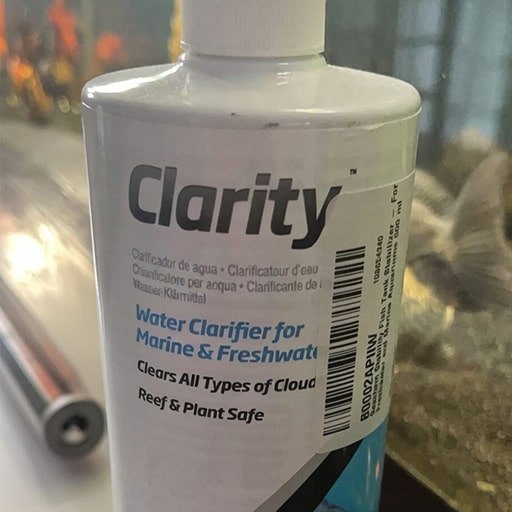
Important Note: If you use something like Seachem Clarity, be prepared! Your tank will look like someone poured milk in it for the first hour. It’s a “flocculant,” meaning it clumps tiny particles together so they are big enough for your filter to catch. Don’t use this without fine filter floss in your filter, or the clumps will just keep circulating through your tank. Here’s the “why” behind testing afterward: all that suspended organic waste doesn’t disappear; it gets concentrated in your filter instead. As it breaks down there, it’s effectively a sudden bioload spike, similar to what happens after overfeeding, so your existing bacteria colony has to work harder to keep up. That’s why I check ammonia 12 to 24 hours later, just to confirm the colony kept pace.
My Super Secret Pro-Tip For Clear Fish Tank Water:
The $10 Secret to Crystal Water – Most HOB (Hang-on-Back) filters come with standard sponges that are great for biological growth, but the holes are too big to catch micro-particles. Whenever my water looks ‘dusty,’ I take a handful of fine filter floss (poly-fill) and stuff it into the last stage of my filter. It’s like a mask for your aquarium; it catches the tiny particles the sponge misses. I throw the dirty floss away after 48 hours, and the water is usually sparkling.
Improve Your Tank’s Filtration
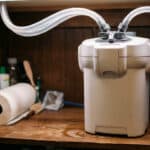
There may be times your filter just isn’t able to handle the bio load in your tank, and you may need a bigger filter or a second one. My full filter guide breaks down exactly what to look for and which ones I recommend.
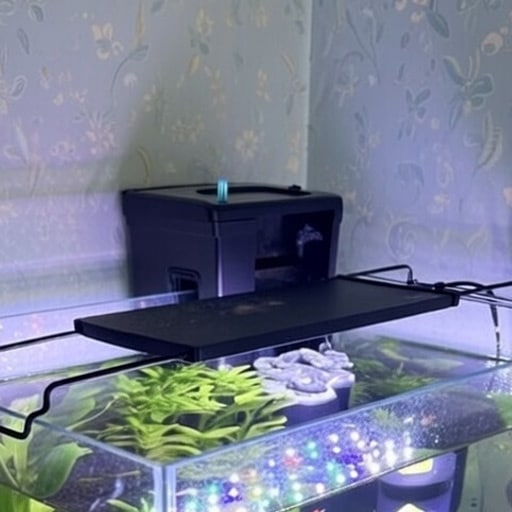
- How It Works: A powerful filter removes debris and the free-floating nuisance bacteria causing a bloom, not the beneficial colony living in your filter media, which you want to keep intact.
- What I do:
- Upgrade/swap out to a larger hang-on-back (HOB) filter.
- I rinse the media monthly using the tank’s water to keep the good bacteria going.
- When dealing with a cloudy tank, I always add filter floss for extra clarity.
- Pros: Long-term solution, improves water quality.
- Cons: Upfront cost for quality filters.
- Tip: Ensure filter flow is 2x tank volume (e.g., 20–50 GPH for 10 gallons).
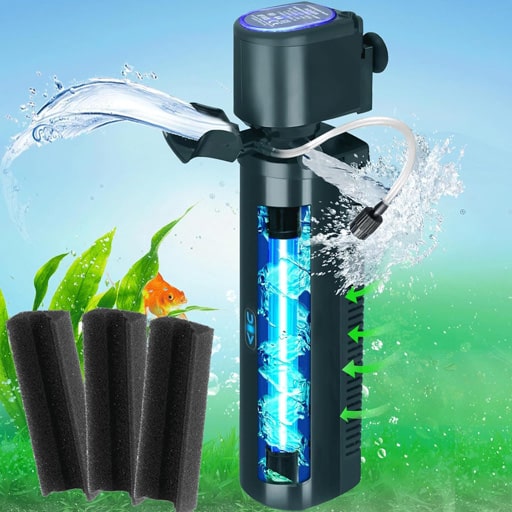
Step 5: Clear Green Water Blooms with UV Light or Blackouts
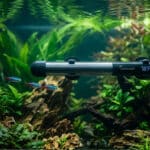
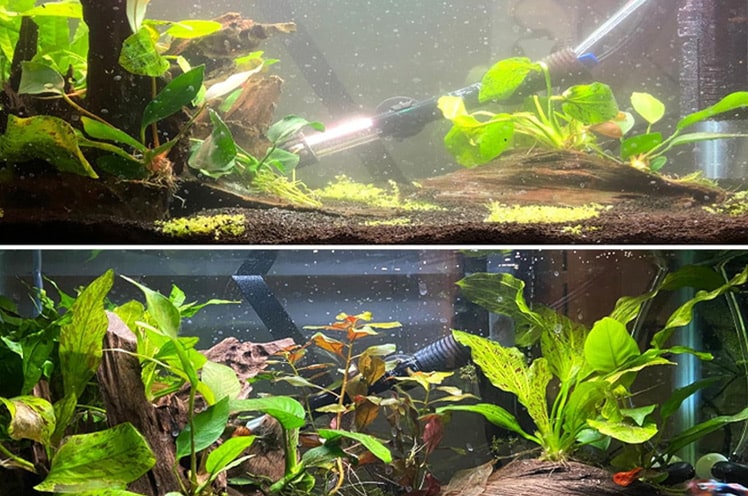
How It Works: UV sterilizers kill free-floating bacteria and algae as water passes through the unit, clearing water in 24–48 hours. It only affects what’s suspended in the water column — it won’t touch the beneficial colony living in your filter media, so your cycle stays intact.
- What I do (when needed):
- Install a UV Sterilizer filter (about $40).
- I’ll run it continuously for 2–3 days, then I’ll switch back to a regular HOB filter.
- Pros: Fast, effective for stubborn cloudiness.
- Cons: Expensive; not a permanent fix.
- Tip: I keep a Green Killing Machine UV Sterilizer in my ’emergency kit.’ I don’t run it 24/7 because UV bulbs have a limited lifespan (usually 6–9 months of runtime). I only drop it into a tank if I have a stubborn green water bloom that water changes can’t touch. It’s the ultimate ‘reset button’ for algae.
Step 6: Maintain Your Biological Balance Naturally
Add Live Plants
- How It Works: Plants like Java Fern absorb nutrients, reducing algae and cloudiness.
- How I do it:
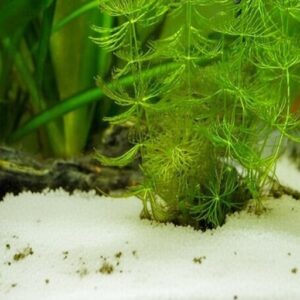
- I’ll add Java Fern or Anubias to my tank by securing them to a piece of hardscape rather than burying the rhizome; string works fine if needed. Hornwort, on the other hand, can simply float free or be loosely weighted at the base; it doesn’t need to be planted at all.
- A full-spectrum LED light works best in my experience. I keep the tank lit for 8–10 hours daily.
- When needed, I add a little Seachem Flourish for plant health.
- Pros: Natural, aesthetic, reduces algae.
- Cons: Slow effect; plants need maintenance.
- Tip: Avoid adding aquarium salt if you’re keeping live plants — even hardy species can struggle with the sodium buildup over time.
If you are going to add live plants to your tank, I do not recommend buying them online. A lot of the time, you get sick or dying plants that can do more harm than good.
I would tell you to get live plants from a reputable aquarium supply store or garden center.
Pre-Filter Sponges:
On all my active tanks, I use a pre-filter sponge on the intake tube. It catches the big gunk before it even enters the filter box, making my monthly maintenance much faster.
The ‘Gravel Vac’ Routine:
I don’t deep-clean every inch of my substrate every week. I do about 25% of the floor area during each water change. This removes the waste without killing the beneficial bacteria living in the soil.
The ‘Old Water’ Rule:
I never rinse my filter sponges under the tap. The chlorine kills the bacteria that keep the water clear. I always squeeze them out in the bucket of old tank water I just siphoned out. It looks gross, but it keeps the water crystal clear.
How to Keep Aquarium Water Clear Naturally (Without Chemicals)
How to Keep Aquarium Water Clear Naturally (Without Chemicals)
If you want crystal-clear water without bottled flocculants or liquid clarifiers, the two natural tools above — fast-growing plants and a pre-filter sponge — are usually all you need. Stack them together, and most everyday cloudiness never gets the chance to start.
Water Clarity Methods Quick View
| Method/Speed | Pros | Cons |
|---|---|---|
| Water Changes/ Medium | Simple, effective, no chemicals needed | Frequent changes may stress fish |
| Water Clarifier/ Fast | Fast, beginner-friendly, safe for fish | Temporary fix if issues persist |
| Improve Filtration/ Medium | Long-term solution, improves quality | Upfront cost for quality filters |
| Live Plants/ Slow | Natural, aesthetic, reduces algae | Slow effect, plants need maintenance |
| UV Sterilizer/ Fast | Fast, effective for stubborn cloudiness | Expensive, not a permanent fix |
| Filter Floss/ Fast | Cheap ($5), no chemicals, removes micro-debris | Needs replacing every 48 hours |
| Seachem Purigen/ Fast | Removes tannins/stains in ~24 hours, reusable resin | Doesn’t help with bacterial blooms or algae |
Common Mistakes: 3 Things I Wish I Knew About Making Fish Tank Water Clear
- Stop “Scrubbing” the Clouds: A white cloud is a living thing (bacteria). You can’t scrub it away — agitating the water just stirs the bloom back up. The real fix is patience: test your ammonia, and if it’s at 0 ppm, leave it alone for 48 to 72 hours.
- New Driftwood Stains: If your water looks like tea, it’s not “dirty” — it’s tannins. If you hate the look, use Seachem Purigen in your filter. It’s a resin that sucks the brown color out of the water like magic.
- The Overfeeding Cycle: If you feed too much, you get an ammonia spike, and that leads to bacterial bloom. A bacterial bloom = cloudy water. If the water is cloudy, the first thing I do is hide the fish food for 2 days.
When I see a hazy bloom in a new setup, I know it’s just the ‘good guys’ settling in. This is why choosing a high-quality Fish Tank Starter Bacteria is so important—it helps that cloudiness clear faster by out-competing the ‘bad’ bacteria that cause the stink.
Make Fish Tank Water Clear FAQs
Why did my water get cloudier AFTER I cleaned the filter?
You likely got a little too aggressive with the cleaning! If you rinsed your filter media in tap water, the chlorine probably killed your beneficial bacteria. This triggers a Bacterial Bloom as the tank tries to regrow its colony. Next time, only rinse your sponges in a bucket of old tank water. It’s the number 1 rule in my fish room.
My water is tea-colored but not exactly cloudy. What is going on?
Those are Tannins. If you recently added driftwood, it’s bleeding organic acids into the water. It is actually very healthy for most fish, especially Bettas, but if you hate the yellow look, drop a bag of Seachem Purigen into your filter. It’ll suck the brown out and make the water look like liquid glass in about 24 hours.
Can I just use a Water Clarifier every day?
I would not. Think of a clarifier like a Band-Aid. It is great for a quick fix before you have guests over, but if you have to use it every day, you have a deeper problem—likely overfeeding or a filter that is too small for your fish load. Solve the source; don’t just mask the symptom.
Is Green Water the same as Cloudy Water?
Nope. Green water is a tiny, free-floating Algae Bloom. It thrives on light. If you have this, a water change usually will not help because the algae grows back faster than you can pour the water. You need to do a blackout on your tank, lights off for 3 days. Or use a UV Sterilizer like the Green Killing Machine to actually kill the spores.
How long should I wait for a Bacterial Bloom to clear on its own?
Usually 48 to 72 hours. I know it’s hard to sit there and look at a foggy tank, but every time you mess with the water, you reset the clock. If your ammonia test comes back at 0ppm, just walk away. Let nature balance itself out.
Why is my water cloudy even though I have a great filter?
Your filter might have great Biological capacity, but poor Mechanical filtration. Most stock filters miss micro-particles. This is where my $10 Filter Floss Trick comes in. Stuffing some fine poly-fill in there will catch the dust that your expensive sponge is letting sail right through.
Final Thoughts On How to Make Fish Tank Water Clear
Achieving pristine water clarity is a game of patience and mechanical precision. In my 15 years, I’ve learned that a clear tank is a balanced tank. Whether you are dealing with a “New Tank Syndrome” bacterial bloom or the tea-colored tannins of a fresh piece of driftwood, the logic remains the same: identify the source, don’t overreact, and use the right mechanical polishers like Seachem Purigen or filter floss.
Don’t let a “cloudy” day discourage you. It’s simply your ecosystem’s way of recalibrating. By sticking to the AquaLogic principles of consistent maintenance and smart filtration, you’ll find that “clear water” isn’t a temporary victory—it becomes the permanent state of your fish room. If your water isn’t sparkling yet, test your parameters, check your filter media, and give nature a few days to catch up. The view is always worth the wait.
Keep your hands dry and your water clear!

I founded AquaLogicHQ to share hands-on, tested strategies that come from 3-month algae battles and countless hours perfecting the nitrogen cycle. My mission is simple: I've made most of the mistakes on my four active tanks and am sharing the answers so you can avoid disaster in yours. When I’m not elbows-deep in a water change, I’m putting the latest hobby gear through its paces to see if it actually delivers.
- Best Canister Filters For Fish Tanks: What I’d Actually Buy for a Big Tank - July 26, 2026
- The Best Nano Aquarium Tanks I’ve Actually Run in My Fish Room - July 19, 2026
- The Best Fish Tank Heaters: Ranked and Sized for Your Setup - July 4, 2026