Updated 26 June 2026
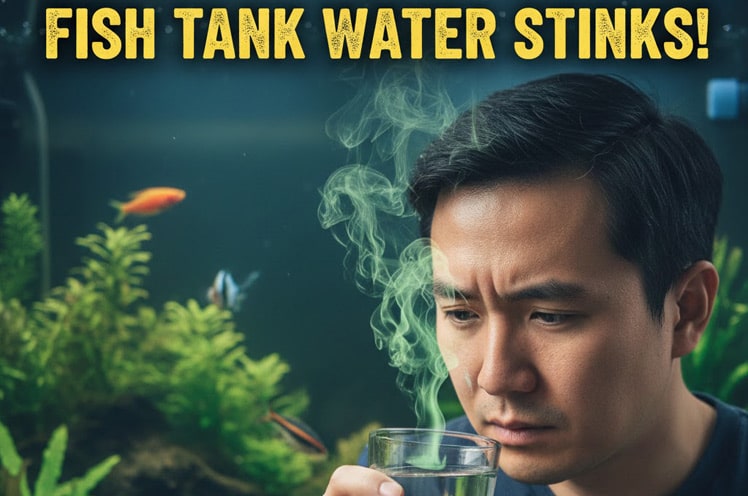
I believe your aquarium should be a centerpiece, not a source of embarrassment. There is nothing quite as humbling as walking into your home and being hit by a scent that ranges from ‘wet dog’ to ‘rotten eggs.’ I’ve been there—early in my 15 years of fishkeeping, I once panicked and nearly tore down a 50-gallon community tank because of a sudden sulfur smell. The logic I’ve learned since then is simple: a stink is just a ‘biological red flag.’ It’s your water quality screaming for balance. In this guide, I’m sharing the foolproof 5-step “Odor Elimination Protocol” I use in my own fish room to kill the stench in hours, not days.
TLDR Quick Diagnosis: What’s Causing the Smell
- The Anti-Aerosol Rule: Never spray household air fresheners, colognes, or plug-in deodorizers near an open aquarium. These chemicals settle on the surface film and are highly toxic to your livestock.
- The Sewage/Fishy Smell: This is a classic “Code Red” indicator of a hidden dead fish, snail, or rotting organic matter. Conduct an immediate head count and clear out the decay.
- The Rotten Egg/Sulfur Smell: This is caused by hydrogen sulfide gas building up in tight substrate “dead zones” without oxygen. Gently run a gravel vacuum over one-third of the tank floor to release trapped gas pockets safely.
- The Musty/Swamp Smell: This points to clogged filter pads or massive decaying plant leaves. Rinse your sponges thoroughly inside a bucket of old tank water — never use a chlorinated tap.
- The Instant Smell Eraser: Drop a fresh media bag of Seachem Purigen or high-grade activated carbon into your filter basket. It works like a chemical sponge, pulling odor molecules out of the water column in less than 6 hours.
- Once you know what you’re dealing with, jump to the full 5-Step Fix below.
| Product | Best For | Price | |
|---|---|---|---|
| Seachem Purigen | Musty/organic odors, clears in under 6 hours | ~$10 | Check price |
| API Activated Carbon | General odor absorption, classic go-to | ~$11 | Check price |
| Hygger Nano Air Stone | Sulfur/rotten egg smell from low-oxygen dead zones | $12 | Check price |
Disclosure: AquaLogicHQ.com is a participant in the Amazon Services LLC Associates Program, as well as other affiliate programs, designed to provide a means for us to earn fees by linking to Amazon.com and affiliated sites at no extra cost to you. Please see the Affiliate Disclosure for more details.
Identify Your Odor: The “Urgency” Matrix
Not all smells are created equal. Use this guide to figure out exactly what you’re dealing with.
| Smell Type | Urgency Level | What it Smells Like | The Likely Culprit |
|---|---|---|---|
| Pungent or Chemical | CODE RED | Ammonia, urine | High ammonia spike, or a hidden dead fish/snail decaying in the tank |
| Rotten Eggs | HIGH | Sulfur | Anaerobic “dead zones” in the gravel are releasing hydrogen sulfide gas |
| Earthy / Musty | MEDIUM | Swamp, wet dirt | Decaying plants, heavy algae, or old filter media |
| Wet Dog / Damp | MEDIUM | Wet fur, damp towel | Biofilm buildup on the water’s surface film or decorations, often from low surface agitation |
| Sweet or Sickly | LOW | Cloying, sugary | Specific bacterial blooms or cyanobacteria |
The Step-by-Step Fix For Fish Tank Odor
Follow these steps to get your tank smelling fresh again ASAP.
Step 1: Do a Body Search to Fix Fish Tank Water That Smells Like Sewage
The most common cause of a sudden “fishy” or “sewage” smell is a death in the tank.
- How I do it: I take a count of every fish. If someone is missing, I check inside the ornaments and behind the filter intake. A single dead snail can make a 20-gallon tank smell like a literal sewer. Remove any carcasses immediately.
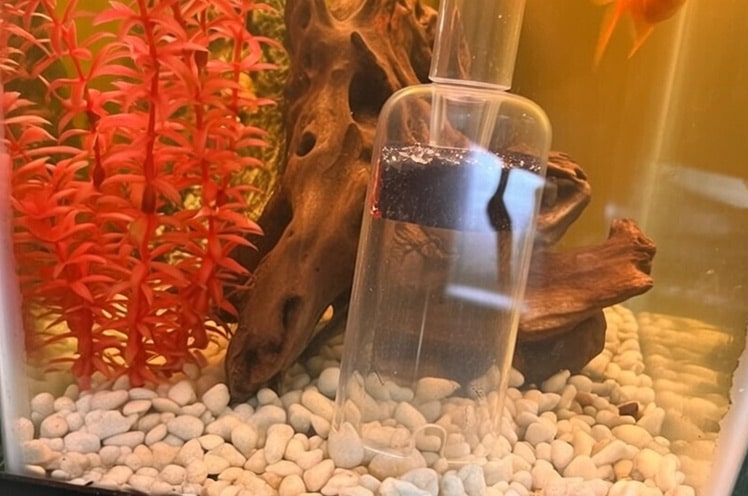
Step 2: Use a Gravel Vacuum if Your Fish Tank Smells Like Rotten Eggs or Sulfur
If you smell rotten eggs, your substrate is likely trapped with “gas pockets.”
- How I do it: Use a gravel vacuum to clean only one-third of your gravel at a time. If you see black bubbles rising, you’ve found the source.
- Pro Tip: Never vacuum your entire tank at once, or you might crash your beneficial bacteria.
Before You Vacuum: Rule Out Your Water Conditioner
Not every rotten-egg smell comes from your substrate. Some water conditioners have a naturally sulfur-like smell straight out of the bottle — it’s a normal part of the formula, not a sign anything’s wrong. Before you assume it’s a substrate dead zone, open your conditioner bottle and smell it directly. If that’s the source, you can stop right there — no vacuuming required.
Step 3: The Large Water Change
Dilution is the solution to pollution. Perform a 30-50% water change.
- Ensure the new water is dechlorinated and temperature-matched to avoid shocking your fish. If you’re struggling with high ammonia during this stage, check my guide on how to lower ammonia quickly.
Step 4: The Filter Rinse
Check your filter pads. If they are slimy and brown, they are likely holding onto the odor.
- Crucial: Only rinse filter media in old tank water. Using tap water will kill your bacteria and lead to a bigger “Cycle Crash” smell later.
Quick Tip: I see so many hobbyists leave the same bag of carbon in their filter for six months — way past its real lifespan of just 2 to 4 weeks. The logic is dangerous: once carbon is “full,” it doesn’t just stop working; it can actually start leaching those trapped odors back into the water. If your tank stinks, the first thing I do in my 50-gallon community is toss the old carbon and start fresh.
Step 5: Clean Your Lid (if you have one)
Most people scrub the glass but forget the underside of the lid. Dried flake food and condensation create a literal ‘rot factory’ just inches above the water. If your tank smells but your water tests perfectly, wipe the lid. It’s a 30-second logic fix that most ‘experts’ ignore.
Best Products To Use When Your Fish Tank Odors Are Too Much
When a water change isn’t enough, these “chemical” fixes act like a sponge for smells.
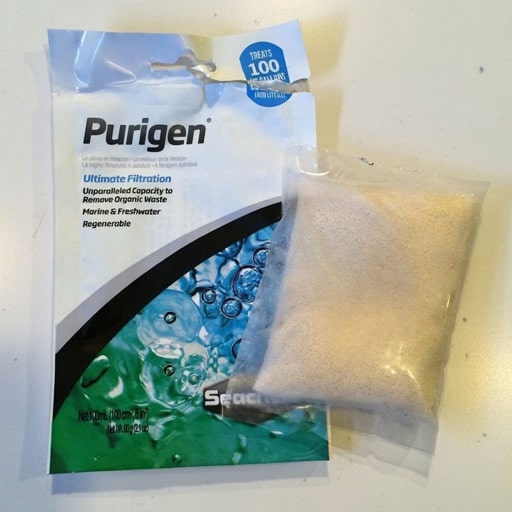
1. Seachem Purigen
- What It Does: It turns from white to dark brown as it absorbs organic waste. When the tank starts to smell, I check the bag; if it’s brown, it’s time to regenerate or replace it. It usually clears a “musty” smell in under 6 hours.
- How I Use It: This is my “secret weapon.” I keep a bag of Purigen in the filter of my 50-gallon community tank at all times.
- Cost: About $10
- 4.7 Stars (13,830 Reviews)
- Where to get it: Pet stores, many online stores
2. Activated Carbon
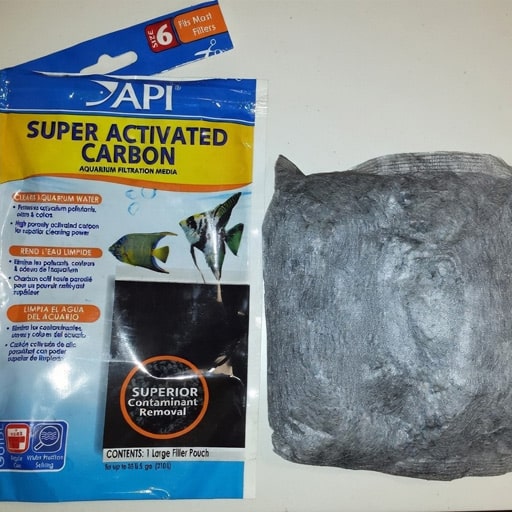
- How I Use It: Carbon is the classic choice for removing smells. I primarily use Fluval Carbon Bags if I’ve recently used medications in the tank. API’s activated carbon is also a solid choice.
- Important Note: Carbon “fills up” and stops working after 2–4 weeks. If your tank smells and you have old carbon in the filter, the carbon itself might be releasing the smell back into the water!
- Cost: About $11
- 4.6 Stars (370 Amazon Reviews)
- Where to get it: Pet stores, many online stores
3. Air Stones and Oxygen
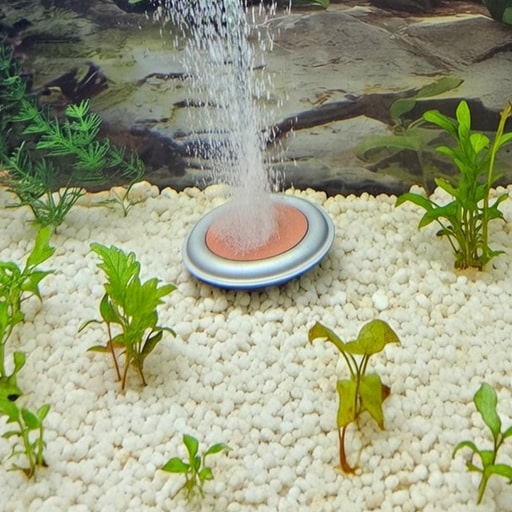
- What An Air Stone Does: They add oxygen, which helps to kill the bacteria that produce sulfur gas. Rotten egg smells happen in “dead zones” with low or no oxygenation. Keep in mind an air stone doesn’t work on its own — it needs to be connected to an air pump to actually push air through it. If you don’t already have one, my air pump guide breaks down exactly which ones I recommend.
- How I Use It: I place an airstone in the back corners of my larger tanks to keep the water moving.
- Cost: Starting around $5, and they go up from there
- Where to get it: Pet stores, many online stores
- My Pick: Hygger 2.6 Inch Nano Air Stone
- Cost for My Pick: $12
- 4.4 Stars (176 Amazon Reviews)
The Best Homemade DIY Fish Tank Odor Eliminator
If your local pet shop is closed and you need a homemade solution to stop an immediate tank stench, you can easily build a DIY odor-absorbing sachet.
The Method: Take a clean, undyed cotton sock or a piece of fine cheesecloth and fill it with a cup of food-grade activated charcoal (the kind sold as digestive capsules or powder, not grilling charcoal or briquettes) or food-grade pelletized carbon. Tie a tight knot at the top.
The Deployment: Drop this homemade charcoal bag directly inside your filter box, or hang it right next to your filter intake where the water flow is strongest. It will immediately begin binding waterborne odor compounds, exactly like an expensive brand-name media pouch, until you can perform a proper water change.
The “Permanent Freshness” Checklist To Fix Fish Tank Odor
To ensure your tank stays odor-free, implement these three habits:
- Stop Overfeeding: Uneaten food is the #1 cause of “musty” water. If it’s not gone in 2 minutes, you gave too much.
- Trim Your Plants: Dying leaves rot fast. I do a weekly “sweep” to snip off any yellowing or translucent leaves.
- Check the “Dead Zones”: During your water change, move your decorations slightly. If gunk is trapped under a rock, driftwood, or anything else in the tank, that’s your future stink. Stirring the substrate around can help.
Quick Tip: If there is too much gravel, gas can get trapped, causing smells from your aquarium. See my post on the right amount of gravel for your aquarium for a little help.
Stinky Fish Tank Water FAQs
Is a sweet smell in my fish tank a bad thing?
Sometimes a tank can smell oddly sweet; this is often a specific type of algae or a bacterial bloom. While not always toxic, it’s a sign to test your nitrates with a liquid test kit.
Can certain fish foods cause smells in my aquarium?
Yes! High-protein pellets or frozen foods (like bloodworms) are pungent. I always rinse frozen food in a net before adding it to my tanks.
Does the room’s humidity affect the smell?
High humidity can trap aquarium odors near the water surface. I use a tight-fitting lid on my 20-gallon long to keep the fishy scent from filling the room.
Will chemicals for clearing fish tank water help with the smell?
Usually, no. Those clump particles together but don’t remove the organic compounds, causing the odor. Stick to adding some activated carbon or Seachem Purigen instead.
How do I clean my filter without making it smell worse?
Only rinse one sponge at a time. If you clean the whole filter at once, you might kill your beneficial bacteria, causing a “Cycle Crash” smell.
Can a dirty tank lid make the water smell?
Actually, yes! Dried food and algae on the underside of a glass lid can rot and smell terrible. Wipe your lids down once a week.
Why does my new tank smell like dirt?
A mild earthy smell is normal during the first 4 weeks as the nitrogen cycle establishes. If it gets sharp or begins to smell rotten, follow the steps above.
Does driftwood make my tank smell earthy?
Yes, and it’s usually nothing to worry about. Driftwood and bogwood release tannins as they break down, which can give the water a mild, earthy scent — especially in the first few months after adding a new piece. This is a slow, natural process that can continue for years and isn’t a sign of a problem. If the smell is faint and your water tests clean, just enjoy the “forest after rain” scent. It’s only worth investigating further if it turns sharp, sour, or rotten.
Can I use air fresheners near or in my fish tank?
No, NEVER. Aerosols and plug-ins are toxic to fish. The chemicals settle on the water’s surface and can kill your stock. Fix the issues in your tank’s water; don’t mask it.
Will boiling my gravel stop the smells in my fish tank?
No! Boiling gravel kills all your good bacteria and can release toxins into the air. Proper vacuuming is the best and safest way that I’ve found.
How long until the smell from my fish tank is gone?
The media itself starts working fast — Purigen or fresh carbon typically pulls odor molecules out of the water in under 6 hours. But for the smell in the room to fully clear, combine that with a 30% water change, and you’re usually looking at 90% improvement within 12 to 24 hours.
Summary & Final Advice For Fish Tank Odors
The logic of a fresh-smelling tank is a reflection of a healthy ecosystem. An aquarium should have a faint, earthy scent—almost like a forest after a light rain—not a pungent odor that drives you out of the room. In my 15 years, I’ve found that most odor issues are caused by one of three things: hidden decay, trapped gases in the Substrate, or over-saturated filter media.
Don’t reach for the air freshener—aerosols are toxic to your fish and only mask the symptoms. Instead, use your nose as a diagnostic tool. Whether it’s the “Code Red” ammonia spike or the sulfur “Rotten Egg” gas, apply the logical steps of cleaning, diluting, and absorbing the waste. Once you restore the balance in your AquaLogic system, the smell will vanish naturally. A clean tank doesn’t just look better; it breathes better, ensuring your fish stay healthy and your home stays a place you actually want to be.
Still smelling something funky? Describe the scent in the comments below, and I’ll do my best to help you troubleshoot it!

I founded AquaLogicHQ to share hands-on, tested strategies that come from 3-month algae battles and countless hours perfecting the nitrogen cycle. My mission is simple: I've made most of the mistakes on my four active tanks and am sharing the answers so you can avoid disaster in yours. When I’m not elbows-deep in a water change, I’m putting the latest hobby gear through its paces to see if it actually delivers.
- Best Canister Filters For Fish Tanks: What I’d Actually Buy for a Big Tank - July 26, 2026
- The Best Nano Aquarium Tanks I’ve Actually Run in My Fish Room - July 19, 2026
- The Best Fish Tank Heaters: Ranked and Sized for Your Setup - July 4, 2026