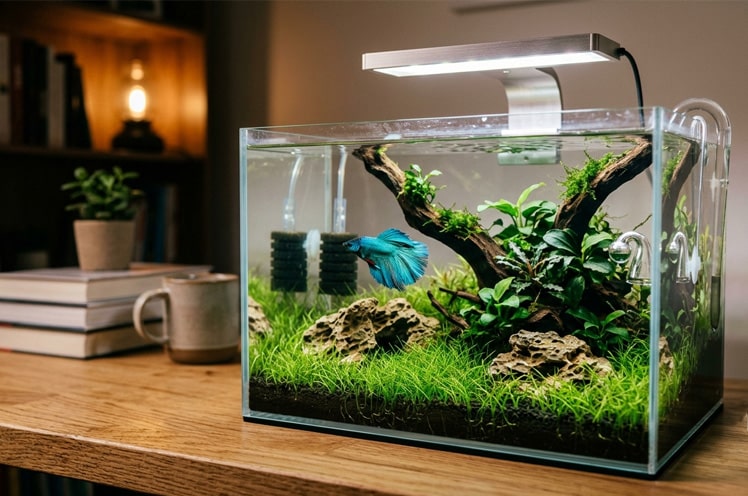
There is something mesmerizing about a tiny, perfectly aquascaped world sitting right on your desk — a slice of nature indoors without sacrificing floor space. But here’s what the glossy Instagram photos leave out: smaller spaces demand a completely different strategy. A miniature ecosystem is actually harder to keep thriving than a massive display tank, because there’s zero margin for error. Whether you’re trying to dodge the hidden “nano tax” of mismatched equipment, comparing all-in-one kits, or avoiding the classic overstocking mistake, you’re in the right place.
Disclosure: AquaLogicHQ.com is a participant in the Amazon Services LLC Associates Program, as well as other affiliate programs, designed to provide a means for us to earn fees by linking to Amazon.com and affiliated sites at no extra cost to you. Please see the Affiliate Disclosure for more details.
Best Nano Aquarium Tanks TLDR:
- What counts as “nano” tank: Generally under 10 gallons, split into Pico (under 3 gal, inverts only), True Nano (3–6 gal), and Large Nano (7–10 gal) — smaller means less room for error, not less work.
- Watch the “nano tax“: Standard equipment (heaters, filters) is built for bigger tanks, so scaling down often costs more per gallon and eats up precious swimming space.
- Best fix: All-in-One (AIO) kits hide filtration behind a false back wall for a clean look and properly matched flow. Top picks: Fluval Spec V (best overall), Aqueon MiniBow (easiest maintenance), NICREW Nano Nature (best budget rimless).
- Going custom? Avoid oversized HOB filters, preset non-adjustable mini-heaters, and coarse gravel — all common mismatch traps.
- Water chemistry is unforgiving: Small volume = fast, dramatic swings. Top off with RO/distilled water, do small weekly 10–20% water changes, and don’t overfeed.
- Stock defensively: Pick a lane — shrimp colony or a single Betta or a small school like Chili Rasboras. Don’t mix schoolers, centerpiece fish, and cleanup crews in under 10 gallons.
| Product Recommendations | Best For | Capacity | Price | |
|---|---|---|---|---|
| Fluval Spec V | Bettas & Planted Aquascapes | 5 Gallons | $130 | Check price |
| Aqueon LED MiniBow | Absolute Beginners & Kids | 5 Gallons | $75 | Check price |
| NICREW Nano Nature | Dwarf Shrimp & Moss gardens | 2.5 Gallons | $60 | Check price |
Jump Down To Nano Tank Reviews
The Nano Scale Breakdown
In the fishkeeping world, the term “nano” gets thrown around a lot, but what does it actually mean in practice?
Ask five different aquarists, and you might get five different answers, but the general consensus in the hobby defines a nano aquarium tank as any setup under 10 gallons (approx. 38 liters).
While some hobbyists stretch the definition to include tanks up to 15 gallons, the true defining characteristic of a nano tank isn’t just the literal water volume—it’s the distinct spatial footprint and the environmental limitations that come with it.
To give you a better idea of what you are working with, nano setups generally fall into three sub-categories:
- Pico Tanks (Under 3 Gallons): Extremely small footprints, often small cubes or cylinders sitting on a nightstand or office desk. These are strictly reserved for invertebrates like pest snails or a few dwarf shrimp, and they require expert-level precision to stay stable.
- True Nano Tanks (3 to 6 Gallons): The sweet spot for a single centerpiece inhabitant or a dedicated shrimp colony. These easily fit on standard furniture but offer just enough volume to hold a cycle reliably.
- Large Nanos (7 to 10 Gallons): The most forgiving of the bunch. A 10-gallon rimless cube offers massive layout potential for aquascaping while giving you slightly more flexibility with equipment and livestock choice.
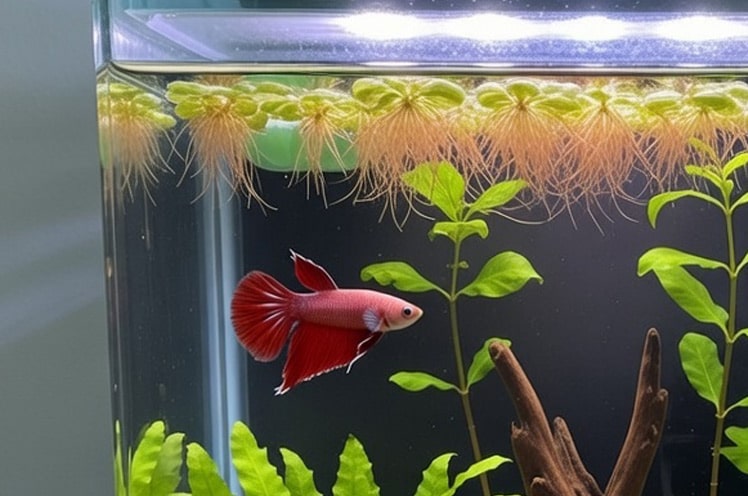
Ultimately, a nano tank is less about saving time on maintenance and more about maximizing a compact footprint. You are trading horizontal swimming space for a highly concentrated, visually striking focal point. Because every single inch matters, choosing the right shape—whether it’s a standard rectangle, a perfect cube, or a panoramic curved display—will dictate exactly what kind of micro-ecosystem you can successfully build.
The Myth of the Cheap Small Tank (The Nano Tax)
When you walk into a local fish store or browse online, the price tag on a bare 5-gallon glass tank looks like an absolute steal. You think, “Perfect, this will be a cheap, easy little project.”
The nano tax is the hidden premium you pay when outfitting a compact setup. While the raw glass itself might be inexpensive, scaling down the essential equipment—the filter, the heater, and the light—to fit a tiny, precise spatial footprint is where the budget gets stretched. In fact, building a custom nano tank piece-by-piece often costs significantly more per gallon than setting up a standard, mass-produced 20-gallon long aquarium.
Here is why the math turns against your wallet, and how to avoid the mismatch trap.
The Footprint Problem: The Gear Mismatch Struggle
When you build a large tank, equipment selection is incredibly forgiving. If a filter flow is a little strong, the fish move to the other side. If a heater is an inch too tall, it slants across the back wall.
In a nano aquarium tank, you don’t have that luxury. The dimension mismatch struggle is real:
- The Heater Hazard: Standard, reliable aquarium heaters are often 8 to 10 inches long. Put that in a 5-gallon cube, and it will literally stick out of the top of the water. If you buy a cheap, preset “mini-heater” to save space, you lose the ability to adjust the temperature, which often leads to underheating or, worse, cooking your tank. See my aquarium heater guide for more info.
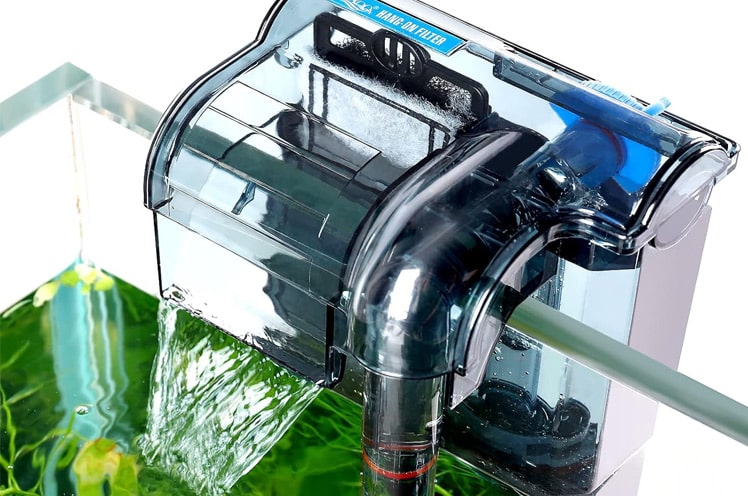
- The Filter Whirlpool: A standard hang-on-back (HOB) filter or small internal filter might technically be rated for a 5-gallon volume, but its physical flow rate can turn a small footprint into a high-velocity washing machine, shredding the fins of a Betta or exhausting tiny dwarf shrimp.
- The Crowded Visuals: By the time you drop a standard heater, a bulky internal filter, and intake pipes into a 5-gallon space, you have used up 30% of your actual swimming volume. Your beautiful aquascape is now completely crowded out by ugly plastic gear.
The Antidote: All-in-One (AIO) Kits
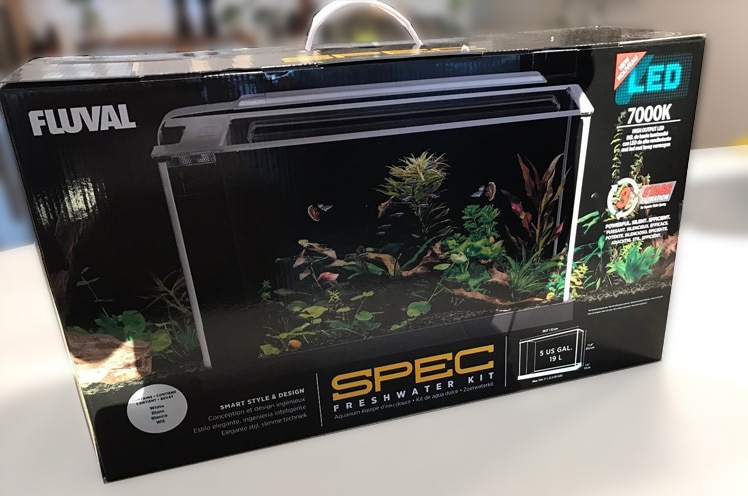
If you want to dodge the nano tax and skip the headache of measuring equipment down to the millimeter, All-in-One (AIO) kits are the smartest entry point for beginners and pros alike.
Instead of forcing you to hunt down rare, miniature components, these kits feature integrated filtration compartments hidden behind a false back wall. The pump, mechanical media, and even the heater are tucked completely out of sight. This gives you a seamless, clean visual profile, perfectly calibrated water flow, and a guaranteed equipment match right out of the box—saving you both cash and frustration.
Do Nano Tanks Need an Air Pump?
For a standard, lightly-to-moderately stocked AIO nano kit, don’t feel like you’re missing a piece of gear if there’s no air pump in the box. Add one if you switch to a sponge filter or if you ever see your fish gasping at the surface — not as a default purchase.
The short answer: Usually not, if you’re running an AIO kit. The internal pump that drives the filtration also creates enough surface agitation and water movement to keep oxygen levels stable in a tank this size — that’s part of what you’re paying for with an all-in-one setup.
There are a few situations where I’d add an air pump:
You’re running a sponge filter instead of the kit’s built-in filtration. Sponge filters are air-driven by design, so if you go that route (common for shrimp-only setups where you want zero suction risk), you need a small air pump to run it. My air pump guide breaks down which nano-sized ones I’d actually use — most standard pumps are way oversized for a 2.5 to 5-gallon tank.
Your tank is heavily stocked or planted with strong lighting. More livestock and more light-driven plant activity both increase oxygen demand. If you notice fish hanging near the surface, that’s your sign.
You’re fighting a summer heatwave. Warm water holds less dissolved oxygen, and a nano tank heats up and cools down fast since it has almost no thermal mass. A cheap battery or USB air pump is worth having on hand for this exact scenario — I cover it in my guide to cooling fish tank water.
My Top 3 Nano Kits Compared
If you are looking to skip the gear-matching puzzle completely, an All-in-One (AIO) kit is the most streamlined way to get started. By bundling the tank, pump, integrated filtration, and lighting into a single package, these kits eliminate the headache of dealing with an unseemly tangle of wires and mismatched components.
| Nano Kit | Capacity | Footprint Style | Best For | Standout Feature |
|---|---|---|---|---|
| Fluval Spec V | 5 Gallons | Long / Horizontal | Bettas & Planted Aquascapes | Superior multi-stage filter compartment |
| Aqueon LED MiniBow | 5 Gallons | Bowfront / Compact | Absolute Beginners & Kids | SmartClean Technology for lightning-fast water changes |
| NICREW Nano Nature | 2.5 Gallons | Compact Cube | Dwarf Shrimp & Moss gardens | Ultra-clear rimless glass at a budget price |
My In-Depth Nano Kit Reviews
1. Fluval Spec V (5-Gallon) — Best Overall Horizontal Setup
If you want to give your livestock plenty of horizontal swimming space while building a beautifully terraced aquascape, the Fluval Spec V is the gold standard for five-gallon kits.
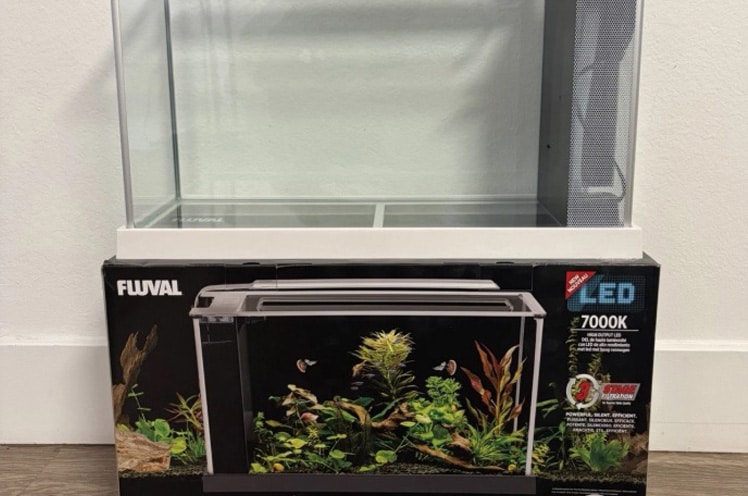
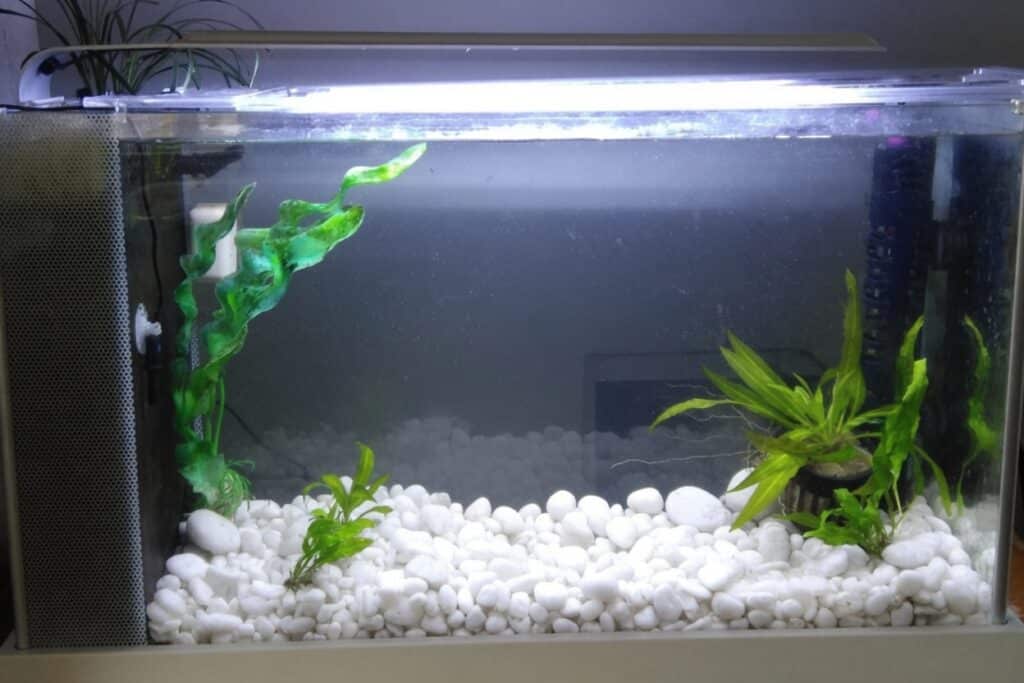
- The Footprint: Its elongated shape (20.5 x 11.6 x 7.5 inches) gives it a dramatic, panoramic look that fits perfectly on low bookshelves, wide desks, or counter spaces.
- The Flow Profile: The stock pump comes with an adjustable output nozzle — great out of the box for high-flow fish. If you’re keeping a long-finned Betta, dial the pump down to its minimum setting or place a small piece of aquarium sponge over the output nozzle to keep the current gentle.
- What I Like: The crown jewel of this kit is the oversized, hidden filtration zone on the side. It uses a massive block of mechanical foam, a dedicated pocket for activated carbon, and BioMax ceramic rings. Because the chamber is so roomy, it’s incredibly easy to customize and holds a rock-solid cycle.
- What I Don’t Like: The stock plastic lid has a large cutout in the center to let light pass through, but that open hole leads to noticeably faster evaporation — you’ll need to top off with freshwater once or twice a week. The stock pump flow can also turn the tank into a whirlpool if you don’t dial it down to its lowest setting.
- What You Should Know: This tank isn’t strictly shrimp-safe out of the box — the lower filter intake slats are wide enough for baby shrimp to get pulled into the pump chamber. If you plan on breeding shrimp, budget a couple of dollars for a pre-filter sponge or fine mesh cover to block those slots.
- Cost: About $130.00
- 4.5 Stars (234 Amazon Reviews)
2. Aqueon LED MiniBow (5-Gallon) — Best for Easy Maintenance
If you are worried about the upkeep of a tiny ecosystem, the Aqueon MiniBow simplifies the process. Made of durable acrylic rather than heavy glass, its bowed front panel offers a classic look while integrating a unique, hassle-free maintenance feature.
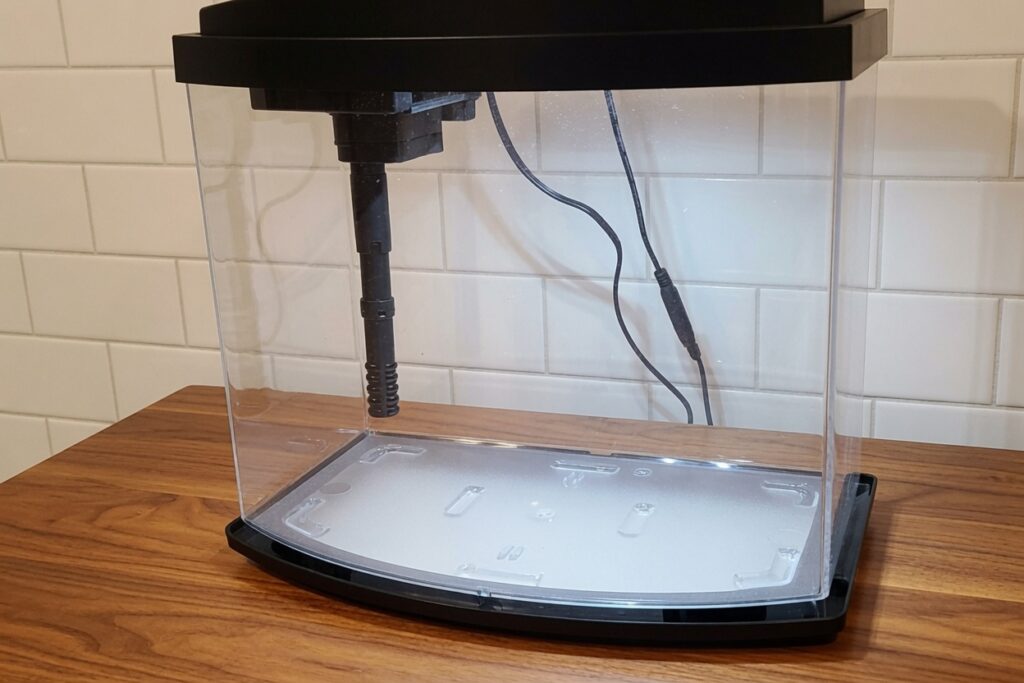
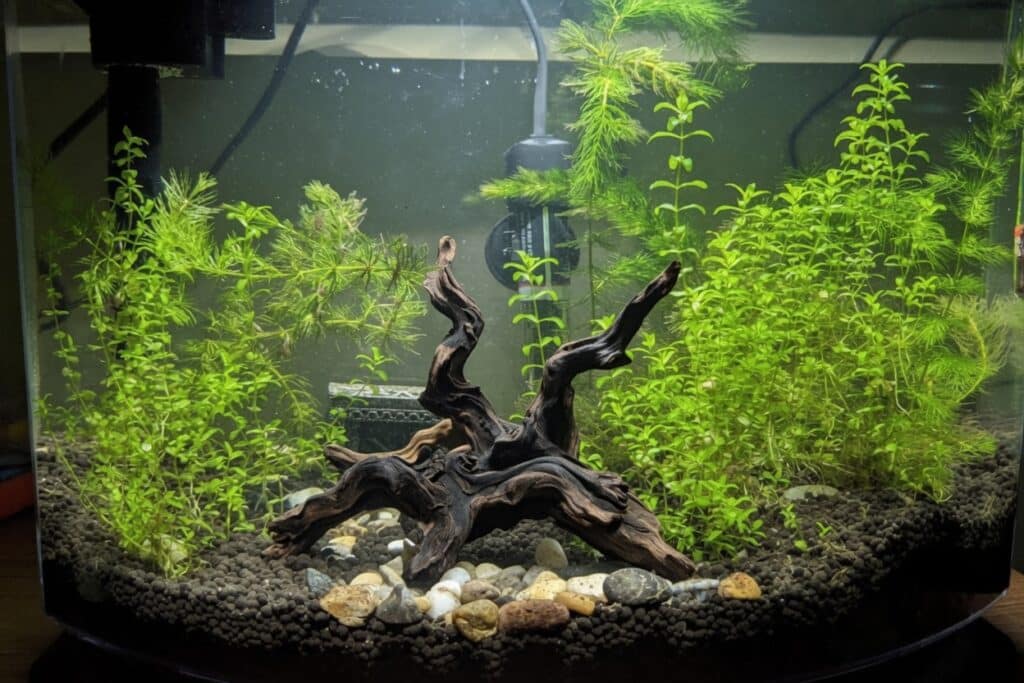
- The Material & Construction: Because it uses molded acrylic, the tank is lightweight and completely seamless from the front. It also features a fully enclosed low-profile hood with integrated LED lighting, which prevents jumpers and keeps evaporation to a minimum.
- What I Like: The SmartClean Technology is a lifesaver for absolute beginners. The power filter has a built-in water change spout that swings out over an empty container — turn the pump on, and it drains dirty water right out of the tank in under two minutes. No manual siphon tubes or bucket hauling required.
- What I Don’t Like: The built-in hood lighting is fine for basic viewing and bulletproof, low-light plants like Anubias or Java Fern, but it doesn’t have the power or spectrum to grow high-tech, carpeted aquascapes.
- What You Should Know: Because the hood is fully sealed to prevent jumps and contain evaporation, you can’t easily swap or upgrade the lighting later without removing the entire lid. It’s also acrylic, which handles impacts well but can scratch if you use a rough, coarse algae scrubber.
- Cost: About $75.00
- 4.1 Stars (5,606 Amazon Reviews)
3. NICREW Nano Nature (2.5-Gallon) — Best Budget Rimless Choice
For those looking to dip their toes into high-end aquascaping without dropping serious cash, this ultra-compact kit offers a premium visual style on a budget.
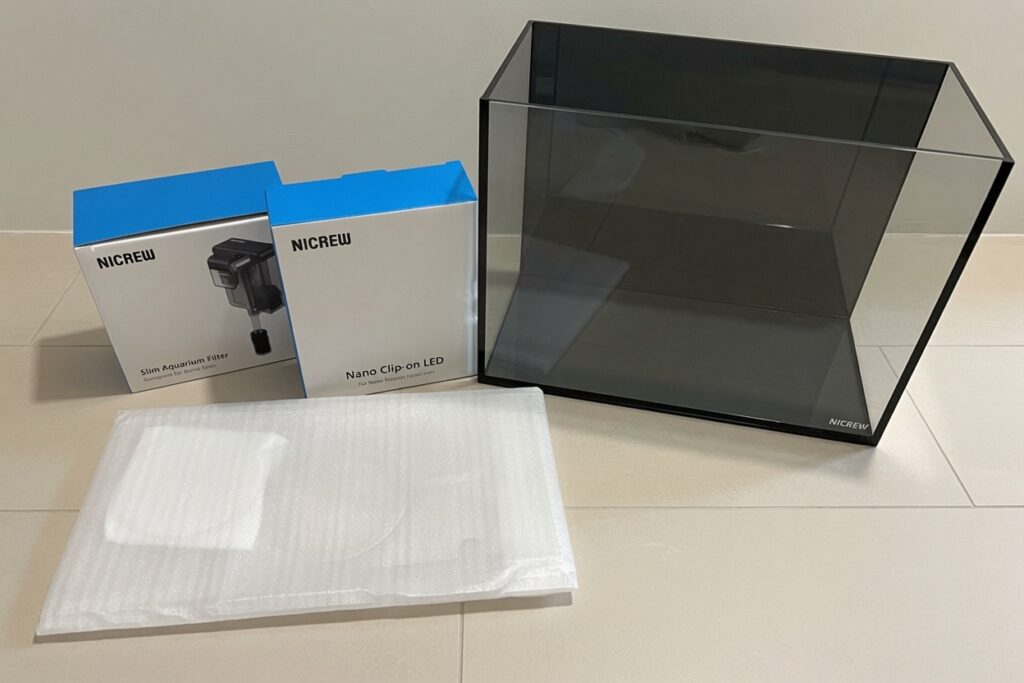
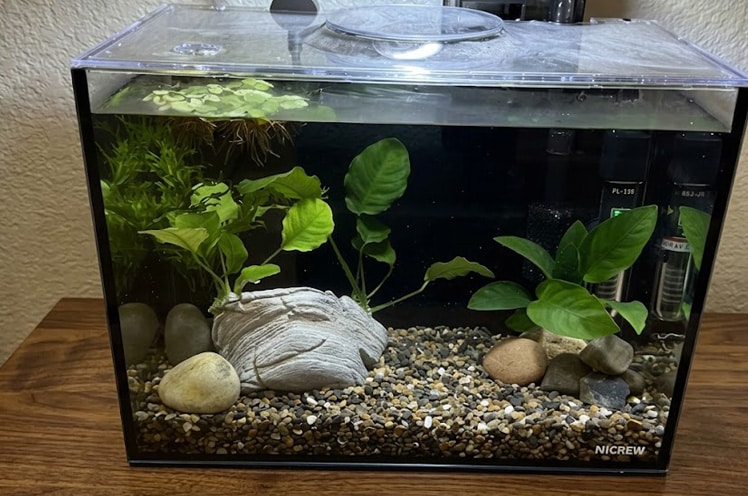
- The Layout: At 2.5 gallons, your biological constraints are strict. The included filter is basic but effective for keeping the water clear, making it a solid desktop home for a vibrant colony of Cherry or Crystal Red shrimp.
- What I Like: The glass quality is stellar for the price point — 91.2% ultra-clear, low-iron glass. This eliminates the classic greenish tint found in cheaper mass-market tanks, giving you crisp, true-to-life colors on your hardscape and livestock. It looks like a high-end rimless display sitting on your desk.
- What I Don’t Like: The included slim filter and clip-on nano LED light are entirely external. Given the tiny footprint (11.8 x 6.3 x 8.66 inches), having the filter hang on the back and the light clip to the rim means your gear is fully visible and can detract slightly from that clean, minimalist look.
- What You Should Know: At 2.5 gallons, your water volume is exceptionally small — evaporation or an uneaten pinch of food can shift your parameters in a matter of hours. This setup is a fantastic choice for a dedicated shrimp colony or moss garden, but it’s too small for active fish species.
- Cost: About $65.00
- 4.6 Stars (859 Amazon Reviews)
Going Custom? What NOT to Buy Piece-by-Piece
If you decide to skip the all-in-one kits and build a custom nano aquarium tank piece-by-piece, you have complete creative freedom. You can pick the exact glass dimensions, choose ultra-clear silicone, and curate high-end gear.
However, building custom down at this scale is a minefield. When you are shopping for individual components, standard retail shelves are working against you. Most equipment is engineered for larger tanks, and scaling down requires a very specific eye.
Here is exactly what you should avoid buying if you are piecing together a custom nano setup.
1. Oversized Hang-On-Back (HOB) Filters
It is a common rule of thumb in the hobby to “over-filter” your tank. While that is great advice for a 40-gallon setup, it backfires spectacularly in a nano tank. If you hang a standard power filter rated for a 20-gallon tank onto a 5-gallon rimless cube, you will create a high-velocity whirlpool. Long-finned fish like Bettas will be constantly exhausted fighting the current, and dwarf shrimp will spend all their time pinned behind rocks just to stay stable.
- What to use instead: Look for a dedicated nano HOB filter with a built-in flow adjustment knob, or opt for a tiny sponge filter driven by a reliable air pump.
2. Preset, Non-Adjustable Mini-Heaters
Walk into any big-box pet store, and you will see cheap, plastic, flat mini-heaters labeled “for 2-5 gallon tanks.” Almost all of these are preset to heat the water roughly 5 to 7 degrees above room temperature, or they are locked permanently at 78°F (25.6°C) with no thermostat control. If your room temperature fluctuates heavily, or if the internal sensor fails, these cheap units will either leave your tank freezing or literally cook your livestock overnight.
- What to use instead: Buy a micro-sized, fully adjustable glass or titanium heater with a digital thermostat control. It might take up an extra inch of space, but it keeps your temperature locked exactly where it needs to be.
3. Coarse, Heavy Substrates
Thick, chunky gravel looks incredibly out of scale in a tiny aquarium, making the tank look smaller than it actually is. More importantly, large gaps between pieces of gravel act as traps for uneaten fish food and waste. In a tiny tank, that trapped organic matter rots quickly out of sight, spiking your parameters before you even realize what happened.
- What to use instead: Stick to fine aquarium sands or specialized, fine-grain aquascaping soils. They look proportional to the space, give tiny root systems a place to anchor, and keep waste sitting on top of the substrate where your siphon can easily reach it.
The Golden Rule of Nano Water Chemistry
If there is one concept that determines whether your nano tank thrives or crashes, it is understanding the relationship between water volume and environmental stability.
Beginners often buy small tanks because they assume a smaller volume means less work. In reality, the exact opposite is true. Large aquariums are incredibly forgiving because they have a massive buffer.
Think of it like this:
In a 50-gallon tank, a dead snail rotting in a corner is an afterthought—the massive volume of water dilutes the waste completely. In a 5-gallon tank, that exact same dead snail is a biological bomb that can cause an ammonia spike capable of wiping out the entire ecosystem in a single afternoon.
The Dilution Effect
Every time your fish eat, breathe, and produce waste, they release toxic ammonia into the water. Your beneficial bacteria cycle handles this, turning it into nitrates. However, evaporation also plays a massive role in a nano ecosystem.
When water evaporates from your tank, it leaves all the dissolved minerals, salts, and waste compounds behind. In a 5-gallon tank, losing just half a gallon of water to evaporation means your water parameter concentrations shift by a massive 10%. That sudden shift in Total Dissolved Solids (TDS) and pH can shock sensitive inhabitants like dwarf shrimp.
How to Keep a Nano Ecosystem Stable
To keep your water chemistry pristine without spending hours on maintenance, stick to these three non-negotiable rules:
- Top Off Consistently with RO or Distilled Water: Because evaporation concentrates minerals, never top off your evaporated water with tap water (which introduces more minerals). Keep a jug of pure Distilled or Reverse Osmosis (RO) water on hand to top off the tank to its original line every few days.
- Small, Frequent Water Changes: Never do a massive 70% water change on a nano tank unless it is an absolute emergency. Stripping that much water alters the chemistry too quickly. Instead, perform small, gentle 10-20% water changes once a week. It takes less than five minutes at this scale, but it keeps your parameters rock-solid.
- Be Ruthless with Feeding: The biggest cause of nano tank failure is overfeeding. A fish’s stomach is roughly the size of its eye. Feed tiny, controlled pinches that your fish can completely consume in under 60 seconds, and immediately siphon out any food that hits the substrate uneaten.
Case Study: My Early Overstocking Mistake
When I first got into nano aquariums, I fell hard for the “miniature world” aesthetic. I picked up a gorgeous 5-gallon rimless cube, threw in some high-end aquascaping soil, arranged some beautiful dragon stone, and planted a lush carpet of dwarf hairgrass. Visually, it was a masterpiece.
Then came the livestock selection.
I went to my local fish store with a list of “nano” fish I’d seen online. I bought a single male Betta to be the centerpiece star. But then I saw a school of brilliant Neon Tetras and thought, “They’re tiny; a half-dozen of them will look amazing schooling around the rocks.” To round things out, I grabbed three Otocinclus catfish for algae control and a handful of Cherry Shrimp.
On paper, every single one of those creatures was small. In reality, I had just created a biological time bomb.
The Crash
For the first two weeks, everything seemed fine. But a 5-gallon tank simply does not have the surface area or water volume to support that much activity. The problems started cascading rapidly:
- The Behavioral Shift: Neon Tetras need horizontal swimming space to school properly. In a tight 5-gallon cube, they became stressed, territorial, and started nipping at my Betta’s long, flowing fins.
- The Ammonia Spike: Even with an upgraded filter, the sheer volume of waste (bioload) from ten animals outpaced my beneficial bacteria. I noticed my fish gasping at the surface. A quick water test revealed ammonia levels spiking out of nowhere.
- The Algae Explosion: Getting the ammonia under control left the tank with a nitrate surplus from the extra bacteria and water changes. Combined with my high-end aquascaping lights, my beautiful green paradise turned into a thick, soup-like forest of hair algae within 48 hours.
I spent the next three weeks doing daily 20% water changes, battling algae, and ultimately having to rehome the Neon Tetras and Otocinclus to a much larger 20-gallon setup just to save their lives.
The Lesson Learned
My mistake wasn’t understanding the size of the fish; it was failing to understand their spatial and biological needs. Just because a fish physically fits inside a tank doesn’t mean it belongs there.
In a nano aquarium tank, you have to choose a direction. You can have a dedicated shrimp colony, or you can have a single centerpiece fish like a Betta. Trying to mix schooling fish, centerpieces, and cleanup crews in under 10 gallons leaves zero margin for error and guarantees a stressful environment for your livestock.
The Nano Tank Stocking Guide
To make sure you don’t repeat my early mistakes, I’ve put together a defensive stocking guide. This layout outlines exactly what you can safely keep based on your tank size, prioritizing environmental stability and the psychological well-being of the inhabitants.
| Tank Size | Safe Inhabitants | Plants Welcomed? | Difficulty Level |
| 3 Gallons | Neocaridina Shrimp (6-8) OR Ramshorn/Nerite Snails | Yes (Mosses, Anubias Nana Petite) | Hard (Strict parameter monitoring) |
| 5 Gallons | 1 Male Betta OR Dedicated Nano Shrimp Colony | Highly Recommended (Bucephalandra, Crypts) | Moderate (Standard entry point) |
| 10 Gallons | School of Chili Rasboras (6-8) OR Endlers Livebearers (6, Males only) | Yes (Full aquascape potential) | Easier (More forgiving water volume) |
Nano Stocking Calculator
Nano Tank Stocking Calculator
Enter your tank size and what you want to keep — get a safe, defensive stocking count.
Critical Bio-Load Warning: Never combine schooling fish (like Rasboras or Tetras) with a Betta in anything under 10 gallons. The restricted physical space forces territory overlap, which causes chronic stress, fin nipping, and sudden biological crashes.
Approved Nano Species Spotlight
If you are looking for livestock that genuinely thrives in compact footprints, keep your eyes open for these three hobby favorites:
- Chili Rasboras (Boraras brigittae): These are true micro-predators, topping out at just 0.7 inches. A school of 6 to 8 can live comfortably in a well-planted 10-gallon tank. Their vibrant red coloration looks stunning against a dark green plant backdrop.
- Neocaridina Shrimp (Cherry, Blue Dream, etc.): With a virtually non-existent bioload, a thriving colony of dwarf shrimp is the ultimate choice for small 3- to 5-gallon spaces. They act as a built-in cleanup crew and are endlessly fascinating to watch graze.
- Endler’s Livebearers (Poecilia wingei): Smaller and more colorful than standard guppies, active male Endlers bring tons of energy to a 10-gallon tank. Just make sure to buy only males, or your nano setup will be overrun with fry within a month!
Frequently Asked Questions
When it comes to managing a nano aquarium tank, a few specific questions pop up more than any others. Here are the direct answers to the most common dilemmas nano tank owners face.
Can I keep a Betta fish in a 3-gallon tank?
While a Betta can technically survive in a 3-gallon setup, it is highly recommended to use a 5-gallon tank as the absolute minimum standard. In a 3-gallon space, the water volume evaporates too quickly, causing rapid shifts in water parameters that stress the fish. A 5-gallon layout gives your Betta proper swimming room, leaves space for live plants, and makes maintaining a stable nitrogen cycle significantly easier.
Do nano tanks absolutely need a heater?
Yes, if you are keeping tropical livestock like Bettas, Chili Rasboras, or Neocaridina shrimp, you absolutely need a heater. Because nano tanks hold so little water, they have zero thermal mass—meaning they drop to room temperature almost instantly. If your air conditioning kicks on or your home cools down at night, your tank temperature will plummet, shocking your fish’s immune system. Look for a high-quality, adjustable micro-heater to keep temperatures locked between 75°F to 80°F (24°C to 27°C).
How many shrimp can I safely keep per gallon?
As a general rule of thumb, you can safely keep 5 to 10 dwarf shrimp (like Cherry Shrimp) per gallon of water, provided the tank is fully cycled and planted. They have an incredibly low biological footprint. In a well-balanced 5-gallon tank, a starting colony of 10 to 15 shrimp can easily grow into a thriving population without overloading your filtration system.
Do I need to use live plants in a nano setup?
While you don’t have to, live plants are highly recommended for nano aquariums. Because your water volume is so small, you need all the biological help you can get. Live plants act as natural filters, actively absorbing toxic nitrates and ammonia from the water while pumping out fresh oxygen. Low-maintenance choices like Anubias Nana Petite, Java Moss, and Bucephalandra thrive in nano footprints without taking over the entire tank.
How often should I clean a nano filter?
You should gently rinse your nano filter media in a container of removed tank water once every two weeks. Never rinse your filter pads under tap water, as the chlorine will instantly wipe out your beneficial bacteria. Because nano filters use smaller sponges and cartridges, they can clog with organic waste much faster than larger systems, which can quickly restrict water flow and cause a dangerous parameter dip if ignored.
Bringing Your Miniature World to Life
Diving into the world of nano aquariums is one of the most rewarding challenges in the fishkeeping hobby. While the hidden “nano tax” and the strict rules of small-scale water chemistry can catch beginners off guard, the payoff is completely worth it. A carefully planned, well-stocked 5 or 10-gallon setup offers all the beauty and fascination of a massive display tank, scaled down perfectly to fit right on your desk or countertop.
The secret to long-term success isn’t spending hours on maintenance—it’s choosing the right foundation from day one. By opting for a streamlined, all-in-one kit like the Fluval Spec V or the beginner-friendly Aqueon MiniBow, respecting your biological boundaries, and stocking defensively, you can easily avoid the classic pitfalls and build an ecosystem that truly thrives.
Take your time, let your tank cycle completely, and enjoy the process of crafting your own thriving micro-aquascape!

I founded AquaLogicHQ to share hands-on, tested strategies that come from 3-month algae battles and countless hours perfecting the nitrogen cycle. My mission is simple: I've made most of the mistakes on my four active tanks and am sharing the answers so you can avoid disaster in yours. When I’m not elbows-deep in a water change, I’m putting the latest hobby gear through its paces to see if it actually delivers.
- Best Canister Filters For Fish Tanks: What I’d Actually Buy for a Big Tank - July 26, 2026
- The Best Nano Aquarium Tanks I’ve Actually Run in My Fish Room - July 19, 2026
- The Best Fish Tank Heaters: Ranked and Sized for Your Setup - July 4, 2026