Updated 22 July 2026
I view oxygen as the lifeblood of the ecosystem. Whether you’re driving a sponge filter in a nano betta tank or powering an aeration stone in a 50-gallon community, the logic is the same: you need a pump that is reliable enough to run 24/7 and quiet enough that it doesn’t ruin your living room. After 15 years of dealing with vibrating, buzzing, and failing pumps, I’ve narrowed the market down to the only units that actually deserve a spot under my tank stands.
Quiet Fish Tank Air Pumps TLDR Cheat Sheet:
- Quietest for Nano Tanks: Hygger Ultra Quiet — piezoelectric element, tested at ~30 dB for dead-silent shallow setups.
- Most Reliable Workhorse: Tetra Whisper — classic dome design, tested at ~35-40 dB, with cheap diaphragm rebuild kits.
- Best Adjustable Dual Flow: Uniclife Dual Outlet — control dial tunes bubble volume and noise, from ~35 dB at 50% power up to ~45 dB at full flow.
- Best for Large Tanks & True Silence: Hygger 8W — tested under 35 dB.
- The Essential Backup: USB Battery Powered Pump — tested at ~30-35 dB, runs off a phone power bank during outages.
| Product Recommendations | Best For | Type | Price | |
|---|---|---|---|---|
| Hygger Ultra Quiet | Nano tanks, shallow setups under 12″ | Piezoelectric | $15-$20 | Check price |
| Hygger 8W | Large tanks (50+ gal) & true silent operation | Premium | $40+ | Check price |
| Tetra Whisper | Reliable, repairable workhorse up to 40 gal | Basic | $25-$35 | Check price |
| Uniclife Dual Outlet | Running two accessories at once | High Flow | $15-$25 | Check price |
| USB Battery Powered Pump | Emergency backup during power outages | Battery Backup | $19-$35 | Check price |
Jump To Air Pump Reviews
Disclosure: AquaLogicHQ.com is a participant in the Amazon Services LLC Associates Program, as well as other affiliate programs, designed to provide a means for us to earn fees by linking to Amazon.com and affiliated sites at no extra cost to you. Please see the Affiliate Disclosure for more details.
Does a Fish Tank Need an Air Pump? (Why Aeration Matters)
The short answer is no, not every aquarium requires a dedicated air pump, but every tank absolutely requires surface oxygenation.
The logic comes down to gas exchange. Fish don’t actually breathe the underwater bubbles themselves; they breathe the dissolved oxygen (O2) created when those bubbles break the surface film of the water. This movement allows fresh oxygen into the water and lets trapped carbon dioxide (CO2) escape.
When You Can Skip an Air Pump
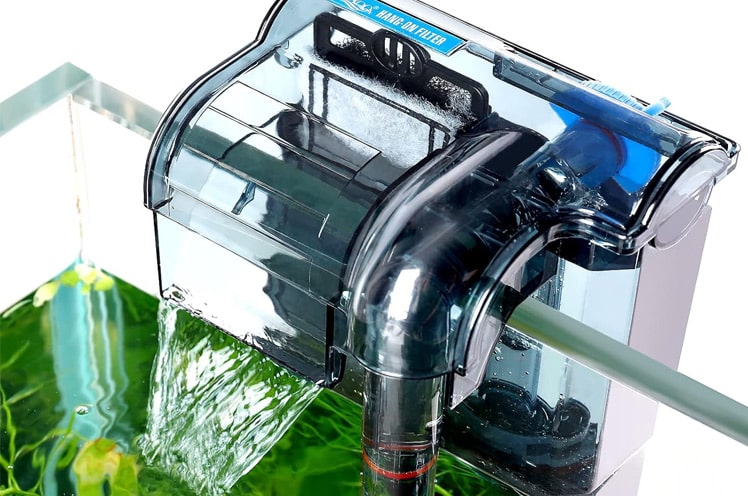
If you have a high-quality Hang-On-Back (HOB) filter or a canister spray bar that already creates a steady, rippling splash across the water’s surface, your agitation is likely fine.
When an Air Pump is Mandatory
If your tank layout creates stagnant spots, or if you meet any of the criteria below, an air pump shifts from an optional accessory to a necessary piece of life support:
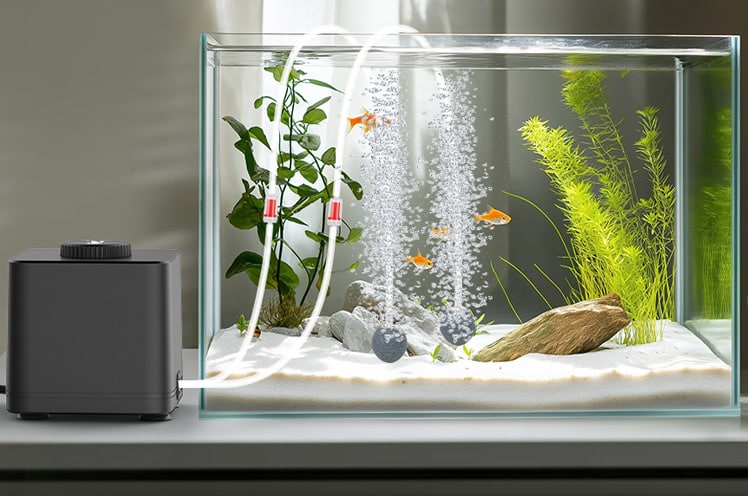
- Sponge Filter Power: Air pumps are the sole engine behind sponge filters, offering gentle biological filtration without creating a harsh washing machine current.
- Stagnant Odor Prevention: Breaking the surface film stops stagnant spots and prevents unpleasant odors. If you are dealing with a smelly setup, check out my guide on how to get rid of fish tank smells quickly.
- Algae and Cycle Boosting: Better overall circulation distributes nutrients evenly, which reduces opportunistic algae and supports beneficial nitrifying bacteria. You can see how this fits into the bigger picture in my easy nitrate reduction guide and my breakdown of the best starter bacteria.
- Handling Climate and Heat Spikes: This is a big one. Warm water holds significantly less dissolved oxygen than cool water — oxygen solubility in water measurably decreases as temperature rises, which is exactly why summer heat spikes are so dangerous for stocked tanks. Where I live, the summers get incredibly hot and humid. I used to see my fish visibly stressed in July until I added extra aeration to the water column. If you struggle with seasonal spikes, my guide on cooling a fish tank safely covers some great defensive strategies.
Signs your tank needs immediate aeration: You see an oily surface scum forming on top of the water, your sponge filter flow feels weak, or your fish are actively gasping for air near the surface.
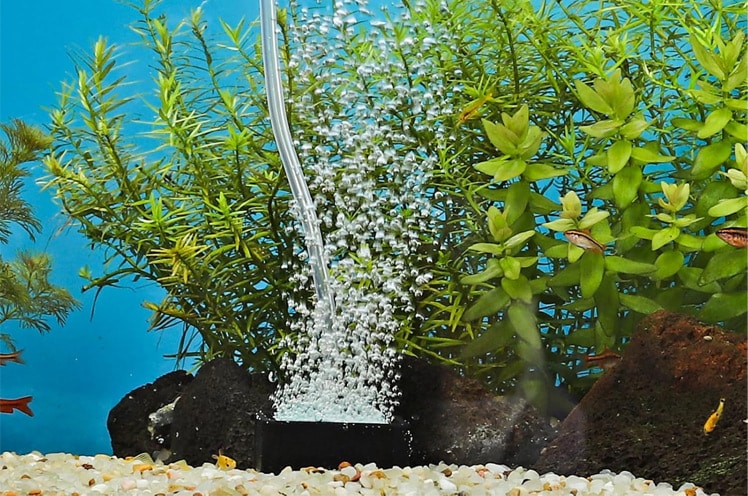
Types of Fish Tank Air Pumps
Air pumps vary by power, outlets, and features. Here’s a breakdown to match your tank.
Single or Dual Outlet Air Pumps
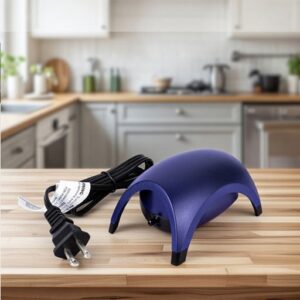
Description: 1-2 ports for basic use.
Best For: Small/medium tanks
Price Range: $10-25
Pros: Simple setup and cheap
Fully Adjustable Flow Air Pumps
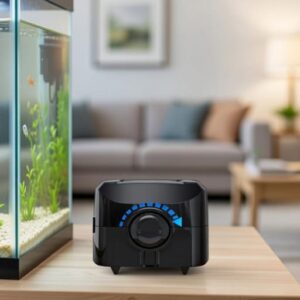
Description: Air volume flow control.
Best For: Medium-sized tanks with plants
Price Range: $20-40
Pros: Custom bubbles flow
Backup Battery-Operated Air Pumps
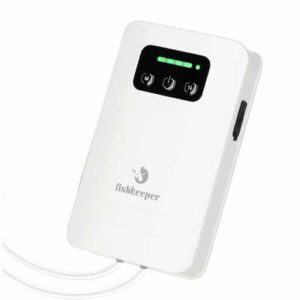
Description: Runs on batteries in outages.
Best For: Power loss-prone areas/moving setups
Price Range: $10-50
Pros: Safety backup for fish
High-Output/Multi-Port Air Pumps
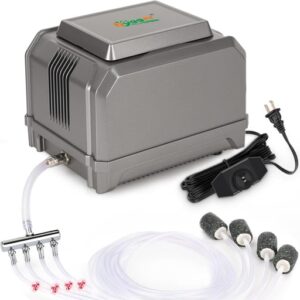
Description: 4+ air outlets, strong airflow.
Best For: Large tanks/Artificial ponds
Price Range: $40 and up
Pros: All-in-one pump style
Case Study: The 12-Hour Blackout
Last winter, a storm knocked out my power for over 12 hours. While the temperature drop was a concern, the real danger was the lack of oxygen. Without the filters running, the water surface in my 50-gallon community tank became stagnant, and my fish started gasping within four hours.
The Save: I keep two battery-operated portable pumps in my emergency kit. I dropped an airstone into the 50-gallon tank and another into my breeder tank.
The Result: Even though the water got a little chilly, those bubbles kept the oxygen levels high enough that I didn’t lose a single fish. Now, I tell every beginner I meet: Don’t wait for a storm to realize you need a backup plan.
How to Choose the Right Size Air Pump
Choosing an air pump isn’t just about finding the quietest model; it’s about ensuring your aquarium has enough surface agitation to facilitate gas exchange (CO2in, CO2out).
The Golden Rule of Getting The Right Size Pump
For a standard setup, you should aim for 0.5 to 1.0 liters per minute (LPM) of air for every 10 gallons of water. However, if you are running deep tanks or multiple sponge filters, you will need to account for backpressure.
Air Pump Sizing Chart
Use this table as a baseline for a standard community tank with a single airstone:
| Tank Size (Gallons) | Recommended Airflow (LPM) | Best Use Case |
| 5–10 Gallons | 0.5 – 1.0 LPM | Small sponge filters or nano airstones. |
| 20–30 Gallons | 1.5 – 2.5 LPM | Standard setups; ideal for 24-inch depths. |
| 50–75 Gallons | 3.5 – 5.0 LPM | Dual outlets; large bubble walls or multiple filters. |
| 100+ Gallons | 8.0+ LPM | Heavy-duty linear piston pumps. |
Factors That Require “Upsizing” Your Pump
If your tank meets any of the following criteria, move up one size in the chart above:
- Tank Depth: If your tank is deeper than 20 inches, the water pressure makes it harder for the pump to push air down. Look for a pump rated for “Deep Tanks.”
- Sponge Filters: These require more “lift” than a standard airstone.
- Heavy Stocking: More fish mean higher oxygen demand. If your tank is at capacity, err on the side of a more powerful pump.
Quick Tip: Always install a check valve. It costs less than $5 and prevents water from siphoning back into your pump during a power outage—a common cause of pump failure and “wet floors.”
How I Tested These Pumps for Real-World Noise (The Decibel Meter Setup)
“Quiet” is one of the most misused words in aquarium marketing. What sounds like a whisper in a noisy pet store can feel like a jackhammer in a silent living room at 11:00 PM.
To take the guesswork out of these reviews, I ran every pump through a standardized, real-world noise test using a sound meter app on my phone. While phone-based decibel apps aren’t perfect, modern smartphone microphones paired with calibrated spectrum analyzer apps are remarkably accurate for measuring sound changes within a controlled room—giving us a reliable head-to-head comparison.
My Testing Protocol
To ensure every pump was judged on a level playing field, I kept the environment identical for each test:
- The Ambient Baseline: I conducted all tests in a closed, silent room late at night to minimize background noise. The room’s natural ambient noise floor registered between 30 dB and 32 dB (equivalent to a quiet rural bedroom or soft breathing).
- Standardized Distance: I made sure my phone was placed exactly 12 inches away from the pump at a 45-degree angle to catch direct motor hum without obstructing airflow.
- Vibration Isolation: Because air pumps naturally vibrate, placing them on bare hardwood creates artificial “table rattle.” I tested every pump resting on a 1/4-inch mouse pad to ensure I was measuring motor and diaphragm sound, not furniture resonance.
- Real Backpressure Load: An air pump running in free air (without tubing attached) sounds completely different than one pushing air into water. Every unit was connected through a check valve to an airstone submerged at a fixed 12-inch depth in a 20-gallon tank to simulate real operating backpressure.
What the Numbers Actually Mean in Your Home
Decibel scales are logarithmic—meaning a 10 dB increase represents a sound that is roughly twice as loud to human ears. Here is how to translate these test results into your living space:
| Decibel Level (dB) | Real-World Equivalent | How It Feels Next to Your Tank |
| Under 35 dB | Soft rustling leaves / Quiet library | True Silence: Unnoticeable over normal household room sounds; perfect for bedrooms. |
| 35–40 dB | Quiet residential area / Soft hum | Very Quiet: A gentle, low background hum; easily drowned out by light TV or conversation. |
| 41–45 dB | Moderate refrigerator hum | Noticeable: Fine for a living room stand, but might bug you on a nightstand. |
| 46+ dB | Standard electric toothbrush | Loud: Creates annoying cabinet vibration; requires extra dampening pads. |
The 5 Best Noise-Free Fish Tank Air Pumps (Tested for Silence)
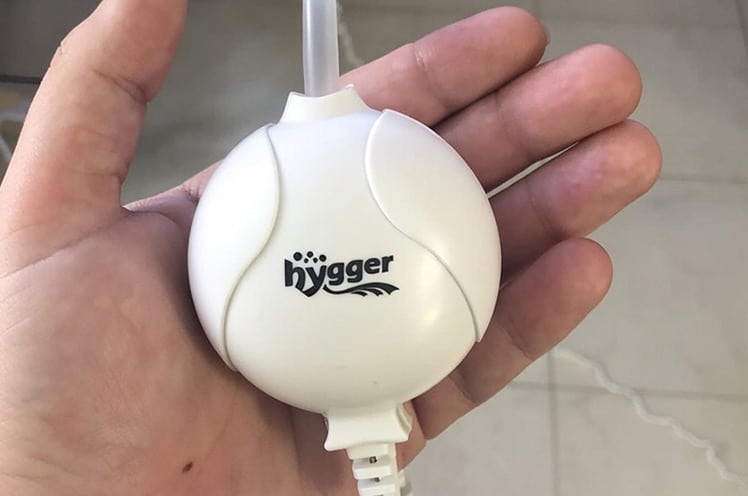
Hygger Ultra Quiet
Type: Mini / 5-20 gallon fish tanks
Avg Price: $15-20
Where I Use It: I use this on my nano betta tank. Because it uses a piezoelectric element instead of a traditional motor, it’s the quietest pump I’ve ever owned. However, it doesn’t have much ‘head pressure.’ I tried using it to power a deep air stone in my 50-gallon once, and it couldn’t push the air down that far. Keep this one for shallow tanks (12 inches deep or less).
- Pros: Exceptionally quiet because it uses a piezoelectric element instead of a traditional vibrating motor. Perfect for nano setups and shallow tanks.
- Cons: Low head pressure; cannot push air down into deep tanks (e.g., struggling at 50-gallon depths).
4.4 Stars based on 5,587 Reviews
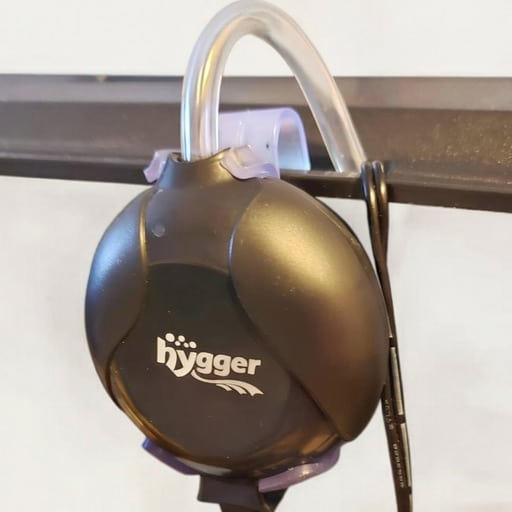
Decibel Level: ~30 dB (virtually silent, comparable to a quiet whisper or rustling leaves).
Tetra Whisper
Type: Basic / Up to 40 Gallons
Avg Price: $25-35
Where I Use It: This is the ‘workhorse’ in my fish room. I have the 40-gallon version running a sponge filter in my 20-gallon breeder. It’s not the most stylish pump, but it’s incredibly easy to repair. If it ever gets loud, you can buy a $5 diaphragm replacement kit, and it’ll run like new for another three years.
- Pros: Extremely durable and easy to repair—$5 diaphragm replacement kits give it a multi-year lifespan. Reliable workhorse for standard tanks.
- Cons: Classic dome aesthetic isn’t the most stylish. Can get noisier over time as the internal diaphragm wears down (though repairable).
4.5 Stars based on 44,891 Reviews
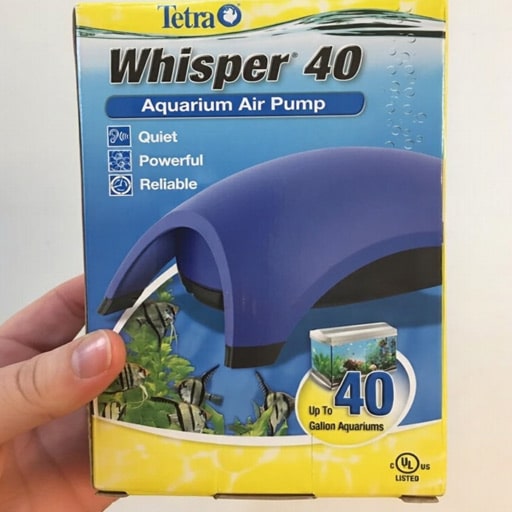
Decibel Level: ~35–40 dB. While Tetra doesn’t list an exact dB rating on the box, my tests place it in the quiet library range. Its unique dome shape and internal sound-dampening chambers specifically flatten noise frequencies.
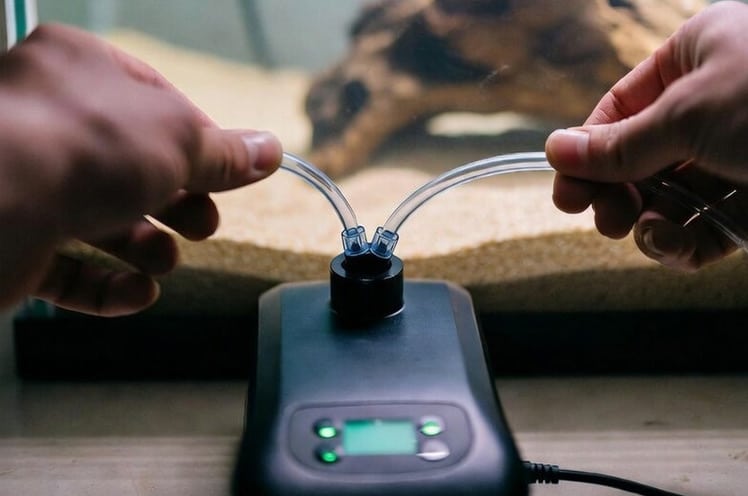
Uniclife Dual Outlet
Type: High Flow
Avg Price: $15-25
Where I Use It: This is what I use when I need to power two things at once, like an air stone and a small bubbler. The adjustment dial is the star here. I usually keep it at about 50% power; I’ve found that running any pump at 100% all the time makes it wear out faster and run much louder.
- Pros: Dual outlets allow running two accessories simultaneously. Built-in adjustment dial tunes both bubble flow and motor noise. Great value for the features at $15–$25.
- Cons: Running it at 100% capacity significantly increases wear and noise.
4.3 Stars based on 1,926 Reviews
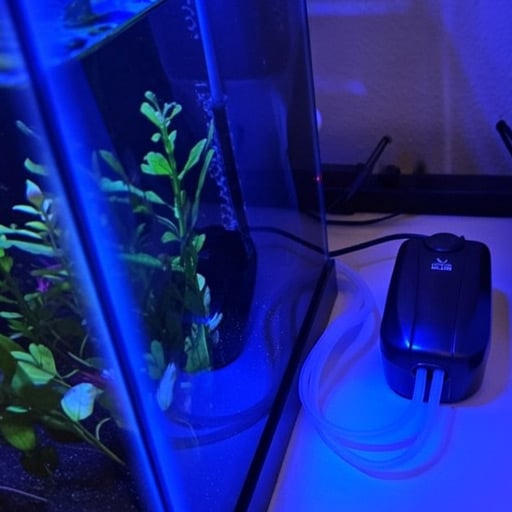
Decibel Level:~35–45 dB depending on dial setting. When dialed down to 50% power (as recommended), it operates quietly around the mid-30s dB range, but hums louder when pushed to maximum flow.
Hygger 8W Air Pump
Type: Premium
Avg Price: $40 and up
How I Use It: I saved up for this one for my 50-gallon community tank, and it was worth every penny. What makes it unique is that you can adjust the airflow directly at the airstone that comes with it. In my own use, I’ve also found it’s one of the only pumps I’ve found that truly stays silent even when it’s sitting on a hard wooden cabinet.
- Pros: Strong pressure capable of driving deep tanks. Airflow is adjustable directly at the airstone. Maintains silent operation even when resting on hard wooden cabinet stands.
- Cons: Higher price point ($40+). Newer model with fewer long-term aggregate reviews.
4.5 Stars based on 28 Reviews
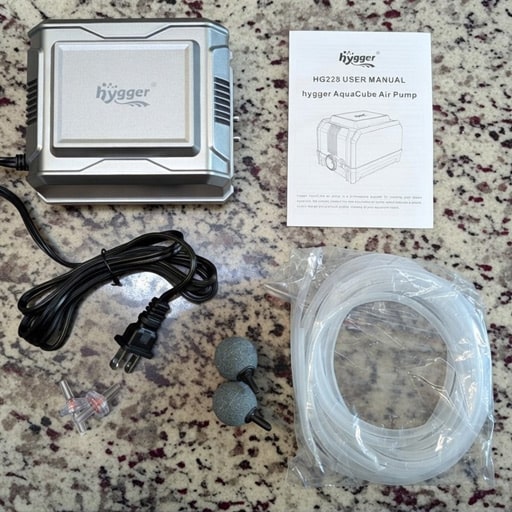
Decibel Level: Under 35 dB. Designed specifically with low-decibel dampening to prevent vibration transfer onto cabinet surfaces.
It doesn’t have the review volume of the others yet, but every owner I’ve seen mention it backs up the silent claim.
USB Battery Powered Fish Tank Air Pump
Type: Battery Backup (The “Life Saver”)
Avg Price: Between $19 and $35
Where I Use It: This is the exact pump I mentioned in my power outage Case Study. I keep two of these hanging off the back of my tanks at all times. They run off a standard USB brick, which means if the power goes out, I can just plug them into a portable phone power bank and keep my fish breathing for 24+ hours.
- Pros: Essential emergency gear—runs off standard USB power banks for 24+ hours during power outages. Portable and lightweight.
- Cons: Intended primarily for emergency aeration rather than serving as a heavy-duty, multi-tank main driver.
4.6 Stars based on 445 Reviews
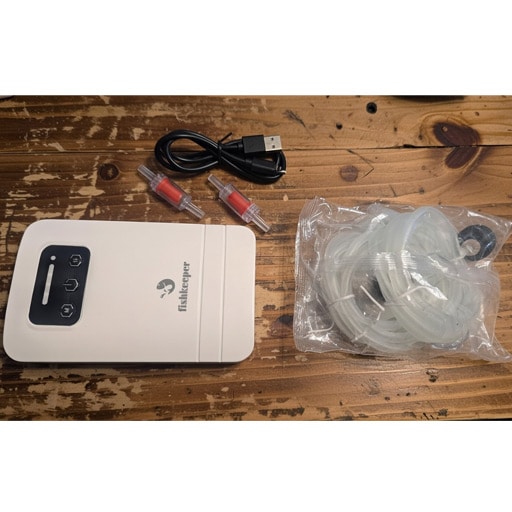
Decibel Level: ~30–35 dB. Because USB-driven motors operate on low voltage, they run relatively quiet with minimal hum.
My #1 Recommendation: Hygger Ultra Quiet for small tanks. It is one of the quietest pumps I’ve used.
For tanks up to 40 gallons, the Tera Whisper is also a solid choice for beginners.
Step-by-Step: How to Set Up Your Air Pump (The Right Way)
Setting up a pump is easy, but setting it up so it stays quiet and safe takes a few tricks I’ve picked up over the years.
1. Find the “Sweet Spot” (Pump Location)
If possible, place your pump above the water level of the tank. This uses gravity to prevent water from ever siphoning back into the air pump.
- Quick Tip: Air pumps create air by vibrating a rubber diaphragm, and that vibration turns into a loud “hum” on hardwood. I never set my pumps directly on the stand. Instead, I use a cheap neoprene mousepad or a thick piece of foam as a base. It absorbs the micro-vibrations before they hit the wood. If your pump is “walking” across the table, a small rubber band around the feet acts as a perfect parking brake.
2. Install the Check Valve & The Drip Loop
Cut your silicone tubing and insert a Check Valve about 6 inches away from the pump. Ensure the arrow on the valve is pointing toward the tank.
I never run an air line without a $2 check valve. It’s a simple logical insurance policy. If the power cuts, the water stays in the tank and out of your pump’s motor. I’ve seen $50 pumps ruined for the sake of a 10-second installation.
- Safety Tip: Even with a valve, I always use a Drip Loop. Make sure your power cord hangs below the electrical outlet before plugging it in. If water ever leaks or splashes onto the cord, it will drip off the bottom of the loop instead of running straight into your socket. I started doing this after a minor spill almost fried a power strip in my early days!
3. Connect Your Accessories
Attach the other end of the tubing to your air stone, sponge filter, or bubbler.
- Tip: I prefer Ceramic Air Stones for my 50-gallon tank because they produce finer bubbles, which means better oxygen exchange and less “splashing” at the surface.
4. The Bubble Test
Plug the pump in and check the surface of the water. You’re looking for a gentle ripple, not a geyser. While you’re at it, glance back at your check valve and the tubing leading up to it — you shouldn’t see any water creeping back up the line. If you do, your check valve isn’t oriented correctly (the arrow needs to point toward the tank) or it’s failed and needs replacing. If you have an adjustable flow pump, dial it back until the noise is low, but the bubbles are consistent.
5. Don’t Forget the Intake (Monthly Maintenance)
Most people forget that air pumps have a tiny felt filter on the bottom to keep dust out of the motor.
- Maintenance Tip: Every few months, flip the pump over. If that little white pad looks grey or brown, it’s clogged. A clogged intake makes the motor work twice as hard, making it louder and shorter-lived. Give it a quick cleaning or swap it out to keep the pump running silently.
Maintenance & Troubleshooting Tips
- Clean stones bi-monthly (vinegar solution soak).
- Replace diaphragms yearly if available for your air pump model.
- No bubbles, but the pump is? Check the valve to make sure it’s open and check the air stones for clogs.
- Noisy pump bothering you? Use a foam pad to dampen vibrations.
- Backup plan for a power outage: Have a battery-powered air pump just in case.
Follow these, and your pump runs trouble-free, supporting healthy oxygenation. Get more oxygenation info and why it’s important in my easy algae removal post.
Frequently Asked Questions: The “Air Pump” Troubleshooting Guide
Is my air pump supposed to get hot to the touch?
A little warmth is normal because the motor is working 24/7, but it should never be burning hot. If it feels like it’s overheating, check your airstone. If the stone is clogged with algae or calcium, the pump has to push harder against that back-pressure, which creates massive heat. Clean the stone, and the pump should cool down.
Can I hide my air pump inside my aquarium cabinet to muffle the noise?
You can, but be careful! Cabinets can act like a speaker box and actually amplify the vibration. If you do this, make sure the pump is on a mousepad and that the cabinet has enough ventilation. If the pump can’t breathe fresh air, it will overheat and fail prematurely.
Why are my bubbles getting smaller or stopping entirely?
Nine times out of ten, it’s not the pump—it’s the air stone. In my 50-gallon tank, I find that minerals in the water eventually clog the tiny pores in the stone. Drop your air stone in a mix of vinegar and water for an hour, scrub it with a toothbrush, and your bubbles should return to full strength.
My air pump is brand new, but it’s rattling like crazy. Is it broken?
Not necessarily. Check your tubing. If the silicone tubing is touching the side of the tank or the wooden stand, it will vibrate against it and create a rattling sound. Make sure the tubing has a clear “path” to the tank without touching any hard surfaces.
Do I really need an air pump if my filter already creates bubbles?
If you have a hang-on-back filter that creates a lot of surface splash, you might be fine—until you have a heatwave. Warm water holds less oxygen. In my part of the world, when the humidity hits in July, I always kick on an extra airstone. It’s better to have the extra O2 and not need it than to wake up to fish gasping at the surface.
How often should I replace the airline tubing?
I usually swap mine out once a year. Over time, silicone tubing gets stiff and can develop micro-cracks, especially where it connects to the pump. For a couple of dollars, it’s worth replacing it annually to ensure you aren’t losing air pressure to tiny leaks.
Conclusion: The Best Fish Tank Air Pump
The logic of choosing an air pump comes down to balancing output and peace. You want a pump that can push air to the bottom of your deepest tank without sounding like a lawnmower in your cabinet. In my 15 years, I’ve learned that “cheap” usually comes with a hidden cost: noise and vibration that can actually stress your fish (and you).
That’s exactly why I stopped trusting the word “quiet” on a box and started measuring it myself. Every dB number in this guide came from the same test rig, the same 12-inch distance, the same real backpressure load — so when I tell you the Hygger Ultra Quiet sits at 30 dB, and a hard-surface no-name pump creeps past 46, that’s a difference you can actually feel standing next to the tank, not just marketing copy.
In my 20-gallon long, I prioritize silent operation because it’s a display piece. In my breeding setups, I prioritize raw power to drive multiple sponge filters. Whatever your goal, always size your pump for the depth of your tank — not just the volume — to ensure the air has enough “push” to reach the stone. Don’t wait for a gasping fish or an ammonia spike to realize your aeration is lacking. Invest in a quality, repairable air pump now, and let your “AquaLogic” system run on autopilot while you enjoy the view.

I founded AquaLogicHQ to share hands-on, tested strategies that come from 3-month algae battles and countless hours perfecting the nitrogen cycle. My mission is simple: I've made most of the mistakes on my four active tanks and am sharing the answers so you can avoid disaster in yours. When I’m not elbows-deep in a water change, I’m putting the latest hobby gear through its paces to see if it actually delivers.
- Best Canister Filters For Fish Tanks: What I’d Actually Buy for a Big Tank - July 26, 2026
- The Best Nano Aquarium Tanks I’ve Actually Run in My Fish Room - July 19, 2026
- The Best Fish Tank Heaters: Ranked and Sized for Your Setup - July 4, 2026