I view nitrates as the ‘exhaust’ of your aquarium’s engine. While they aren’t as immediately lethal as ammonia, high nitrates are the silent driver of algae blooms and ‘Old Tank Syndrome.’ After 15 years of managing everything from nano betta tanks to my 50-gallon community, I’ve learned that lowering nitrates isn’t just about water changes—it’s about fixing the logic of your ecosystem. In this guide, I’ll show you how to drop your nitrate levels safely and, more importantly, how to keep them there.
If you are also struggling with pH swings, be sure to check out my guide on how to bring aquarium pH down easily.
Disclosure: AquaLogicHQ.com is a participant in the Amazon Services LLC Associates Program, as well as other affiliate programs, designed to provide a means for us to earn fees by linking to Amazon.com and affiliated sites at no extra cost to you. Please see the Affiliate Disclosure for more details.
The Nitrate Reality Check: What the Numbers Actually Mean
In 2026, we know that “0 nitrates” isn’t always the goal, especially in a planted tank. Here is how I judge my levels:
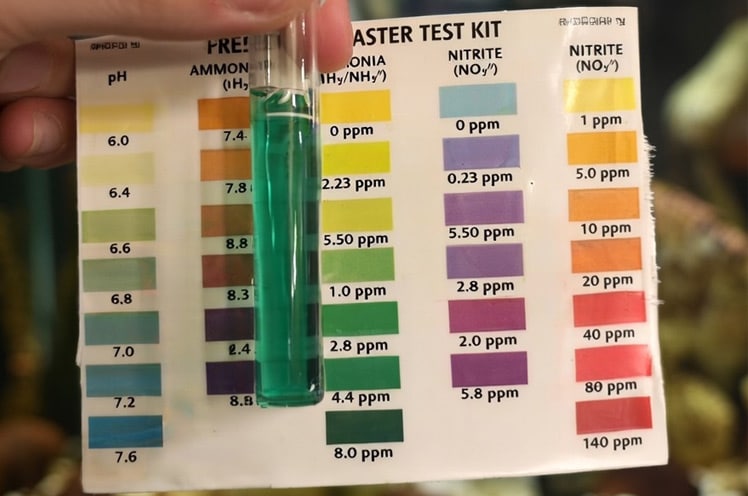
- 0-10 ppm: Perfect for sensitive shrimp and “high-tech” planted tanks.
- 10-20 ppm: The “Sweet Spot” for most community tanks.
- 40+ ppm: The Danger Zone. At this level, your fish are stressed, and an algae bloom is inevitable.
Quick Pro-Tip: If your nitrates are high even after a water change, test your tap water! In some agricultural areas, tap water can come out of the faucet with 10-20 ppm of nitrates already in it. If your source water is the problem, you may need to look into softening your aquarium water using RO water.
Test Your Tap Water
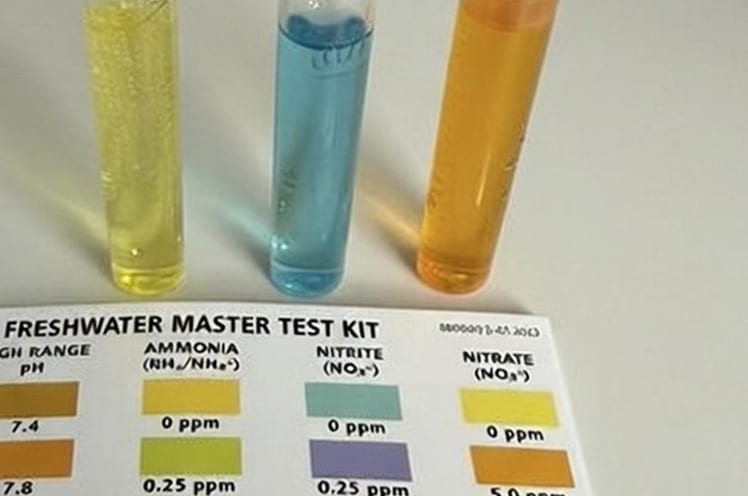
This should be the first logical step, but test your tap water! In many agricultural areas, tap water can have 20–40 ppm of nitrates right out of the faucet. If yours does, no amount of water changes will ever get you to zero. This is when I’d switch to the Reverse Osmosis/Tap mix. For more info about mixing RO and Tap water, I discuss it in detail over on my post about lowering pH.
The “Deep Clean” Strategy: Why Water Changes Aren’t Enough
If you just change the water, you’re only treating the symptom. To fix the cause, you have to go where the nitrates are “born”: the gunk.
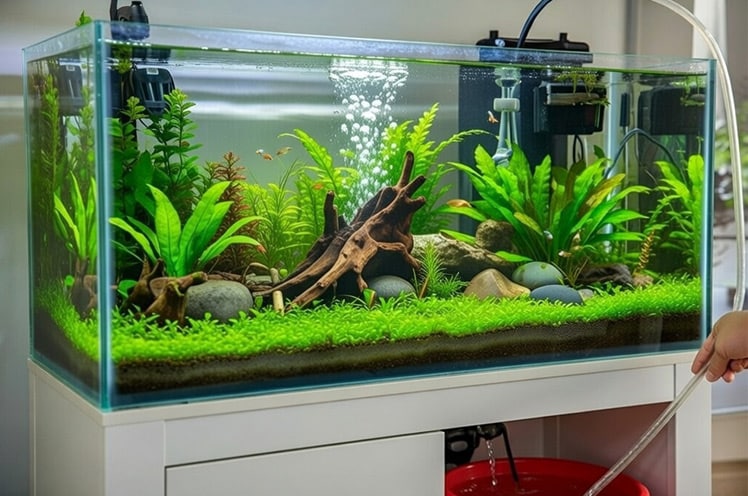
- Vacuum the Substrate: Nitrates are the end-product of decaying waste. If your gravel is full of “mulm,” it’s a nitrate factory. I like using a gravel vac on 50% of the floor every week.
- Clean the Filter Media: Clogged sponges trap fish waste and let it rot. I gently squeeze my sponges in a bucket of old tank water (never tap!) to keep the flow high. If your filter is constantly clogging, you might need to upgrade to one of the best aquarium filters for your tank size.
- Check the “Dead Zones”: In my 50-gallon, I noticed nitrates stayed high until I found a pile of decaying leaves stuck behind a piece of driftwood. Clear the hidden spots!
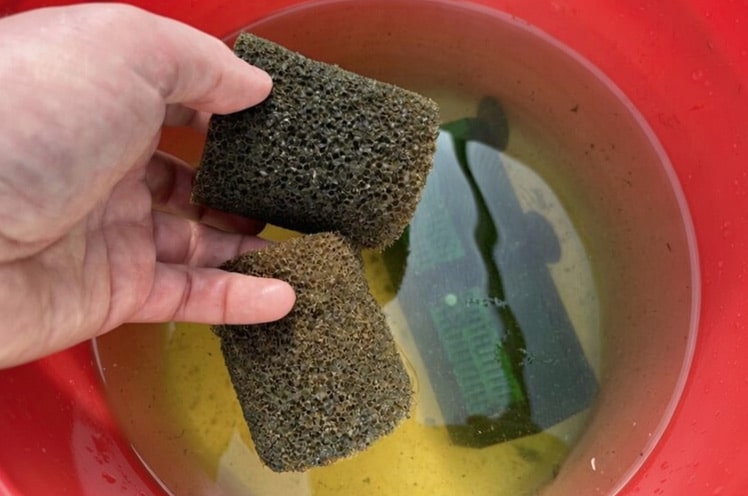
IMPORTANT NOTE: If your nitrates are 80+ ppm, don’t do a 90% water change. You’ll shock your fish with the sudden shift in chemistry. Use the ‘Logic of Dilution’: 20% changes every other day until you’re back in the safe zone.
Tools That I Use, That Actually Work For Lowering Nitrates in My Fish Tank
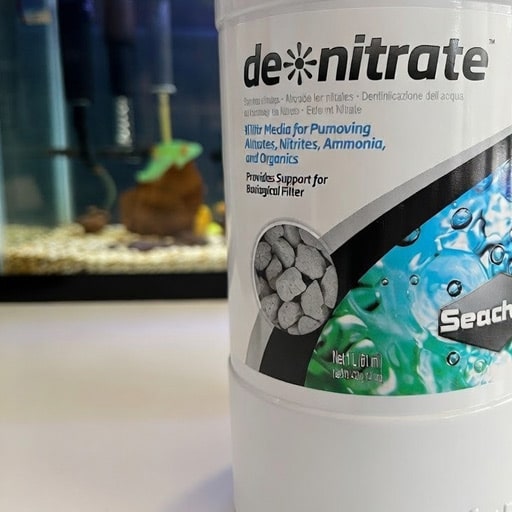
1. Seachem Denitrate
Description: A high-porosity stone media designed to house anaerobic bacteria that “eat” nitrates and helps with ammonia levels in your tank.
How I use it: I place this in the very last tray of my canister filter, where the water flow is slightly slower. This is the secret to getting those nitrate-consuming bacteria to colonize.
Cost: Starts at about $6 ($19 for 1L size pictured)
Get More Info At Amazon.com
4.4 Stars (1,205 Reviews)
2. API Nitra-Zorb
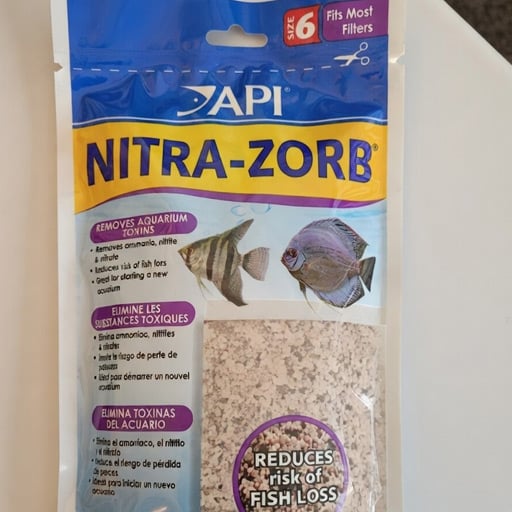
Description: A powerful ion-exchange resin pouch that pulls nitrates and ammonia out of the water quickly.
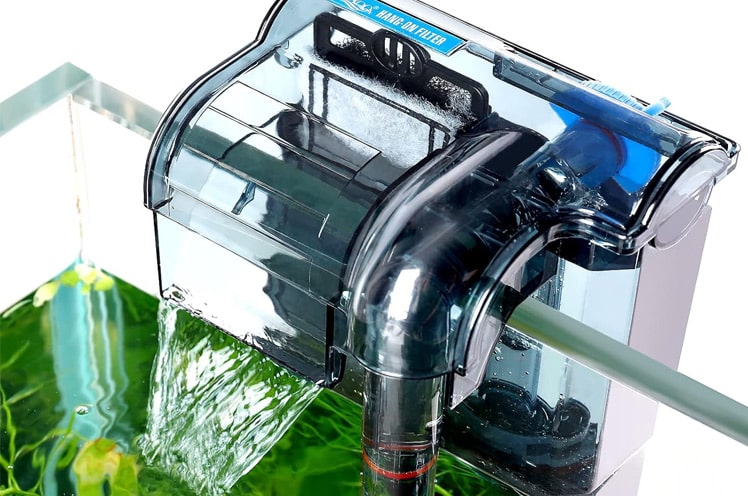
How I use it: This is my “Emergency Pouch.” If I have a spike (like after a short vacation), I drop this into my HOB (hang-on-back) filter to take care of the problem. It’s rechargeable with plain salt, which can save a ton of money over time.
Cost: About $17
Get More Info At Amazon.com
3. Floating Plants (Nature’s Sponge)
Description: Plants like Frogbit or Salvinia
How I use it: In my Nano Betta tank, I let floating plants cover about 30% of the surface. Their roots grow directly into the water, sucking up nitrates faster than almost any submerged plant. If you’re adding plants, make sure you have the best fish tank light for plants to keep them growing fast.
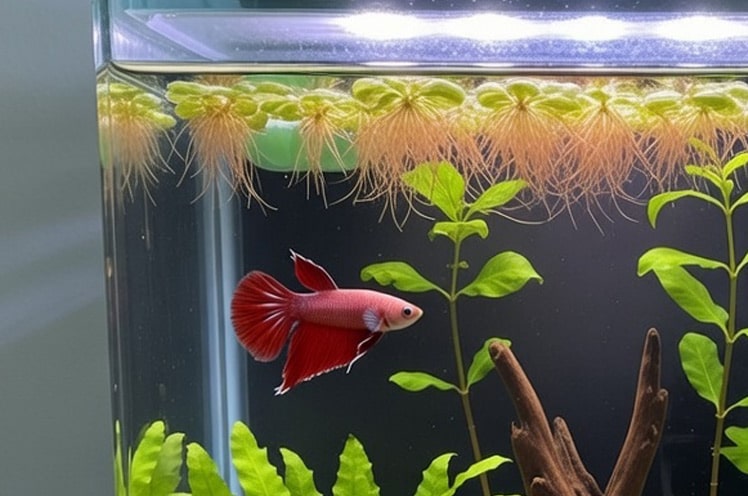
In my 20-gallon long, I keep a corner dedicated to floating plants. They are nitrate-eating machines because they have access to CO2 from the air, allowing them to process waste much faster than submerged plants.
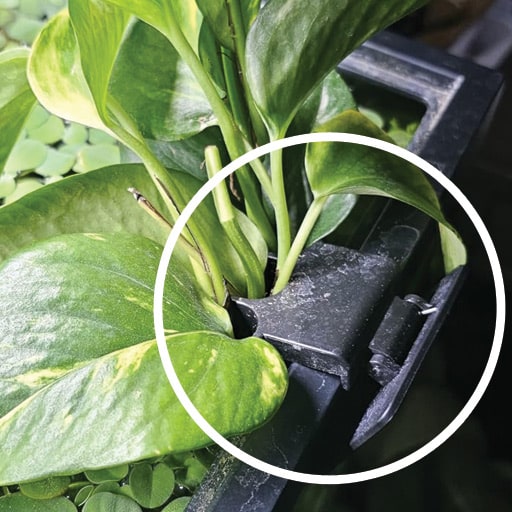
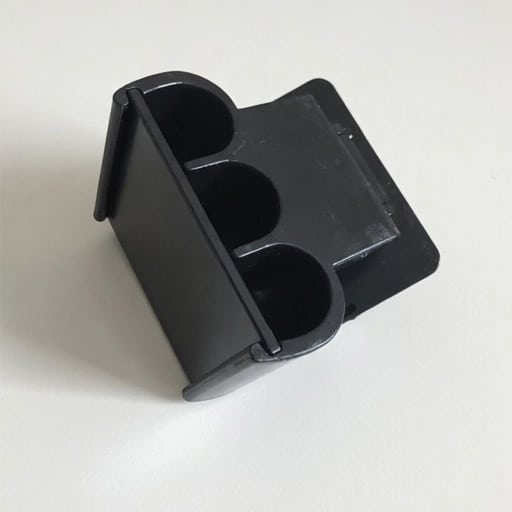
4. Pathos Cutting In HOB Filter or Plant Holder
Years ago, I learned about how Pathos acts like a vacuum for nitrates and had seen a few people setting a bit or it directly in their HOB(hang on back) filters. I love the idea, but aesthetically it doesn’t look great. Also, I should mention that it doesn’t work with a canister filter set up. Then I found these cheap clip-on plant holders that I can drop in some Pathos without having its roots cling to everything in the filter housing.
FAQs For Troubleshooting High Aquarium Nitrates
Why are my nitrates still high after a 50% water change?
If you have 80 ppm and do a 50% change, you still have 40 ppm—which is still high! Also, if your substrate is filthy, it will refill the water with nitrates within hours. You may need to do back-to-back 25% changes over three days to see a real difference.
Can I use a houseplant like Pothos to lower nitrates?
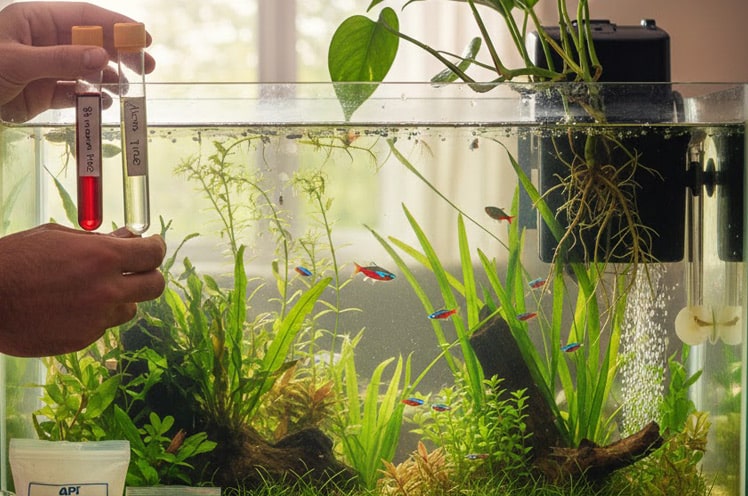
Yes! This is one of my favorite hacks. I stick the roots of a Pothos cutting directly into the back of my filter. The plant grows like crazy and eats nitrates for breakfast. Just make sure the leaves stay out of the water.
Is the 1 inch of fish per gallon rule accurate?
Honestly? No. It’s an old rule that doesn’t account for bioload. A 10-inch Oscar creates way more waste than ten 1-inch Tetras. Instead of counting inches, watch your nitrate levels. If they hit 40 ppm in less than a week, your tank is overstocked for your filtration.
Does “Old Tank Syndrome” involve nitrates?
Absolutely. If you don’t do water changes for months, nitrates can climb into the hundreds. Your fish slowly adapt, but if you suddenly do a massive 90% water change, the clean water can actually shock and kill them. If your nitrates are off the charts, lower them by 10% daily to be safe.
Can high nitrates cause algae?
Nitrate is basically plant food. If your plants aren’t growing fast enough to eat it, algae (like Hair Algae or Green Water) will step in to do the job. Check out my guide on how to remove algae from your aquarium easily to see how to handle the cleanup.
Will charcoal (activated carbon) remove nitrates?
No. Activated carbon is great for removing medications, odors, and tannins, but it does absolutely nothing for nitrates. For that, you need ion-exchange resins like Nitra-Zorb or biological media like Seachem Denitrate.
Can I use Prime to “remove” nitrates?
Seachem Prime can detoxify nitrates for about 24–48 hours in an emergency, but it does not remove them from the water. It just buys you time to perform a water change. Don’t rely on it as a permanent fix!
Do air stones lower nitrates?
Not directly. Air stones increase oxygen, which helps your beneficial bacteria process ammonia and nitrite into nitrate. However, they don’t help with the final step of removing the nitrate itself. For that, you need plants or water changes.
Why are my nitrates 0 in a cycled tank?
If you have a very heavily planted tank, the plants might be eating the nitrates as fast as the fish produce them. However, if you don’t have plants and your reading is 0, your tank might not be fully cycled, or your test kit might be faulty (nitrate liquid tests require a lot of shaking to work!). Check out my guide on how to lower ammonia to make sure your cycle hasn’t crashed.
What is the difference between Nitrite and Nitrate?
Nitrite is highly toxic and should always be 0. Nitrate is the much safer result of the aquarium cycle. Think of Nitrite as smoke (dangerous) and Nitrate as ash (messy, but won’t kill you immediately).
Final Thoughts On How to Lower Nitrate in Your Fish Tank
Nitrates are a permanent part of the hobby, but they don’t have to be a permanent headache. By balancing your bioload, utilizing fast-growing plants, and sticking to a logical maintenance schedule, you can keep your water pristine. If you’re struggling with a stubborn nitrate spike that won’t budge, leave a comment below or send me a message on the contact page with your tank size and livestock—I’ll do what I can to help you troubleshoot it. Don’t forget to check out my guide on accurate aquarium test kits to make sure your readings are accurate before you start making big changes

I founded AquaLogicHQ to share hands-on, tested strategies that come from 3-month algae battles and countless hours perfecting the nitrogen cycle. My mission is simple: I've made most of the mistakes on my four active tanks and am sharing the answers so you can avoid disaster in yours. When I’m not elbows-deep in a water change, I’m putting the latest hobby gear through its paces to see if it actually delivers.
- My Fish Tank Water Stinks! How to Kill Aquarium Odors Fast - April 15, 2026
- Best Aquarium Light for Plants - April 14, 2026
- Best Aquarium Substrate: A Guide to Sand, Gravel, and Soil - April 14, 2026