I believe that chasing ‘perfect’ numbers is crazy when it comes to testing, but providing the right environment for your fish is non-negotiable. If you’re keeping soft-water species like Discus or Bettas in liquid rock, you’re working against the biology of your tank. After 15 years of tinkering with everything from peat moss to RO units in my 50-gallon community, I’ve learned that the most effective way to soften water isn’t with a bottle of chemicals—it’s with a logical understanding of mineral dilution. In this guide, I’ll show you the three methods I use to bring GH and KH down safely without causing a pH crash.
How to Soften Your Aquarium Water (Quick Info):
The Safety Limit: Never let your KH drop to 0, or your pH could crash and stall your filter’s cycle.
The Fastest Method: Reverse Osmosis (RO) or Distilled Water. Diluting your tap water by 50% reduces hardness instantly.
The Natural Method: Driftwood, Peat Moss, or Indian Almond Leaves. These release tannins that slowly lower GH/KH over weeks.
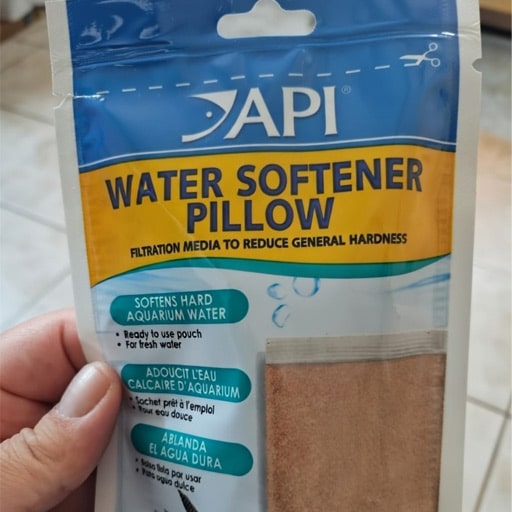
The Emergency Fix: API Water Softener Pillow. Swaps minerals for ions in 24-48 hours.
Disclosure: AquaLogicHQ.com is a participant in the Amazon Services LLC Associates Program, as well as other affiliate programs, designed to provide a means for us to earn fees by linking to Amazon.com and affiliated sites at no extra cost to you. Please see the Affiliate Disclosure for more details.
The Science: Why Hard Water Blocks Plant Growth (And How to Fix It)
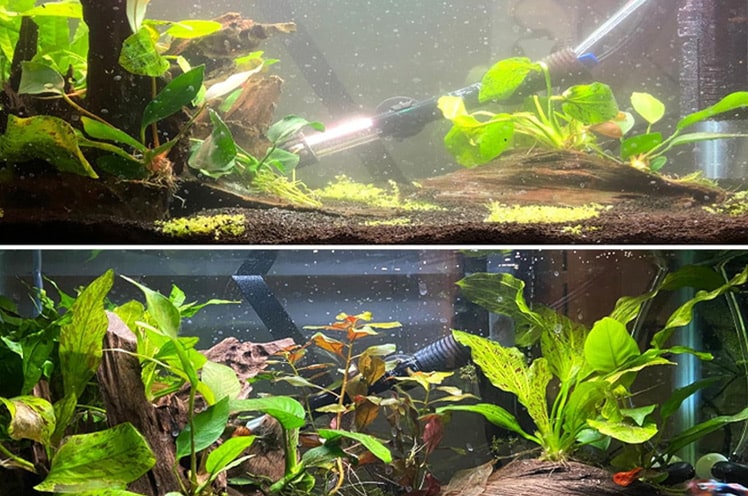
When you have ‘liquid rock,’ your plants suffer from nutrient lockout. High calcium levels essentially ‘choke’ the plant’s ability to take in iron. By using the dilution methods below, you unlock those nutrients and stop the yellowing (chlorosis) of your leaves.
In technical terms, high General Hardness (GH) means your water is saturated with Calcium and Magnesium. When these levels are too high, they can cause nutrient lockout.
According to scientific principles like Liebig’s Law of the Minimum, plant growth is dictated by the scarcest resource. In hard water, iron often becomes “immobile” and insoluble. This leads to interveinal chlorosis—where your new plant leaves turn yellow while the veins stay green. If you see this, your water is likely too hard for your plants to “eat.”
Before you start stripping minerals, you need to understand the difference between General Hardness (GH) and Carbonate Hardness (KH). Check my Water Hardness Guide to see which one is actually causing your ‘liquid rock’ problem.
The Softening Checklist: What You’ll Need
Don’t guess with your water chemistry. Before you start, grab these essentials:
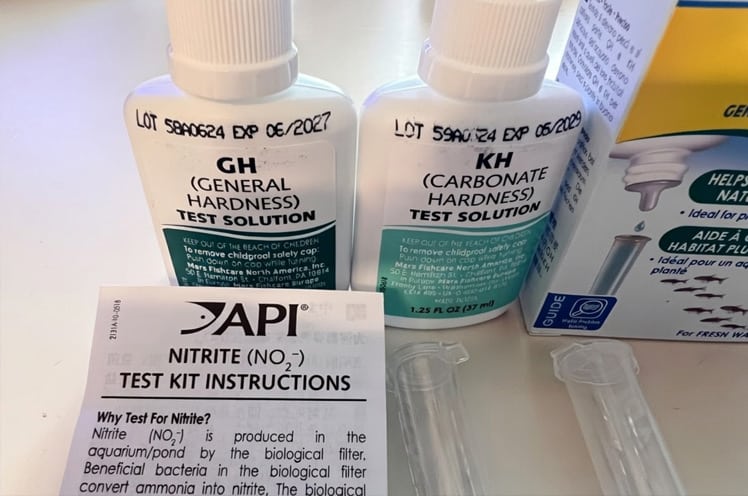
- Liquid GH/KH Test Kit: Strips are okay for a quick glance, but liquid kits are the gold standard for accuracy.
- RO or Distilled Water: The “magic eraser” for hard water.
- A Dedicated Mixing Bucket: Use a bucket reserved specifically for aquarium use (no household cleaners!).
Step-by-Step Guide: How I Soften My Tanks
Method 1: The 50/50 Dilution (easiest for everyone)
This is exactly how I maintain my 50-gallon community tank.
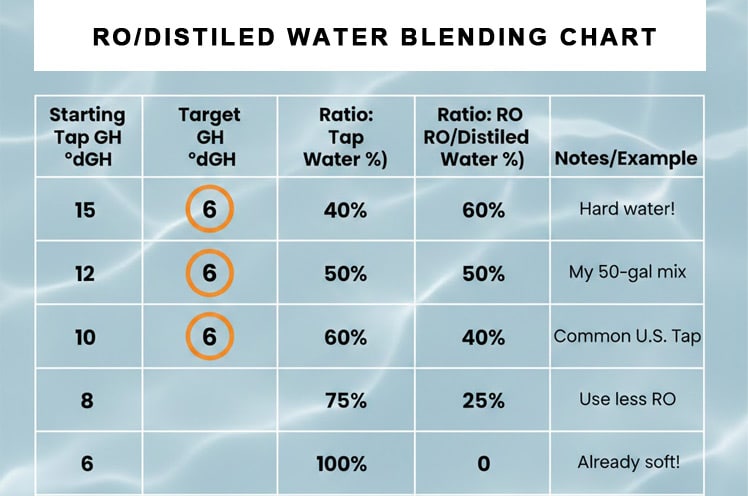
- Test your tap: My tap water usually comes out at 12 dGH.
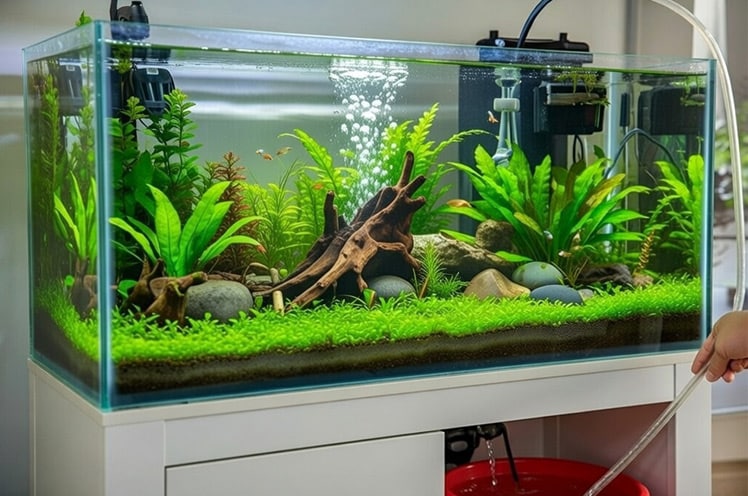
- The Mix: During my weekly water change, I mix 50% tap water with 50% Reverse Osmosis (RO) or Distilled water in my bucket.
- The Result: This brings my tank down to a perfect 6 dGH, which is the “sweet spot” for most tropical fish and plants.
Quick Tip: You don’t need 100% RO water. I use the logic of ‘Cutting the Deck.’ By mixing 50% distilled or RO water with 50% tap water, you reduce your hardness by half instantly without the expense of a full system.
Method 2: Natural Tannins (My preferred way)
In my 20-gallon long planted tank, I prefer a more natural approach using Driftwood.
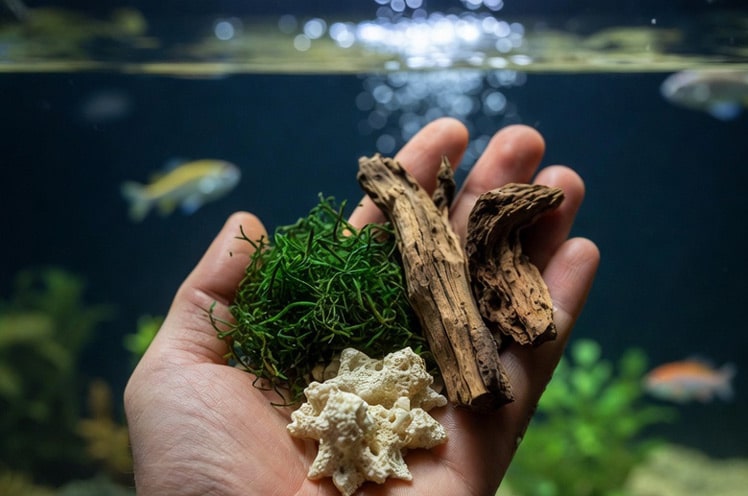
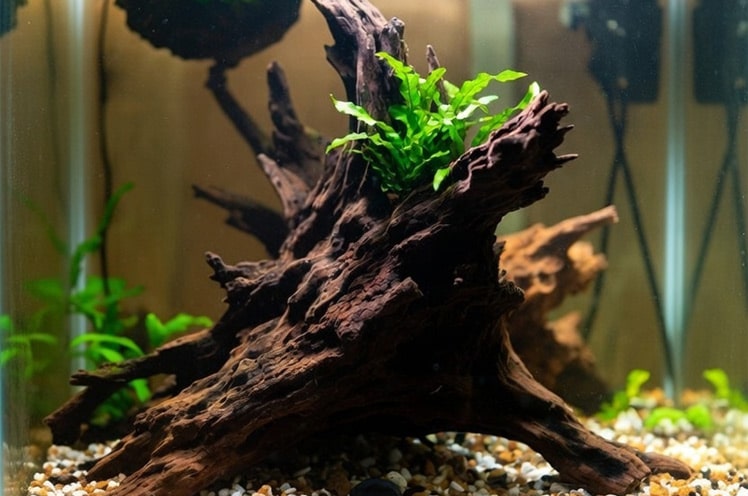
- How I use it: Before going into my tank, I boil it to kill bad bacteria and then drop in a bucket to let it soak. I like letting it soak as the wood will release heavy tannins that will darken up my tank water.
- What to expect: Over several weeks, the natural driftwood’s tannins will naturally soften up your tank’s water. It will give your water a slight “tea” tint, which looks incredible in a natural aquascape.
If you use driftwood or peat to soften your water but hate the tea-colored tint, you can follow my Clear Water Protocol to remove the stains without losing the soft-water benefits.
Many people want soft water but hate the ‘tea’ color of tannins. I’ll explain why I use Indian Almond Leaves in my nano betta setups not just for the softness, but for the antibacterial properties. If you hate the brown look, I’ll show you how to combine botanical softening with Seachem Purigen to keep the water soft but crystal clear.
Softening your water often leads to a drop in pH. If you are keeping sensitive species, read my guide on Lowering pH Safely to ensure you don’t trigger a dangerous acid swing while you soften the water.
Top 3 Natural Aquarium Water Softeners
Peat Moss: You can place a bag of aquarium-safe peat in your filter. This is the most “aggressive” natural method and will lower GH and KH effectively but will darken the water significantly.
Driftwood (Mopani or Bogwood): Releases tannins steadily. Best for long-term stability.
Indian Almond Leaves (Catappa): Excellent for nano tanks and Bettas. They soften water and provide antibacterial benefits.
Method 3: The “Emergency” Pillow
If you need a quick fix, the API Water Softener Pillow is a lifesaver.
- Pro-Tip: I only use these for short bursts (24-48 hours) to bring down a spike. They work by exchanging calcium/magnesium ions for sodium ions. Warning: Don’t leave them in forever, as too much sodium isn’t great for your plants!
How to Soften Aquarium Water Easily FAQs:
Can I boil tap water to make it soft for my fish tank?
The answer is a hard No. This is a common myth. Boiling actually concentrates minerals because only the pure water evaporates. If you want soft water without an RO system, buying a gallon of distilled water for a few dollars is a much safer option than boiling your kettle.
My pH is high, does that mean my water is hard?
Not always, but they are cousins. GH (Hardness) is the mineral count; KH (Alkalinity) is the buffer that keeps your pH stable. Usually, if you have high KH, your pH will naturally sit high (8.0+). When you soften your water by removing KH, your pH will naturally become easier to adjust.
Why is my water turning brown after adding peat or driftwood?
Those are tannins, and they are actually a sign that the softening process is working! Tannins provide natural antibacterial properties for your fish. If you hate the tea look, you can run Seachem Purigen in your filter—it clears the tint without removing the softening benefits.
Can I use Mopani or Spider Wood to soften water?
Yes! Driftwood is a fantastic long-term softener. Mopani wood is very dense and releases a lot of tannins, while Spider Wood is milder. Just remember to boil them first so they sink and don’t grow white fuzz in your tank.
Is a Water Softener for my house safe for my fish?
Avoid this. Most home water softeners replace calcium with sodium. While this is fine for your shower, many plants and sensitive fish (like Corydoras) don’t handle high sodium well. It’s much better to use a dedicated RO system.
Will Rainwater work for softening?
In theory, yes—rainwater is naturally soft. However, it can pick up pollutants from your roof or gutters. If you use it, you must run it through high-quality carbon filtration first to be safe.
What happens if I make the water too soft?
If your KH drops to zero, your pH can crash, meaning it drops rapidly. This can stall your nitrogen cycle. Always aim to keep at least 2–3 dKH to act as a safety net for your pH.
Final Thoughts On How to Soften Aquarium Water Easily
The logic of softening water is about creating a stable, stress-free home for your fish. In my 15 years, I’ve seen more tanks crash from people using “pH Down” chemicals than from the hard water itself. Nature moves slowly, and your adjustments should too. Whether you’re using Reverse Osmosis for a high-end breeding project or just adding some driftwood to a community tank, the goal is consistent mineral levels, not a perfect number on a chart.
In my own fish room, I prioritize the health of the livestock over the ego of a specific parameter. If your fish are thriving and breeding, don’t chase the clouds. But if you’re seeing mineral buildup or stressed fins, use the dilution and botanical methods I’ve outlined to bring your AquaLogic back into balance. Softening water doesn’t have to be a chemistry headache; with a bit of patience and the right tools, you can create a slice of the Amazon right in your living room
Want me to check your specific parameters? Drop your GH and KH numbers in the comments below, and I’ll help you figure out your ideal mix!

I founded AquaLogicHQ to share hands-on, tested strategies that come from 3-month algae battles and countless hours perfecting the nitrogen cycle. My mission is simple: I've made most of the mistakes on my four active tanks and am sharing the answers so you can avoid disaster in yours. When I’m not elbows-deep in a water change, I’m putting the latest hobby gear through its paces to see if it actually delivers.
- Best Aquarium Phosphate Removers: Stop Algae at the Source - April 22, 2026
- Fish Tank Water Green but No Algae? The Solution To Phytoplankton - April 22, 2026
- 4 Best Digital Aquarium Water Testers: Accuracy Tested (2026) - April 20, 2026