Updated 28 June 2026
I believe starting a fish tank should be a rewarding scientific journey, not a series of expensive mistakes. Most beginners are let down by big-box stores that sell them a tank and a bag of fish on the same day. After 15 years of maintaining everything from nano betta setups to my 50-gallon community, I’ve realized that the secret to a thriving tank is a logical, step-by-step foundation. In this guide, I’m stripping away the marketing fluff to give you the exact blueprint I use to set up every new tank for long-term success.
Starting A Fish Tank For Beginners TLDR Cheat Sheet
- The 15-Minute Weekly Routine: Water Swap, Glass Swipe, Filter Rinse, Headcount. A 25% water change plus a quick glass scrape each week is enough to keep algae and nitrates in check — no 2-hour deep clean required.
- The Right Tank Size: 20 Gallons. A tank this size gives you enough water volume to “dilute” beginner mistakes — the same slip-up that’s forgivable in a 20-gallon can be fatal in a 5-gallon.
- The #1 Mistake to Avoid: Adding Fish Too Soon. Run the tank empty for about 4 weeks first, feeding it a few flakes of food daily to grow the bacteria that process ammonia — don’t buy anything that swims until your test kit shows 0 ammonia and 0 nitrite.
- The Heater Rule: The 20-Minute Soak. Submerge a new heater for about 20 minutes before plugging it in. Power it on while it’s still cold, and the sudden thermal shock can shatter the glass tube.
- Best Starter Fish: Guppies, Corydoras, and Bettas. Corydora catfish need a group of at least 4 to 6 to feel safe, and two male Bettas should never share a tank.
Disclosure: AquaLogicHQ.com is a participant in the Amazon Services LLC Associates Program, as well as other affiliate programs, designed to provide a means for us to earn fees by linking to Amazon.com and affiliated sites at no extra cost to you. Please see the Affiliate Disclosure for more details.
Phase 1: The Honest Shopping List
Before you head to the pet store, you need to know a secret: The store is there to sell you gear. I’m here to tell you what you actually need to keep fish alive.
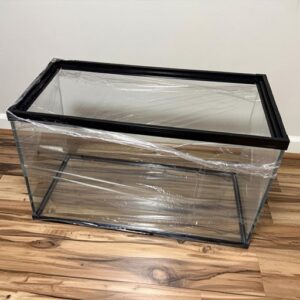
The ‘Goldilocks’ Tank (20 Gallons): I always tell beginners to start with a 20-gallon long. Why? Because in a tiny 5-gallon tank, a single missed water change can be a disaster. In a 20-gallon tank, the water volume is large enough to ‘dilute’ your mistakes. It’s the ‘Goldilocks’ size—not too big to handle, but big enough to stay stable.
- My Pick: Aqueon Aquarium 20 Gallon Long
- Cost: About $100
- 4.0 Stars (544 Amazon Reviews)
If you don’t have the space, or are set on going smaller instead? My nano aquarium tank guide covers what to know before sizing down.
Beginners often underestimate the physics of their hobby — a full 20-gallon tank weighs about 225 lbs, so before you buy furniture for it, think logically about your floor strength and stand quality. Always choose a dedicated aquarium stand (more on exactly why in Phase 2).
The Gear You Can’t Skip:
Adding substrate like rocks or sand looks great, but it doesn’t do much to help the quality of life for your fish.
- A Quality Heater: Fish are cold-blooded. If the room temperature drops at night, their immune systems crash.
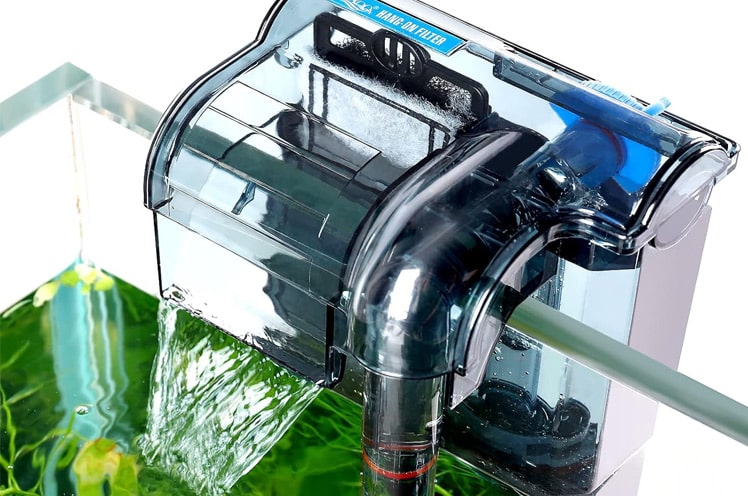
- The Filter (The Lungs of Your Tank): Look for a ‘Hang-on-Back’ style. Don’t worry about the fancy cartridges; we’re going to customize them (check out my Filter Guide for the simple hack).
- Water Conditioner: Tap water is for humans, not fish. You need a bottle of dechlorinator (I use Seachem Prime) to make the water safe almost instantly.
- A Simple LED Light: You don’t need a $200 pro light yet. Just something to see the fish and keep a few ‘bulletproof’ plants like Java Fern alive.
- Quality Test Kit: Looking after the quality of the environment that your little fish swim in is critical. Testing should be done weekly, and my advice would be to get a liquid test kit and avoid test strips.
If you want to add substrate, check out my post on the best substrate, and if you decide to go with gravel, I wrote up a post on calculating how much gravel you need.
Water Conditioners
This stuff is great at detoxifying ammonia, nitrites (commonly found in tap water), and heavy metals to make your fish’s water ready to live in.
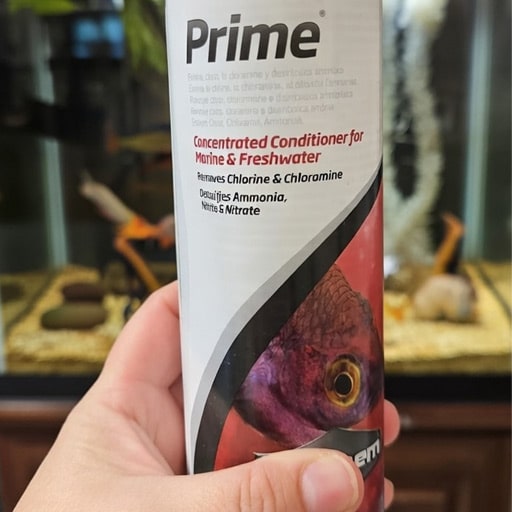
- My Pick: Seachem Prime
- Cost: About $9.00 for a 250 ml bottle
- 4.8/5 Stars (42,053 reviews)
LED Lights
Without the right kind and amount of light, your plants can’t photosynthesize properly. They use light energy to turn CO₂ and nutrients into growth. See my guide on the best lights for plants for more info.
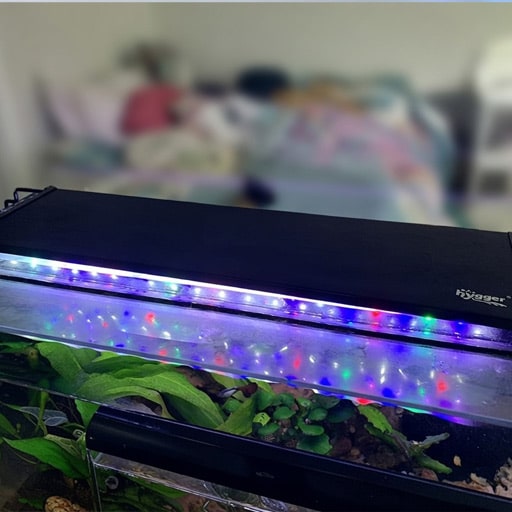
- My Pick: Hygger Advanced Light Bar
- Cost: Starting at $29
- 4.5/5 Stars (3,571 Reviews)
Test Kits
I recommend getting a liquid test kit over test strips, as they are far more accurate, especially when you run into water level issues.
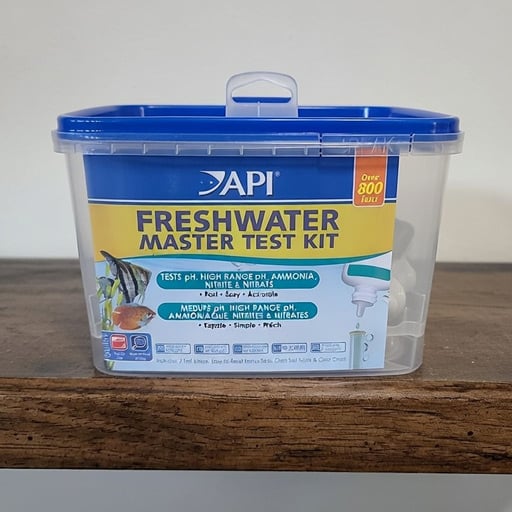
- My Pick: API Master Test Kit
- Cost: About $35
- 4.8 Stars (31,238 Amazon Reviews)
Filters For Your Tank
Having a quality filter is going to help keep your tank not only clean, but clear! For beginners, I recommend an easy-to-use hang-on-back type.
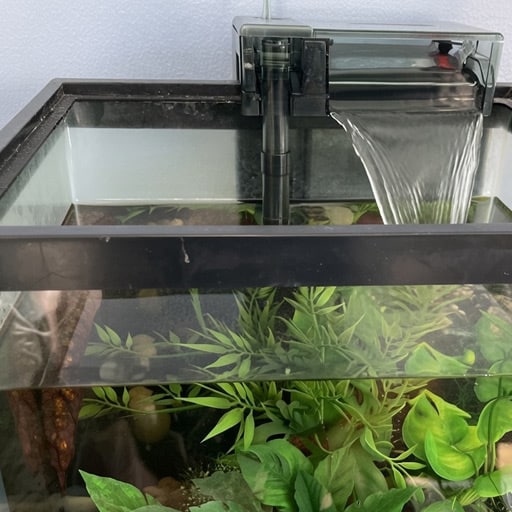
- My Pick: AquaClear 20
- Cost: About $35
- 4.4 Stars (617 Amazon Reviews)
Heaters
A heater protects fish from dangerous daily temperature swings and ensures their metabolism, digestion, and immune systems function properly. My heater guide breaks down everything you need to know and has a calculator for finding the perfect size for your tank.
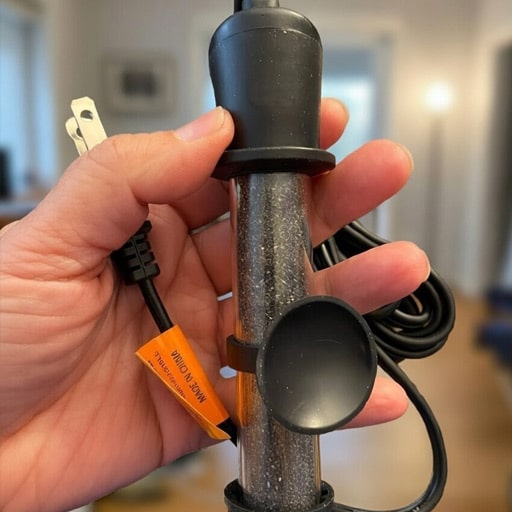
- My Pick: Hygger Fish Tank Heater
- Cost: About $25
- 4.1 Stars (113 Amazon Reviews)
Phase 2: The Setup (Doing it Right the First Time)
Once you get that glass box home, the temptation is to throw in the gravel and start the hose. Slow down. How you set the tank up today determines whether you’ll be dealing with a wet floor emergency three months from now.
1. The Level Surface Rule
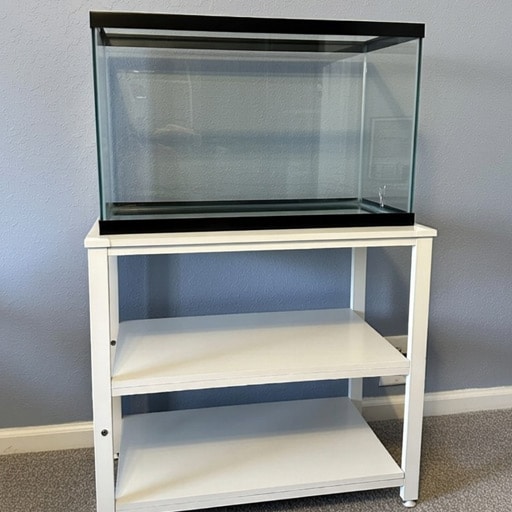
An aquarium isn’t just a decoration; it’s a heavy-pressure vessel. A 20-gallon tank weighs about 225 pounds when full.
A Quick Warning: If your stand is unlevel, the water weight puts uneven pressure on the silicone seals. Over time, that seal will fail. I always use a level app from my phone on the top rim of the tank before I add water. If it’s not level, I use shims on the stand, not the tank, to make sure it’s level.
2. The Heater Safety Soak
This is the mistake that ends in a pop and a $30 trip back to the store.
What I Do: When you stick your heater in the water, do not plug it in yet. Let it sit there for about 20 minutes. The glass tube needs to reach the same temperature as the water. If you plug it in cold, the internal element heats up instantly, and the thermal shock can shatter the glass.
3. The Planted Tank Preparation
If you’re adding plants (which I highly recommend for beginners), don’t just bury them in the gravel.
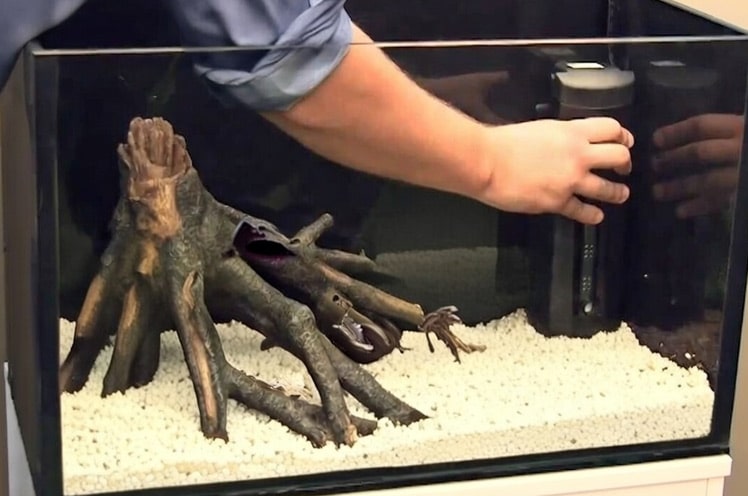
The Pro Move: I like to add about 2 inches of substrate. If you’re using sand, make sure you rinse it in a bucket until the water runs clear. If you don’t, your tank will look like a bowl of milk for a week, and that dust can actually grind down your filter’s motor. I’ve got a post on the easiest plants for your fish tank that you may want to check out.
Phase 3: The Big Wait (The Nitrogen Cycle)
This is the hardest part of fishkeeping in the beginning: having an empty tank for 4 weeks. If you add fish today, they will likely be dead by Friday.
The Invisible Plumbing Analogy
Think of your tank like a house. You can’t move in until the plumbing is connected. In an aquarium, your plumbing is Beneficial Bacteria.
- Fish produce waste (Ammonia), which is toxic.
- You need to grow a colony of bacteria that eats that Ammonia and turns it into Nitrite, then another colony that turns the Nitrite into Nitrate, which is much safer.
To speed up this process from weeks to days, check out my guide on the best starter bacteria, and check out my short guide on what you need to cycle your tank properly.
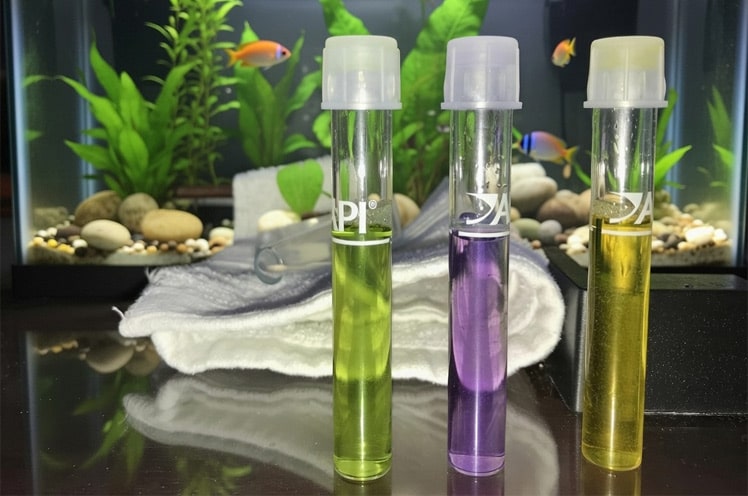
How I “Ghost Feed” my tanks: Instead of using live fish to start the cycle, I drop a few flakes of fish food into the empty tank every day. The food rots, creates ammonia, and feeds the bacteria, so they start growing. Once my Water Test Kit shows 0 Ammonia and 0 Nitrites, the plumbing is done. Only then do I head to the store for fish. Testing your tank’s water is a very important part of keeping fish. Check out my post on the best testing kit for aquariums.
Phase 4: Your First Fish
You’ve waited four weeks, your water tests are perfect, and your wallet is ready. But before you buy the coolest-looking fish in the shop, remember: Compatibility is king. In my 50-gallon community tank, I have a mix of fish that live in different layers of the water. For your first 20-gallon setup, I recommend starting with these three bulletproof options:
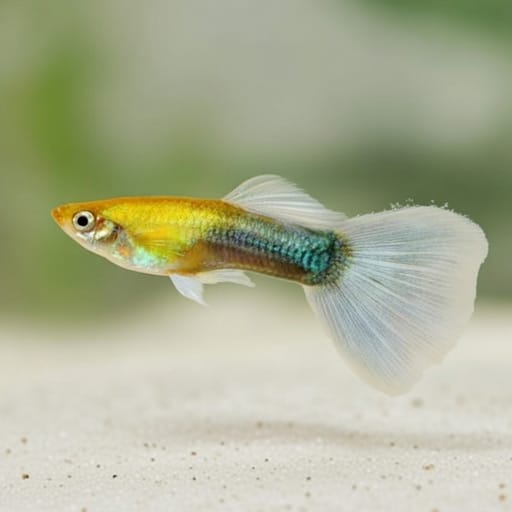
1. Fancy Guppies
- Why I Love Them: They are incredibly colorful, active, and always happy to see you when you walk near the glass.
- Quick Tip: Stick to all males if you don’t want 500 babies in two months. Guppies are hardy, but they appreciate a tank with a little bit of salt or harder water.
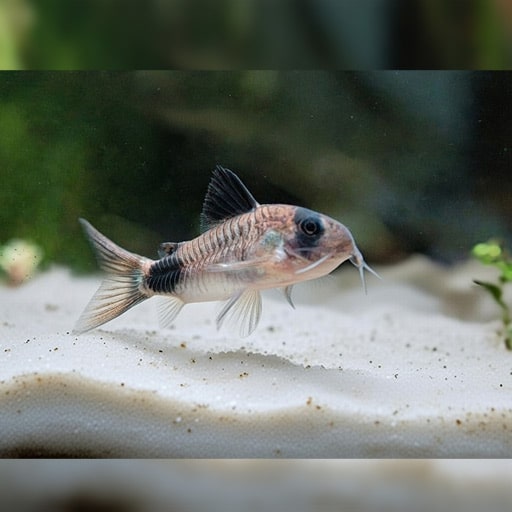
2. Corydora Catfish
- Why I Think They’re Great: These are armored catfish that spend their lives wiggling along the bottom, scavenging for leftover food. They are peaceful and have tons of personality.
- Quick Tip: Corys are social! Never buy just one. You need a group of at least 4 to 6 so they feel safe. Watching a pack of Corys hunt for pellets is one of the best sights in the hobby.
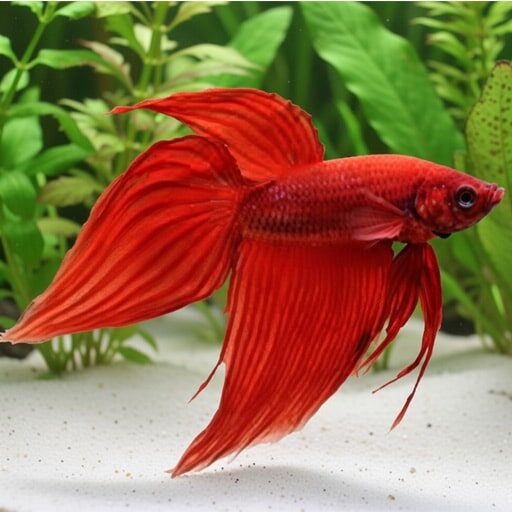
3. Betta Fish
The “Maximus” Note: If you go with a Betta, remember they don’t always like roommates. In a 20-gallon tank, a Betta can usually live with Corydoras, but never put two male Bettas together. They aren’t called “Fighting Fish” for nothing.
Why I think they’re great: If you want one Star of the Show, these are perfect. A Betta is peaceful and stays small.
The Maintenance Habit: The 15-Minute Routine
Most people think a fish tank is a 2-hour chore. If you do it right, it’s 15 minutes. This is the routine I’ve used for 15 years to keep my tanks from turning into algae factories.
- The Headcount: While you feed them, count your fish. If someone is missing or looks clamped, it’s your early warning sign to check your water parameters.
- The 25% Swap: I use my water pump (check out my post on the best Water Change Pump Guide) to remove 25% of the water. This helps to remove the Nitrates that your filter can’t handle.
- The Glass Swipe: A magnetic scraper is what I use to wipe the inside of the glass. Even if you can’t see algae yet, it’s there. Wiping it weekly keeps it from ever becoming a jungle.
- The “Old Water” Rinse: If your filter flow looks slow, I like to squeeze my sponges in the bucket of old tank water (never using tap water!).
Starting A Fish Tank For Beginners FAQs:
Can I just put my tank on my bedroom dresser or a desk?
Maybe, but be careful. Remember the 10 Pounds per Gallon rule. A 20-gallon tank weighs over 200 lbs. Most flat-pack furniture (like the stuff from IKEA) is made of particleboard, which loses its strength if it gets wet. If your dresser bows even a little bit in the middle, it can cause the tank glass to snap. I always recommend a dedicated aquarium stand or a piece of solid wood furniture.
Why is my water cloudy a week after I set up the tank?
Don’t panic! This is usually a Bacterial Bloom. As your nitrogen cycle starts, the bacteria are multiplying so fast that they turn the water milky. Resist the urge to do a massive water change—you’ll just restart the process. Let it sit for 2–3 days, and it will clear up on its own once the bacteria settle into your filter.
Do I really need to leave the lights on all day?
Actually, no. If you leave your lights on for 14 hours a day, you are inviting an Algae Nightmare to move in. I keep my tank lights on a timer for 8 hours a day. This is enough for the plants to grow, but not enough for the algae to take over. Your fish don’t actually need the light to stay healthy; they just need a consistent day/night cycle.
My fish is gasping at the surface. What do I do?
This is an emergency. It usually means there isn’t enough oxygen in the water or there is an ammonia spike. Grab a test kit and find out what is going on so you know why it’s happening.
A Quick Fix: Do a 50% water change immediately to dilute any toxins and add an airstone (check out my post on the best Air Pump Guide) to get the surface moving. Oxygen enters the water through surface agitation, not just the bubbles themselves!
How many fish can I actually fit in a 10-gallon tank?
Forget the one inch of fish per gallon rule—it’s outdated and dangerous. It depends on the type of fish. You can fit 10 tiny Neon Tetras in a 10-gallon, but you can only fit one Goldfish (and even then, they’ll outgrow it in a year). Start small. Put 3 or 4 fish in, wait two weeks, check your water, and then add more if everything is stable.
Can I use rocks or wood I found outside in my tank?
I get asked this all the time. While it’s tempting (and free!), it’s risky.
- The Wood: Softwoods like pine can leak sap and resins that are toxic to fish.
- The Rocks: Some rocks (like limestone) will slowly dissolve and jack up your pH levels.
- A Simple Rule: Unless you are 100% sure what it is, stick to the stuff at the fish store. If you must use a local rock, pour a little vinegar on it—if it fizzes, it’s going to mess with your water chemistry. Don’t put it in.
Why are my fish hiding all the time? I bought them to see them!
It sounds counterintuitive, but fish hide more when they don’t have enough hiding spots. If a fish feels exposed in an empty tank, its instinct is to huddle in a corner or behind the filter. If you provide plenty of plants, caves, and driftwood, they feel safe knowing a hiding spot is nearby, and they’ll actually spend more time out in the open.
Do I really need to wash my gravel before I put it in?
Yes, and then wash it again. New gravel is covered in shipping dust. This is nothing more than tiny particles of stone that will turn your water into a grey fog that can take weeks to settle.
The Pro Method: Put your gravel in a 5-gallon bucket, stick a garden hose in it, and churn it with your hand until the water overflowing the bucket runs crystal clear. Your filter motor will thank you.
Is aquarium salt good for all fish?
Salt is a great medicine, but it’s not for every tank. Some scaleless fish, like my favorite Corydora Catfish, are very sensitive to salt. Also, if you have live plants, salt can wither them away in days.
My Salt Rule: Don’t add salt just because. Save it for a separate hospital tank if a fish actually gets sick.
My tank smells like a swamp. Is that normal?
A healthy aquarium should actually have a very faint, earthy smell—sort of like a forest after it rains. If it smells rotten or like a swamp, something is wrong. Usually, it’s either a dead fish hidden in the plants or a massive amount of trapped, rotting food in the gravel.
The Fix: Don’t just spray air freshener! Do a 30% water change and use your gravel vac to get the gunk out of the substrate. Check out my post on fixing aquarium odors.
Conclusion: Starting A Fish Tank For Beginners
The logic of starting a fish tank is about building an ecosystem from the ground up. In my 15 years, the most successful tanks I’ve ever seen weren’t the ones with the flashiest gear, but the ones where the hobbyist had the patience to let the biology lead the way.
Setting up your first tank is a journey that requires a mix of the right tools and a logical mindset. Don’t rush the process. If you follow the steps of choosing the right substrate, cycling your water properly, and selecting compatible fish, you’ll avoid the “New Tank Syndrome” that causes so many to quit. I prioritize the health of the water above everything else because that is what keeps the fish thriving. Take it one step at a time, trust the science, and enjoy the process of bringing a piece of nature into your home.

I founded AquaLogicHQ to share hands-on, tested strategies that come from 3-month algae battles and countless hours perfecting the nitrogen cycle. My mission is simple: I've made most of the mistakes on my four active tanks and am sharing the answers so you can avoid disaster in yours. When I’m not elbows-deep in a water change, I’m putting the latest hobby gear through its paces to see if it actually delivers.
- Best Canister Filters For Fish Tanks: What I’d Actually Buy for a Big Tank - July 26, 2026
- The Best Nano Aquarium Tanks I’ve Actually Run in My Fish Room - July 19, 2026
- The Best Fish Tank Heaters: Ranked and Sized for Your Setup - July 4, 2026