
Updated 27 June 2026
I look at substrate as more than just “aquarium gravel.” It’s the second-largest biological filter in your tank and the anchor for your entire ecosystem. Whether you’re setting up a 20-gallon long for heavy planting or a simple 50-gallon community, the logic behind your choice determines your water clarity and plant health for years. After 15 years of vacuuming every type of sand, soil, and stone, I’ve learned that the wrong choice here is one of the biggest contributors to cloudy water and a rocky start during cycling. Here is my veteran’s guide to picking a substrate that actually works with your biology.
Aquarium Substrate TLDR Cheat Sheet:
- Pro Tip: Always rinse your substrate until the water runs crystal clear, or you’ll be fighting “Cloudy Tank Syndrome” for weeks.
- Best for Plants: Fluval Stratum (active soil that lowers pH and fuels roots).
- Best for Bottom Dwellers: CaribSea Super Naturals (fine sand that’s gentle on Corydoras).
- Best for Beginners: Midnight Pearl Gravel (cheap, clean, and looks natural).
- The Quick Ballpark (use with caution): 1.5 lbs per gallon gets you in the neighborhood for a standard 2-inch bed, or 2 lbs per gallon for a planted setup — but two tanks with the same gallon count can need different amounts depending on their footprint. Use the calculator below for your real number.
- The Deep Bed Rule: Keep fine sand at 2 inches or less, or till it occasionally. It’s a cheap precaution against stagnant pockets, even though how much real risk they pose is debated among hobbyists.
| Substrate Type | Grain Size | Nutrients | Best For | Price Range | |
|---|---|---|---|---|---|
| Aqua Soil (Fluval Stratum) |
Varies (fine granules) | Nutrient-rich, lowers pH | Planted tanks, shrimp | $10-$80 | Check price |
| Sand (CaribSea Super Naturals) |
1/16mm-2mm | Inert (no nutrients) | Corys, loaches, bottom dwellers | $5+ | Check price |
| Gravel (Midnight Pearl) |
2mm-5mm | Inert (no nutrients) | Beginners, low-maintenance setups | $5+ | Check price |
Not sure which fits your setup? Each type is broken down in detail below, including my personal picks and how I actually use them in my own tanks.
Disclosure: AquaLogicHQ.com is a participant in the Amazon Services LLC Associates Program, as well as other affiliate programs, designed to provide a means for us to earn fees by linking to Amazon.com and affiliated sites at no extra cost to you. Please see the Affiliate Disclosure for more details.
The AquaLogicHq Substrate Calculator
The AquaLogicHQ.com Aquarium Substrate Calculator
Enter your tank dimensions or pick a common size to find out exactly how many pounds of gravel or sand you need.
Bookmark this page — it’s the quickest way to check your substrate math before your next tank setup. (Quick note: the “1.5 to 2 lbs per gallon” rule from the TLDR above and the inch-depth numbers here are just two different ways of measuring the same target — the calculator does the conversion for you based on your tank’s actual footprint, which is more accurate than a flat per-gallon estimate.) Want the full logic behind these numbers, including why weight doesn’t always equal volume? Check out my dedicated guide on how much substrate you actually need.
1. Aqua Soil (For Planted Paradises)
If you want a carpet of green plants, you need a nutrient-rich active substrate.
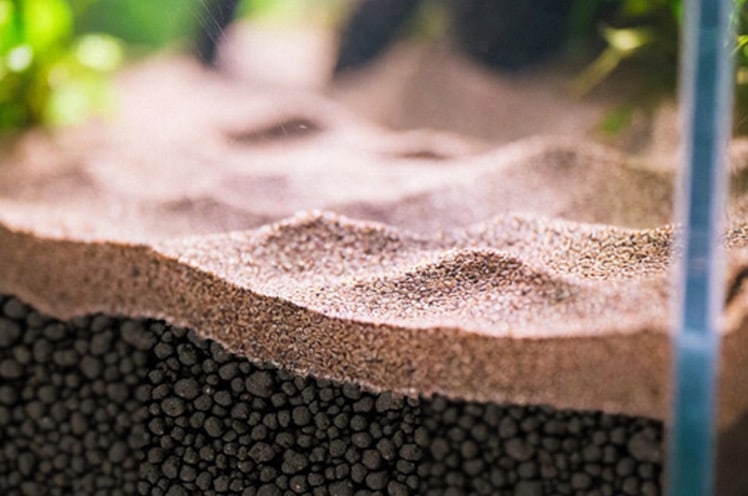
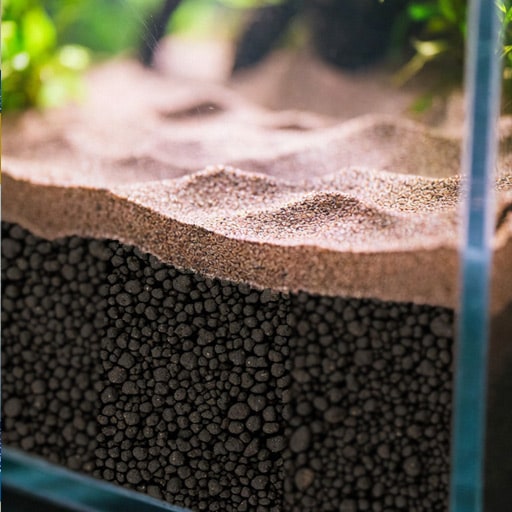
- How I Use Fluval Stratum Aqua Soil: In my 20-gallon long planted tank, I put 2 inches of soil down, then a 1-inch layer of fine sand on top. This keeps the nutrients in the soil and prevents the water from turning into a cloudy “mud soup” every time I move a plant. This is called capping the soil.
- Why I Use It: It helps to maintain my live plants and helps the overall water stability.
- Pros: Explosive root growth; lowers water pH over time.
- Cons: Can leach ammonia for the first 3 weeks — keep an eye on your levels during that window, or check my guide on lowering ammonia fast if it spikes; a little pricey.
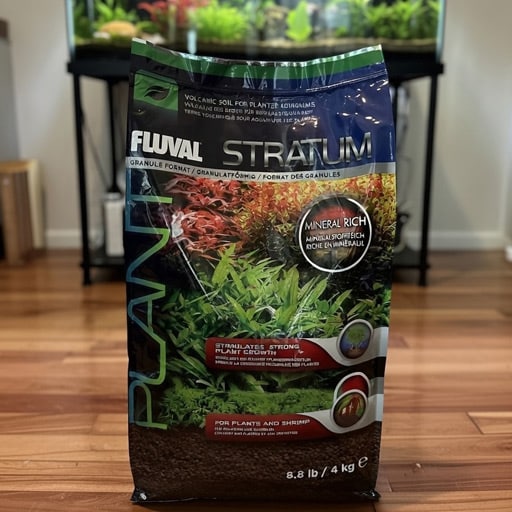
- Aquarium Soil Cost: From around $10 to $80 per bag, depending on brand and type.
- My Pick is Fluval Stratum: About $20 for 8.8lb
- 4.7 Stars (17,786 Amazon Reviews)
Quick Tip: Certain substrates, like Fluval Stratum, are designed to naturally buffer your water. This is one of the easiest ways to Soften Aquarium Water without constantly adding RO or distilled water to your tank.
2. Aquarium Sand (Best for Corys and Loaches)
Sand is the most natural-looking substrate and is essential for fish that dig.
- Why I Use CaribSea Super Naturals Premium Sand: I use this sand in my 50-gallon community tank because it’s heavier than play sand, so it doesn’t get sucked into the filter, and it looks great!
- Pro Tip: If you use sand, stir the top layer once a month. This is a simple way to prevent low-oxygen pockets from forming — some hobbyists link this to hydrogen sulfide buildup, though how much of a real risk that is in a typical tank is debated. If you start smelling rotten eggs, your sand is too compacted regardless, and it’s time to stir. (See my guide on why fish tank water stinks).
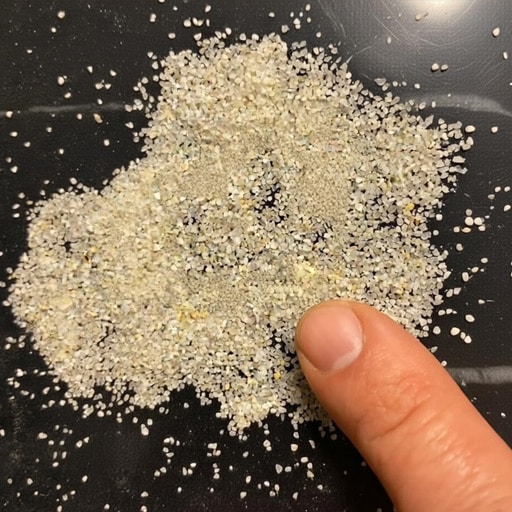
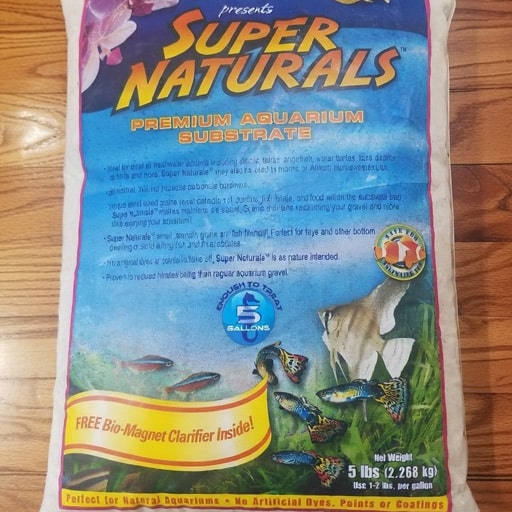
- Aquarium Sand Cost: From around $5 and up, depending on brand and type.
- My Pick is CaribSea Super Naturals Premium Sand: About $20 for a 5lb bag
- 4.6 Stars (997 Amazon Reviews)
Quick Tip: One thing the “top 10” lists never tell you: deep, undisturbed sand can develop low-oxygen pockets — some hobbyists connect this to hydrogen sulfide risk, though it’s a debated point in the community. If I’m using fine sand, I still play it safe: never deeper than 2 inches, or I keep a crew of Malaysian Trumpet Snails to “till” the soil for me.
3. Aquarium Gravel (The Best Choice for Beginners)
Standard gravel is easy to clean and very forgiving.
- Why I Use Midnight Pearl Gravel: It’s the easiest to vacuum with a water change pump and looks really nice.
- Cons: It has zero nutrients. If you want to grow plants in gravel, you must use Root Tabs every 3 months. You can also use Aquarium soil under the gravel to get plants growing quickly.
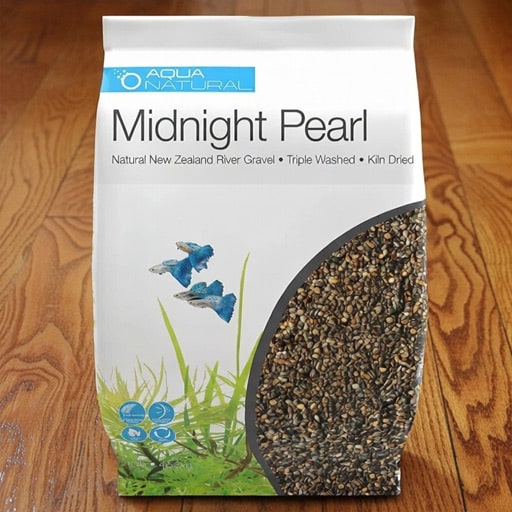
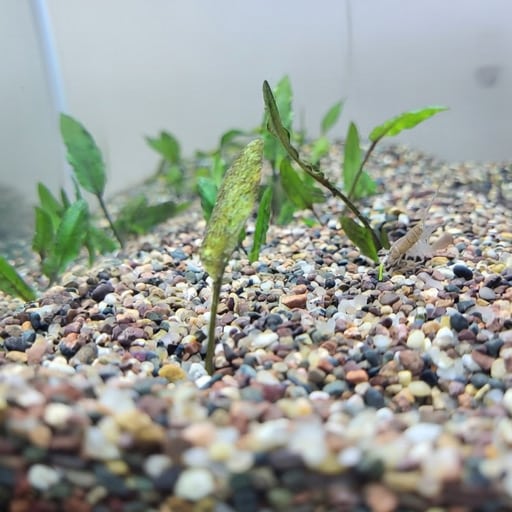
- Aquarium Gravel Cost: From around $5 and up, depending on brand and type.
- My Pick Is Midnight Pearl: About $15 for a 10lb bag
- 4.7 Stars (1,170 Amazon Reviews)
The AquaLogicHQ Setup Guide For Substrate
Step 1: The Substrate Rinse (The Most Important Step)
Unless the bag explicitly says “Pre-Washed,” assume it’s filthy — and even then, I still rinse it anyway. Skipping this step means dumping fine dust directly into your ecosystem, and it’s the #1 cause of Cloudy Aquarium Water that can take a week or more to clear on its own.
How I do it: I fill a 5-gallon bucket or large strainer with substrate and run water through it, stirring by hand, until the water runs clear. It takes about five minutes and saves you a week of fighting cloudy water with mechanical filtration alone.
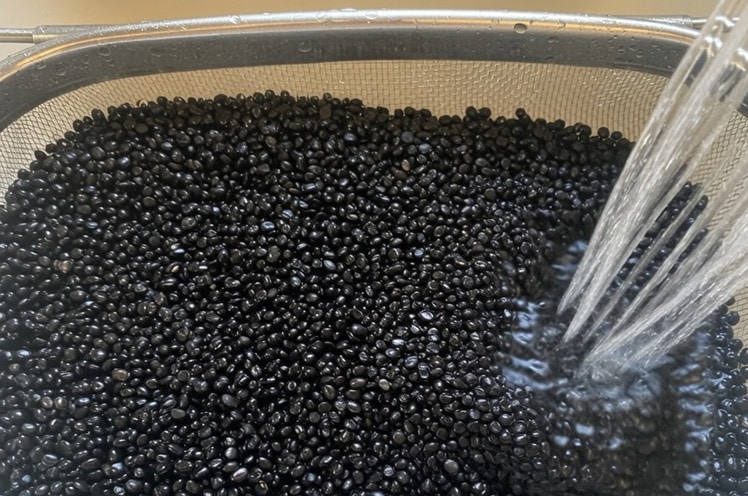
IMPORTANT TIP: I don’t care if the bag says ‘pre-rinsed.’ The logic is simple: if you don’t wash your substrate in a bucket until the water runs clear, you’re going to be fighting Cloudy Water for a week. I’ll show you the 5-minute bucket method that saves you a week of mechanical filtration stress.
Step 2: The “Slope” Trick
Don’t lay your substrate flat. I always make it 3 inches deep in the back and 1 inch deep in the front. This creates an “illusion of depth” that makes your tank look twice as big.
How Deep Should Aquarium Substrate Be?
The logic for substrate depth depends entirely on what you are trying to grow. If your bed is too shallow, plants will float away; if it’s too deep, you risk toxic gas pockets.
- For Gravel (Standard): Aim for 2 to 3 inches. This provides enough depth for beneficial bacteria to colonize without making vacuuming impossible.
- For Sand: Some hobbyists report fine sand beds over 2 inches developing stagnant, oxygen-poor pockets that can potentially trap hydrogen sulfide gas — the science on how much of a real risk this is in a typical tank is debated. Either way, it’s a cheap precaution: till fine sand regularly or keep it at 2 inches or less.
- For Heavily Planted Tanks: I recommend 3 inches in the back and 1.5 to 2 inches in the front. This gives heavy root feeders like Amazon Swords plenty of “runway” to grow.
Step 3: Adding Water (The Plate or Hand Method)
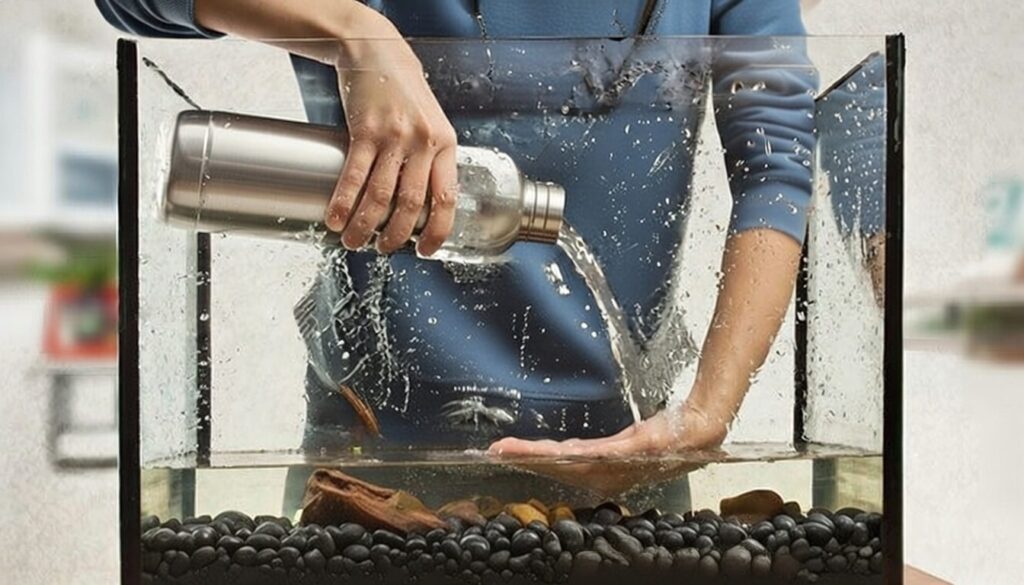
To avoid blowing a hole in your beautiful sand, hold a dinner plate or your hand over the top of the substrate about halfway up the tank. Pouring the water onto the plate or hand diffuses the pressure and keeps your design looking great.
The Best Aquarium Substrate FAQs
How much substrate do I need?
A rough starting point is 1.5 pounds per gallon for a standard 2-inch bed, or 2 pounds per gallon if you’re going deeper for a planted tank — but treat that as a quick ballpark, not a shopping list. Two tanks with the same gallon count can need different amounts depending on their footprint: a 20-gallon Long and a 20-gallon High hold the same water but have different floor space, so they don’t need the same amount of substrate. Use the calculator above for your tank’s actual number based on its real dimensions, or check out my full breakdown in my dedicated substrate calculator guide if you want to see the math behind it.
Can I mix sand and gravel?
You can, but the laws of physics will win eventually. The smaller sand grains will always settle to the bottom, and the gravel will end up on top. It usually looks messy after a few months of vacuuming.
Does substrate soil expire?
Active soils like Fluval Aqua Soil eventually “run out” of nutrients after 2-3 years. At that point, you don’t have to replace it—just start using Root Tabs to recharge it.
Why is my substrate turning black?
This usually means the substrate has developed a low-oxygen pocket, most often in deeper sand beds. It’s debated in the hobby exactly how much risk this poses, but stirring the area gently and boosting circulation is a safe, low-effort fix either way — my air pump guide breaks down which ones I recommend.
Is colored gravel safe?
Most neon gravel is epoxy-coated. It’s generally safe, but if the coating starts to flake off, it can leach chemicals. I always recommend natural-looking substrates for the health of your fish.
Do I need substrate in a quarantine tank?
No. I recommend Bare-Bottom for quarantine tanks. It makes it much easier to spot parasites or uneaten food, and it’s easier to disinfect between uses.
Can I use play sand from a hardware store?
Yes, but it requires massive amounts of rinsing. It is very dusty and can clog your filter if not washed thoroughly. Pool filter sand is a much better budget alternative.
Will substrate change my pH?
Some substrates (like crushed coral) will raise your pH. Others (like Aqua Soil) will lower it. Always check your parameters with a Test Kit after adding a new substrate to your tank.
How do I clean sand without sucking it up?
Hover your vacuum about 1 inch above the sand. Swirl it in a circular motion to lift the waste (detritus) into the water column, then suck it up. Don’t shove the vacuum deep into the sand.
What is the best substrate for shrimp?
Shrimp love active shrimp soils (like Fluval Stratum) because they buffer the water to the slightly acidic levels shrimp need to breed.
Final Thoughts: The Best Aquarium Substrate
The logic of choosing a substrate is about planning for the “Long Game.” You aren’t just picking a color; you’re picking a maintenance schedule. Sand looks sleek but requires a light touch with the siphon; gravel is forgiving but traps more waste; and specialized soils are amazing for plants but can alter your water chemistry if you aren’t paying attention.
In my 20-gallon aquascape, I wouldn’t trade active soil for anything, but in my 50-gallon community, I stick to a high-quality inert sand for ease of cleaning. Every choice has a trade-off. Don’t let a “pretty” bag of gravel lead you into a maintenance nightmare. Choose the substrate that matches your goals—whether that’s a lush carpet of plants or a low-maintenance community setup. Set the foundation right today, and you’ll spend less time troubleshooting your water and more time enjoying the view.
What’s under your fish? I’d love to hear about your setup. Are you a “dirted tank” fan, a “sand and root tab” or a purist? Let’s talk about it in the comments below!

I founded AquaLogicHQ to share hands-on, tested strategies that come from 3-month algae battles and countless hours perfecting the nitrogen cycle. My mission is simple: I've made most of the mistakes on my four active tanks and am sharing the answers so you can avoid disaster in yours. When I’m not elbows-deep in a water change, I’m putting the latest hobby gear through its paces to see if it actually delivers.
- Best Canister Filters For Fish Tanks: What I’d Actually Buy for a Big Tank - July 26, 2026
- The Best Nano Aquarium Tanks I’ve Actually Run in My Fish Room - July 19, 2026
- The Best Fish Tank Heaters: Ranked and Sized for Your Setup - July 4, 2026
Hi, this is exactly the information I was looking for. I started a 20-gallon tank recently and covered the bottom with Fluval Stratum so I can have better success with plants, but then I read information here and there that sand would be better for my bronze corydoras, and dwarf chain loaches.
You answered all my questions and gave me some great tips!
Thanks!
I’m really glad you got the answers you were looking for and wish you the best with the 20 gallon tank!
Donny